

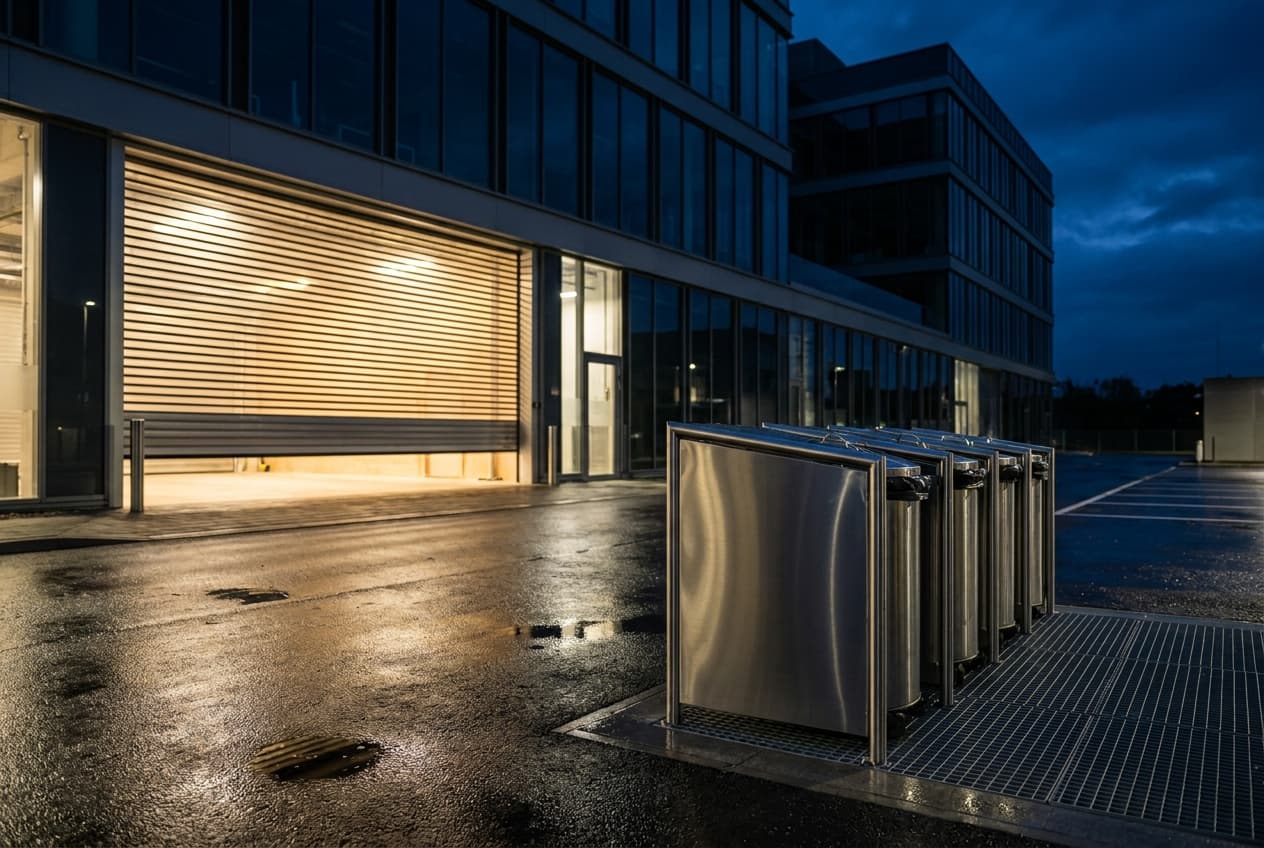
Commercial pest control is a different job from domestic pest control, and not because the pests are different. It is different because of what a pest problem costs a business. A rodent in a house is unpleasant. A rodent in a commercial kitchen is a hygiene rating, potentially an emergency closure, and a fixed cost of lost trading days that dwarfs anything the treatment was ever going to cost.
That changes what you are actually buying. You are buying attendance that fits around trading, treatment that addresses the route in rather than the animal in front of you, and documentation good enough to put in front of an environmental health officer, an auditor, a landlord or your own client. Most of the disappointment in this industry comes from buying the first of those and assuming the other two were included.
Nightshift has been doing this across England for over 45 years, and the operating model is the answer to the timing problem. Technicians work through the night as their standard shift rather than being called out from home, so a restaurant is treated after service, an office after the floor empties, and a warehouse between shifts. The building does not stop, and nobody is charged a premium for the hour of the day.
What the work actually involves
Find the route in, not just the pest
Treating what is visible and leaving the way in open is why infestations come back and why a treatment cycle can run for years without ever finishing. Every visit is looking for the defect behind the activity: the drain, the service penetration, the failed door seal, the gap where a duct passes through a wall. We report it whether or not it is our work to fix, and whether or not it is even on your title.
Work the hours the building is closed
Most commercial pests are nocturnal, so a daytime inspection sees a clean kitchen and very little activity. Night attendance sees what is actually happening and treats it without a technician working around staff, customers or stock. This is the whole reason the company is called what it is.
Proofing and repair, as part of the job
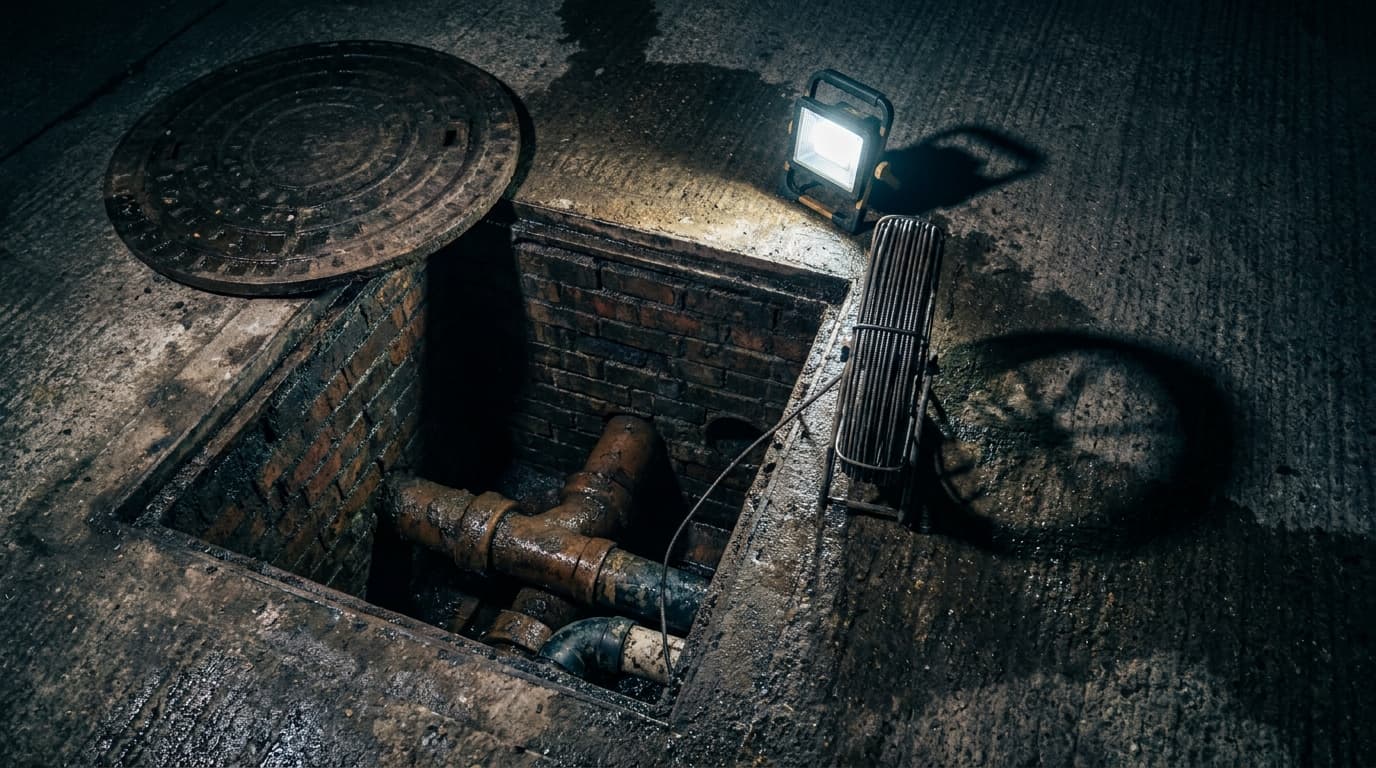
Rodent proofing, drainage investigation, bird proofing and netting, and timber and woodworm treatment are all our own teams rather than subcontracted. One contractor covering the treatment and the physical fix is the difference between a problem closing and a problem being managed indefinitely.
Monitoring instead of guessing
On sites where activity has to be caught early rather than reported by a member of staff, remote monitoring gives continuous detection across areas that are expensive to inspect by hand, including voids and service risers. It also produces a dated record of what happened and when.
Documentation that survives an inspection
A written report is issued the same day as every visit, showing what was found, what was done, what access was achieved and what remains outstanding. RAMS and COSHH documentation is supplied for your file. This is the part that is invisible until the day somebody official asks for it, at which point it is the only part that matters.
Bird control where it belongs to us
Fouling on roofs, plant decks and ledges blocks rainwater outlets and corrodes plant long before anyone objects to how it looks. Proofing and netting where the elevation suits it, and falconry where it does not, both carried out by our own teams rather than passed to a third party.
By type of premises
The underlying work is the same. What changes is what a pest problem costs you, who instructs the visit and what the paperwork has to prove afterwards.
Kitchens, restaurants and food service
The highest-stakes category, because a pest problem in a food business is a hygiene problem the moment an officer sees it, and an emergency closure does not wait for anybody's diary. Attendance before opening or after service, and a written report the same day.
Offices and workplaces
Multi-tenanted floors served by shared risers and ducts, waste concentrated in one basement store, and a problem that is nobody's until it is everybody's. Usually a managing agent or facilities team instruction rather than a tenant one.
Hotels and hospitality
Reputation-sensitive, occupied around the clock, and the one sector where a single review outlives the infestation by years. Canine detection settles which rooms actually carry bed bug activity rather than taking a floor out of service on suspicion.
Warehousing, logistics and storage
Large footprints, loading doors that stand open, and stock that pests reach before anybody counts it. Proofing the envelope is usually worth more than anything placed inside it.
Schools, universities and healthcare
Settings where the treatment itself has to be planned around vulnerable occupants and around terms, shifts or wards, and where the documentation is scrutinised as closely as the outcome.
Social housing and residential portfolios
Blocks and estates where reports arrive through several front doors and only one of them ends at pest control. Block-level programmes, void treatment before re-let, and a record that answers an escalation.
Every environment we work in, including stadiums, airports, heritage estates, farms and government buildings, is listed on the sectors page.
Where we cover
The thirty-minute attendance target is London and London only. Everywhere else is covered by regional technicians and foot teams, and we would rather state that plainly than publish one national number that means something different in every region.
London
On site within 30 minutes
Same-day response
East Anglia
Regional technicians
East of England
Regional technicians
Birmingham foot team
Manchester foot team
West of England
Regional technicians
Framework positions
Ranked No.1
South East Consortium
Nightshift Pest Control is ranked first on the South East Consortium framework for pest control.
Ranked No.2
ESPO
Nightshift Pest Control is ranked second on the ESPO framework for pest control.
Buying it
Most commercial work is contracted rather than reactive. What a contract covers and what decides the price sets out how that is sized. Bid teams already evaluating us want the supplier record, insurance, RAMS and accreditation detail, which lives on the procurement page. If you are still comparing providers, we publish our ranking of commercial pest control companies in London, which names us among them and says what each is genuinely best for.
Common questions
Do you only cover London?
No. London is where the thirty-minute attendance target applies, and it applies there only, but Nightshift covers the South East, East Anglia, the East of England, the Midlands, Manchester and the North West, and the West of England, with regional technicians and foot teams in Birmingham and Manchester. We would rather publish one response time we can hold to than a national number that quietly means something different in every region.
What is the difference between commercial and domestic pest control?
The treatment is often similar. What differs is everything around it: attendance that has to fit around trading rather than around a household, proofing and structural work treated as part of the job rather than an extra, and documentation written to be read by an environmental health officer or an auditor. A commercial job is judged on the record it leaves as much as on the outcome.
Can you treat a commercial kitchen without closing it?
Usually, yes, and that is the normal way we work. Technicians are on shift through the night rather than called out from home, so a kitchen can be treated after service and be ready for the next one. Where a closure genuinely is unavoidable we will say so before starting rather than halfway through.
Do you charge extra for out-of-hours attendance?
Night working is our standard shift, not a surcharge. The company is built around technicians already being on shift at night rather than being woken and sent out, which is what makes out-of-hours attendance ordinary here rather than exceptional.
What does commercial pest control cost?
Nobody credible publishes a figure, because the same building in two different uses is two different jobs. What decides it is the size and use of the premises, the pest pressure around it, how much proofing work is needed and how often the site needs visiting. The contracts page sets out what a survey is actually measuring.
How quickly can you attend?
The target for attendance anywhere in London is thirty minutes, at any hour. That is attendance rather than a phone being answered, and it is a target rather than a guarantee. Elsewhere in England response is same-day in the South East and through regional technicians in the other areas we cover.
Will your paperwork satisfy an environmental health officer?
That is what it is written for. A written report is issued the same day as each visit, building the record an officer expects to see, and RAMS and COSHH documentation is supplied for your file. Nightshift is a BPCA member and CEPA certified.
Do you work with multi-site operators?
Yes, and most of the book is contracted rather than reactive. One agreement can carry every site with one point of contact and one reporting standard, which matters more than it sounds when a client or an auditor asks for the position across a portfolio rather than at one address.
Survey first, price second
Surveys, quotations and advice are free and without obligation, single site or a national estate. We look at the building, tell you what it needs and quote against that.
Arrange a survey