

Canine detection searches
Bed bug detection dogs
Bed bugs are found late. By the time a guest reports a bite the population has usually been established for weeks, has spread beyond the mattress into the headboard, the skirting and the room next door, and the commercial damage is already done. Detection is the whole game, and human eyes are poor at it.
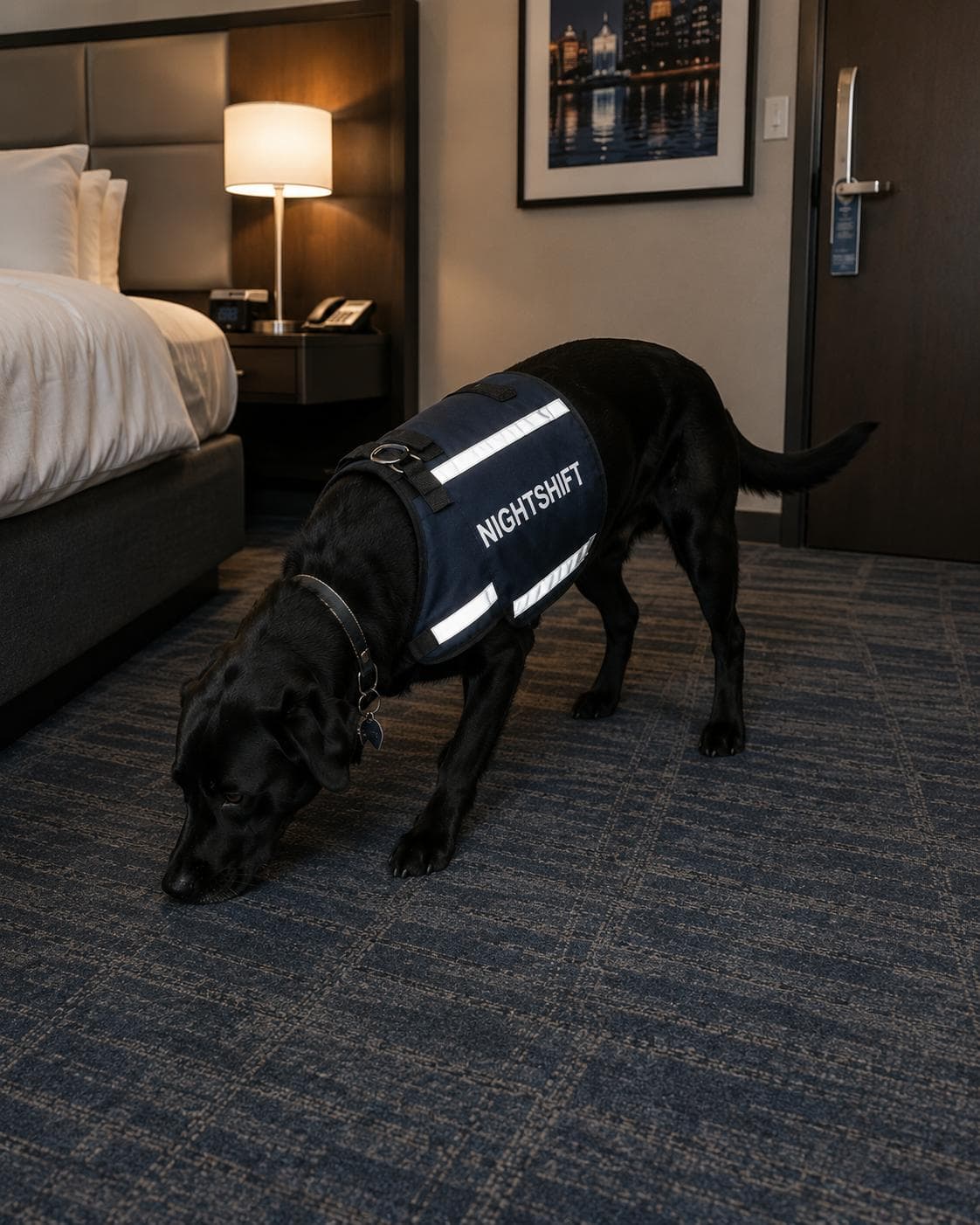
A trained dog is not looking for bed bugs. It is smelling them, which is a fundamentally different problem, scent reaches into voids, seams, bed frames and wall cavities that no visual inspection can open up. A handler and dog can work a corridor of rooms in the time it takes to strip and check a handful of beds properly.
The commercial value is not only in finding infestations. It is in clearing rooms. A search that confirms which rooms are unaffected is what lets a hotel keep selling them with confidence and treat only what needs treating, instead of closing a floor and blanket-spraying it.
Nightshift's dogs are our own. Most pest control companies book a detection dog in from a third party for the day, which makes a scheduled screening programme difficult and continuity impossible. Ours are in-house, so the same handlers and the same dogs learn your building, and a search happens when your rooms are free rather than when a subcontractor is available.
How the programme runs
Searches run overnight and between changeovers, which is when rooms are empty and the building is quiet enough for a dog to work properly. In hospitality that usually means screening a floor after the last check-in and returning the results before housekeeping starts, so affected rooms are held back and everything else goes back on sale the same morning.
Why it works
What this method actually does.
Scent reaches where sight cannot
Bed bugs harbour in seams, frame joints, behind headboards, under carpet grippers and inside wall voids. A visual inspection finds what is exposed. A dog responds to what is present, including in places that would have to be dismantled to see.
Clearing rooms is worth more than finding them
Knowing a room is clear is what returns it to sale. Screening a floor and treating three rooms is a very different commercial outcome from closing the floor because nobody can say which rooms are affected.
Early detection changes the cost entirely
A localised population caught early is a single room treated overnight. The same population found six weeks later is a floor, a reputation problem and a stack of compensated stays.
Verification after treatment
A search after treatment evidences that the work succeeded rather than assuming it. That record is worth having when a guest complains later, or when the same room is reported twice.
Our own dogs, our own handlers
Detection dogs are usually subcontracted in the pest control industry. Ours are not. That is what makes a recurring screening programme practical rather than a one-off visit booked around somebody else's diary, and it means the same dog works your site each time.
Discretion is the point
A handler and a dog move through a property quietly and quickly. There is no stripped-bed, tools-out disruption in a corridor guests are walking down, which matters as much in hospitality as the result does.
Where it is used
Sites that suit it.
- Hotel bedrooms, suites and corridors
- Student halls and university accommodation
- Serviced apartments and short-let properties
- Hostels, hospitality staff accommodation and crew quarters
- Care homes, supported living and social housing
- Cinemas, theatres and upholstered public seating
- Offices, soft seating and staff rest areas
Compliance & evidence
Every search is recorded room by room, so you hold a dated document showing what was screened, what responded and what was recommended. That record matters twice over: it evidences due diligence if a guest or resident later complains, and it evidences active control at inspection. Search findings are confirmed by a technician before treatment is scheduled, so a response is acted on with a visual confirmation rather than treated blind.
Certificates published, not promised
BPCA member M15/1628, CEPA certified to EN 16636, CHAS, SafeContractor and Constructionline, with numbers and expiry dates on our procurement page.
Heat treatment
JG Pest Control
Where a full heat treatment is the right answer, that work sits with JG Pest Control, our sister company within the Tyro UK group, and the UK's highest-rated pest control company on Trustpilot.
Heat is the most thorough option available for bed bugs because it does not rely on an insect walking through a residue. The room is brought up to lethal temperature and held there, with sensors monitoring the temperature and circulation fans driving heat into the voids, seams and frame joints where bed bugs actually harbour. It reaches what a spray cannot.
See JG's heat treatment- Kills every life stage in a single treatment, adults, larvae, nymphs and eggs
- Completely chemical-free, with no residue left behind
- Professional heaters and circulation fans, with placed sensors monitoring temperature
- Rated 4.7 on Trustpilot across more than 26,500 reviews, and 4.6 on Google across more than 8,000, over 34,500 independent reviews in total, as of August 2026
- Backed by JG's above-industry-standard guarantee, with same-day response
JG Pest Control and Nightshift are separate companies and sister businesses within the Tyro UK group, so this is a group referral rather than an independent recommendation. The claims and review figures above are JG's own published figures and are checkable on Trustpilot.
Common questions
Bed bug K9 detection, answered.
The questions facilities and operations teams raise most, answered plainly.
How does a bed bug detection dog actually work?
The dog is scent-trained to respond to live bed bugs and viable eggs rather than to shed skins or old droppings, which is the distinction that matters. You want to know about a live population, not a historic one. The handler works the room systematically and the dog indicates where scent is strongest, which is usually a much smaller area than a room-wide treatment would cover.
Why use a dog rather than a visual inspection?
Speed and reach. Bed bugs harbour inside seams, frame joints, wall voids and under carpet edges, so a thorough visual inspection means dismantling furniture in every room. A handler and dog screen rooms far faster, and reach harbourage that would otherwise stay closed. For a corridor of rooms the difference is a night's work against several days.
Can the dog tell us which rooms are clear?
Yes, and commercially that is often the more valuable half. Clearing unaffected rooms is what lets you keep selling them and treat only what needs treating, rather than closing a floor because nobody can say where the problem stops.
Do you confirm the dog's findings before treating?
Yes. An indication is followed by a technician's visual confirmation before any treatment is scheduled. A dog narrows the search down to a specific area; the technician establishes what is actually there and what treatment it needs.
Do you subcontract the detection dogs?
No. Nightshift has its own dogs and its own handlers, which is unusual, detection dogs are commonly booked in from a third party for the day. It matters for a programme rather than a single visit: the same handlers learn your building, the searching is scheduled around your rooms rather than a subcontractor's availability, and continuity between searches is real rather than nominal.
Will guests or residents see the dog working?
Rarely. Searches are scheduled overnight and between changeovers precisely so the work happens in empty rooms and quiet corridors. Discretion is part of the service, not an afterthought.
Can you search after a treatment as well as before?
Yes, and we would usually recommend it. A post-treatment search evidences that the work succeeded rather than assuming it did, which is worth holding if the same room is reported again later.
Arrange a survey
London never sleeps.
Neither do we.
Call today for a no obligation quote, 24/7. Surveys, quotations and advice are free and without obligation.
office@nightshiftpestcontrol.co.uk
5 Linden Close, The Pantiles, Tunbridge Wells, TN4 8HH
BPCA member · CEPA · CHAS · SafeContractor