

Building proofing & rodent exclusion
Building proofing and rodent exclusion
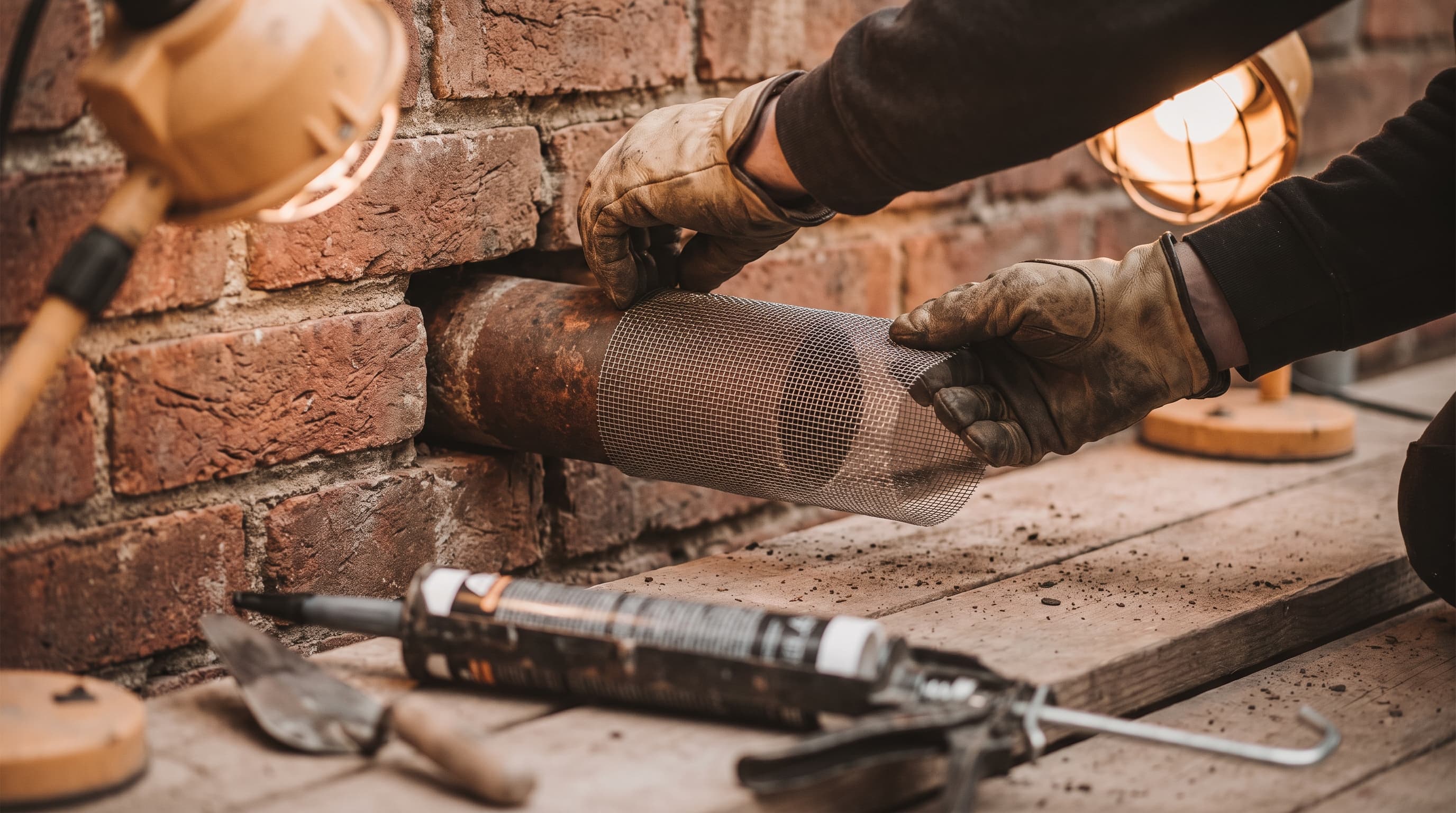
Baiting a building that a rodent can still walk into is a subscription, not a solution. Proofing is the part of the job that ends the problem rather than managing it: finding every route in, then repairing the fabric so it stays shut.
This is building work as much as pest work. A mouse needs a gap the width of a pencil, around 6mm. A rat needs roughly 25mm, and both will gnaw a smaller opening until it is big enough. The routes are almost always the same and almost always repairable, the difficulty is finding all of them rather than the obvious one.
How the programme runs
A proofing survey comes first, inside and out, including drainage where the pattern points there. You receive a schedule of works with the ingress points identified and prioritised, so you can see what is being closed and why, rather than approving an undefined day of labour.
Why it works
What this method actually does.
Exclusion is the only permanent fix
Treatment reduces the population that is already inside. Proofing decides whether a new one arrives next month. Any programme that treats without proofing is committing the client to paying for the same problem indefinitely.
Stewardship is pushing the industry this way
CRRU stewardship discourages permanent baiting, and audits increasingly expect exclusion and monitoring to lead. Proofing is not the alternative to good rodent control any more. It is the core of it.
Defective drains are the route people miss
Rats routinely enter through cracked drain runs, redundant connections and unsealed soil stacks, arriving inside a building whose external envelope looks perfect. If the pressure is persistent and the outside is sound, the drains are the first place we look.
It is not bird proofing
Bird proofing is netting, spikes and deterrent systems at height, and we do that too. Building proofing is a different discipline: sealing the envelope against rodents and repairing the fabric that let them in.
Where it is used
Sites that suit it.
- Service penetrations: pipework, cabling, gas and water entries
- Defective and redundant drainage, unsealed soil stacks
- Air bricks, vents and unprotected ducting
- Door thresholds, shutter seals and dock levellers
- Damaged brickwork, mortar loss and cavity openings
- Roof junctions, eaves, soffits and flashing gaps
- Floor voids, riser shafts and boxing
- Cellar hatches, coal chutes and light wells
Compliance & evidence
Proofing work is surveyed, specified and reported in writing, so the file shows what was found, what was closed and what remains outstanding. Environmental Health Officers expect to see proofing evidence rather than a bait record alone, and BRC-aligned audits treat exclusion as a core control. Where a building is listed or historic, repairs are specified sympathetically to the fabric.
Certificates published, not promised
BPCA member M15/1628, CEPA certified to EN 16636, CHAS, SafeContractor and Constructionline, with numbers and expiry dates on our procurement page.
Common questions
Building proofing, answered.
The questions facilities and operations teams raise most, answered plainly.
How is this different from bird proofing?
Bird proofing installs netting, spikes and deterrent systems, usually at height, to stop birds landing and nesting. Building proofing seals the building envelope against rodents and repairs the fabric they are using to get in. We provide both, but they are separate disciplines with separate specifications.
Can you do the repairs, or do we need a builder?
We carry out the proofing works ourselves: mesh, sealing, mortar repairs, thresholds and vent protection. Where a defect is structural or a drainage repair is substantial, we identify it clearly in the report so you can instruct the right trade rather than discovering it later.
Is proofing worth it if we already have a bait programme?
It is usually the part that makes the bait programme finite. Without exclusion you are treating arrivals indefinitely; with it, the population you treat is the last one.
Our building is listed. Can it still be proofed?
Yes, and it is common work for us. Repairs are specified sympathetically to historic fabric, which is the same discipline we apply to timber treatment in listed and heritage properties.
Arrange a survey
London never sleeps.
Neither do we.
Call today for a no obligation quote, 24/7. Surveys, quotations and advice are free and without obligation.
office@nightshiftpestcontrol.co.uk
5 Linden Close, The Pantiles, Tunbridge Wells, TN4 8HH
BPCA member · CEPA · CHAS · SafeContractor