

Bakeries & food production
Bakery and food production pest control
In a bakery, pest control is not adjacent to food safety. It sits inside it. The pest control file is opened at every audit, and a finding there is a finding against the whole HACCP system.
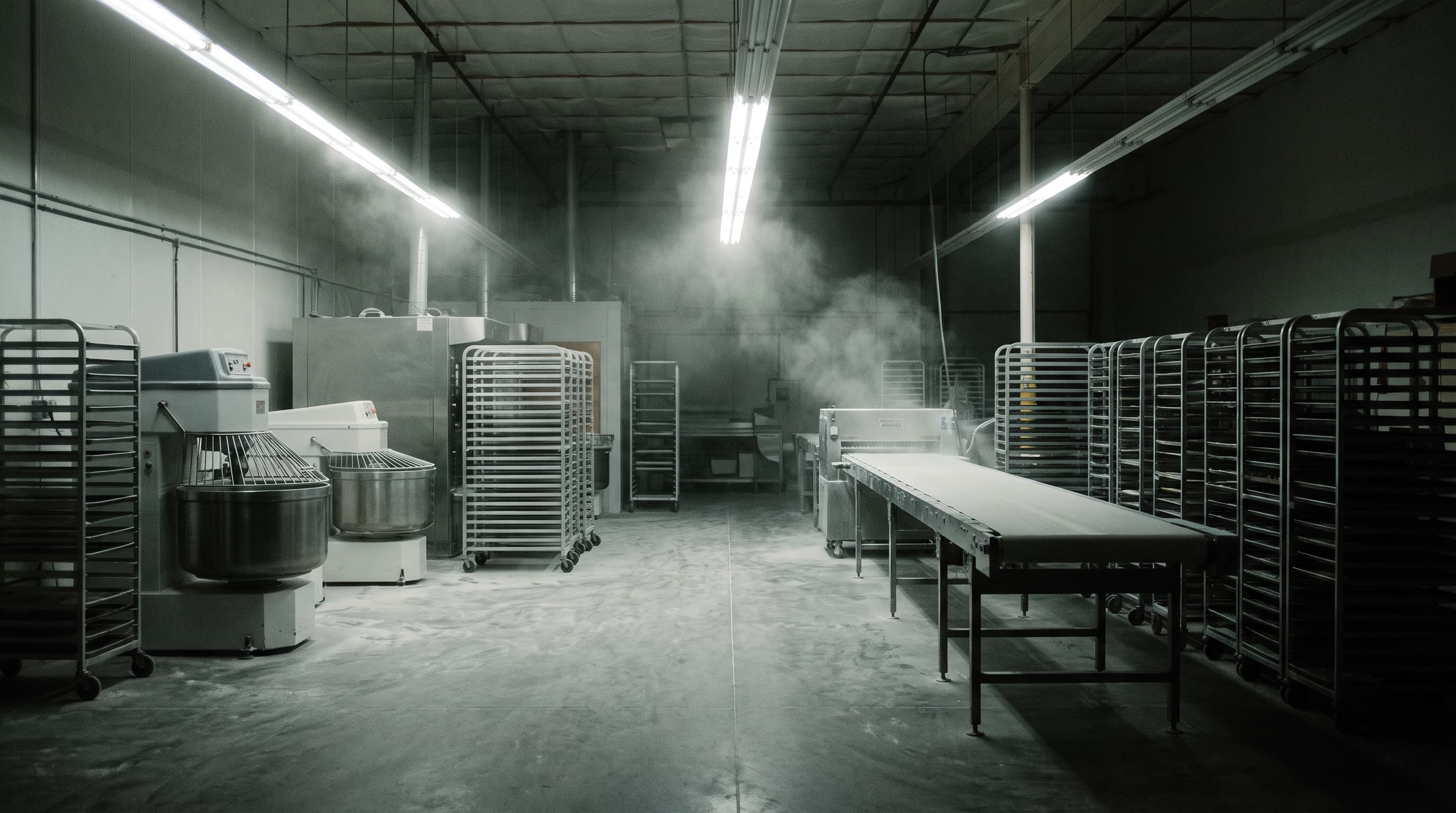
The specific challenge is flour. Dust settles on ledges, in equipment voids and above false ceilings, and it is a complete food source for stored-product insects. Combined with the constant warmth of ovens and proving rooms, a bakery offers a stable breeding environment all year round, which is why infestations here are chronic rather than seasonal.
How we work this environment
Around production. For continuous sites that usually means the sanitation window overnight or at weekend shutdown, and we schedule to the quietest genuine window rather than the most convenient one for us.
The risk profile
What makes this environment different.
Flour dust is a food source
Residual dust on ledges, in equipment voids and above ceilings sustains flour beetles, mites and moths indefinitely. Cleaning schedules reach the visible surfaces; the harbourage is in the places they do not.
Stored-product insects arrive in the ingredients
Tribolium, Ephestia moths and mites come in with raw materials rather than through the door. Goods-in inspection is a control point, not an afterthought, and infestations often trace back to a single delivery.
Warmth removes the off-season
Ovens and proving rooms keep the building warm through winter, so populations that would normally slow simply keep breeding. There is no seasonal reprieve to rely on.
The audit is unannounced and binary
BRC-aligned and retailer audits open the pest file as routine. An incomplete record is a non-conformance whether or not a pest was ever present, and a customer complaint about a foreign body escalates far faster than a sighting.
Where we look first
The places it actually starts.
- Flour silos, bulk bins and transfer lines
- Mixers, hoppers and equipment voids
- Proving rooms and oven surrounds
- Ledges, cable trays and above false ceilings
- Packing lines, cardboard stores and dispatch
- Goods-in, raw material stores and returns
- Waste compaction, external bins and yard drainage
Compliance & evidence
Documentation is prepared for audit rather than for our files: same-day written reports, trend data across visits, RAMS and COSHH on request, and BRC-aligned support for sites supplying retail. Programmes are built on Integrated Pest Management, with monitoring and exclusion leading and rodenticide use following CRRU stewardship.
Certificates published, not promised
BPCA member M15/1628, CEPA certified to EN 16636, CHAS, SafeContractor and Constructionline, with numbers and expiry dates on our procurement page.
Common questions
Bakeries & food production, answered.
The questions facilities and operations teams raise most, answered plainly.
Will your reporting satisfy a BRC audit?
Reports are written to serve as due diligence evidence, recording each visit, finding, recommendation and the action taken. RAMS, COSHH and insurance documentation are supplied for the audit pack on request.
How do you handle stored-product insects specifically?
With monitoring first. Pheromone monitoring establishes which species is present and where the population sits, because treating the room rather than the source simply repeats the problem next quarter.
Can you work without chemical treatment in production areas?
Frequently, yes, and for many sites it is the right specification. Monitoring, proofing, sanitation guidance and targeted intervention take priority over routine application in food-contact environments.
Arrange a survey
London never sleeps.
Neither do we.
Call today for a no obligation quote, 24/7. Surveys, quotations and advice are free and without obligation.
office@nightshiftpestcontrol.co.uk
5 Linden Close, The Pantiles, Tunbridge Wells, TN4 8HH
BPCA member · CEPA · CHAS · SafeContractor