

Biological woodworm treatment
Woodworm treatment without
a single chemical.
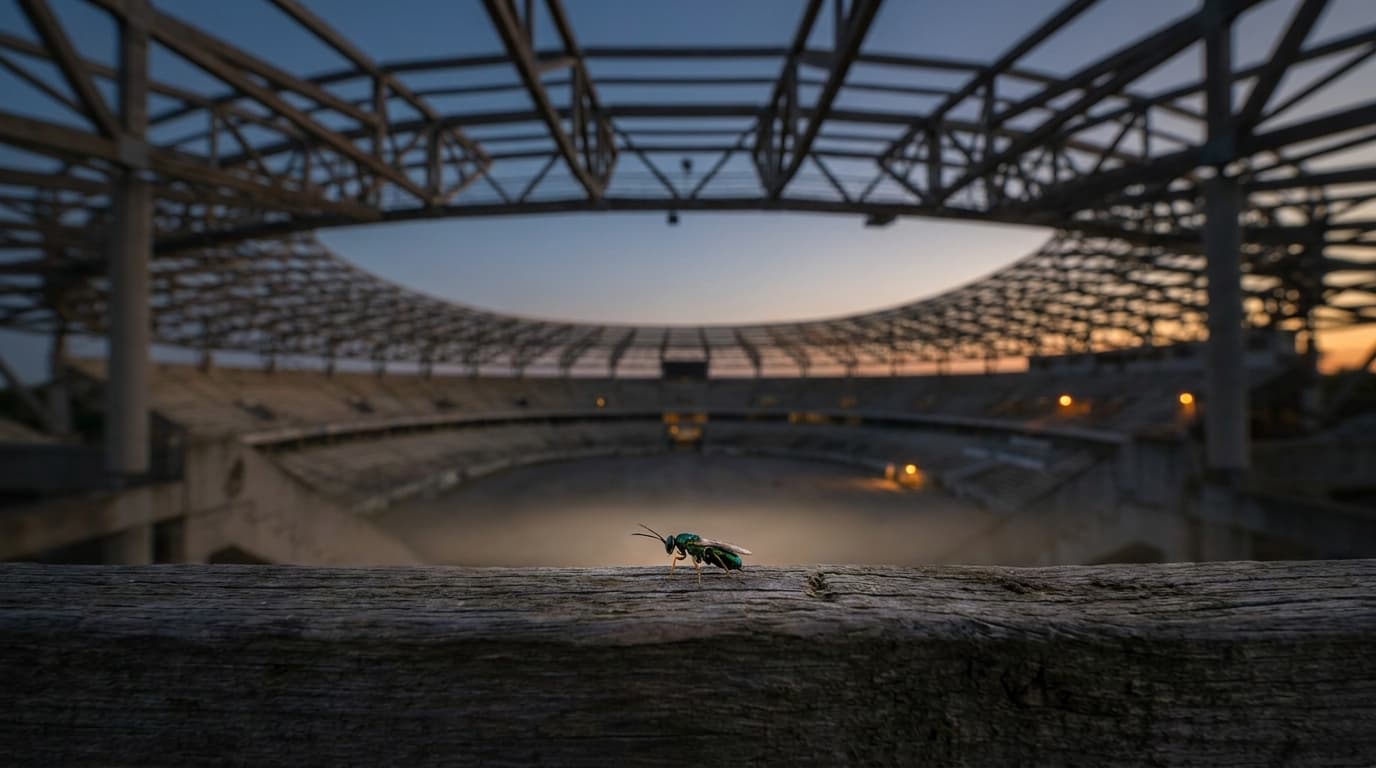
Spathius exarator, a parasitoid wasp 2 to 3mm long, hunts woodworm larvae inside the timber itself. Nothing is sprayed, nothing is stripped out, and the building stays open while it happens, which is why it suits the places where a conventional treatment is the hardest thing to justify.
How it works
A predator, introduced on purpose.
Woodworm is the larval stage of a wood-boring beetle. The damage you can see (the flight holes, the frass) is the end of a cycle that has been running unseen inside the timber, sometimes for years. Chemical treatment tries to reach those larvae by soaking the surface of the wood and waiting.
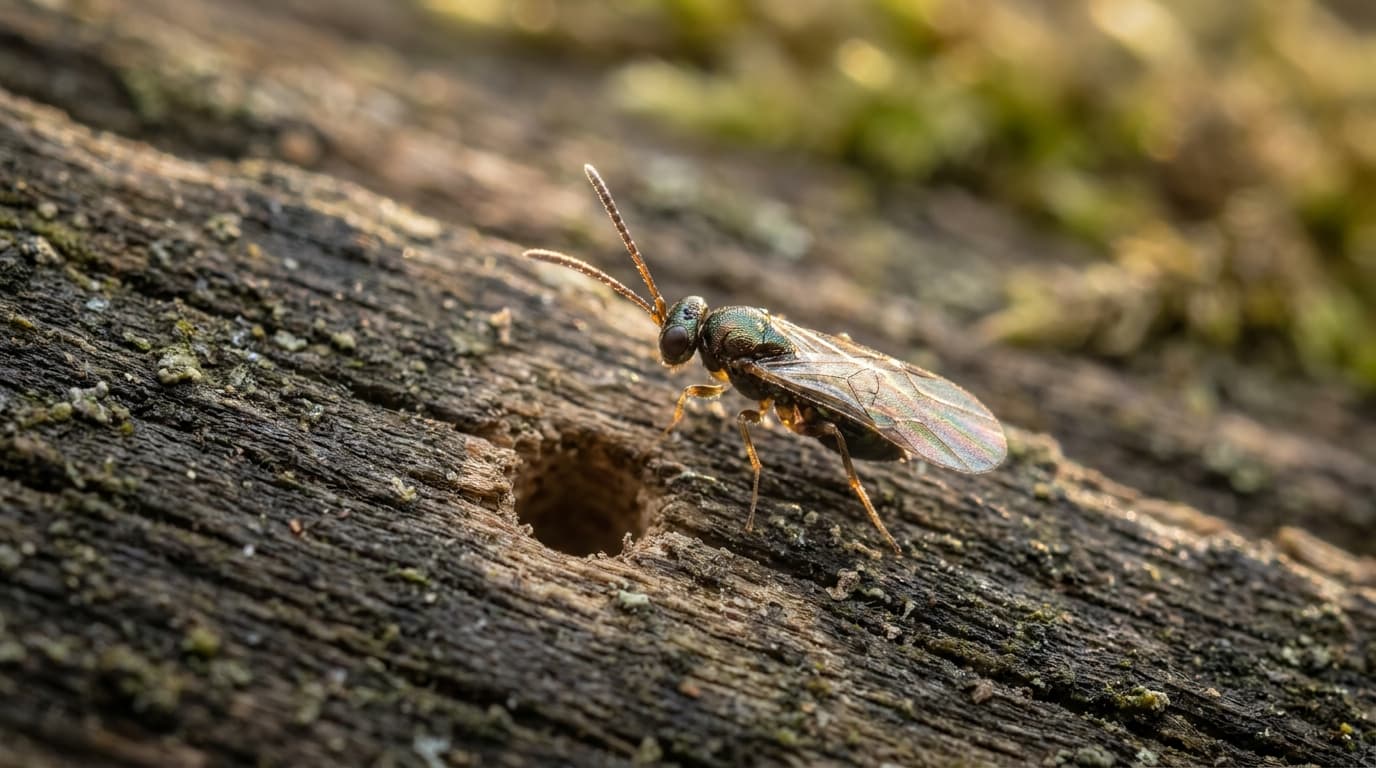
Biological treatment goes the other way. Spathius exarator is a braconid wasp, 2 to 3mm long, and the natural enemy of Anobium punctatum: the common furniture beetle behind most woodworm in British buildings. It detects a larva through the wood, pierces the timber with its ovipositor and lays a single egg onto it. The wasp larva that hatches feeds on the beetle larva, and the infestation ends from the inside.
It is silent, it does not sting, and it is harmless to people, pets and the public. It has no interest in food, furnishings or fabric, and it cannot sustain itself without beetle larvae. When the infestation collapses, so does the wasp population, leaving no residue, no odour and no chemical in a building that may have stood for a thousand years.
It also leaves its own evidence. A wasp emerges through a hole roughly 0.5mm across, against about 2mm for the beetle, so the timber itself shows where the treatment has worked. Published research on the method reports reductions in woodworm activity of up to 90 per cent.
Availability
Licensed through Tyro UK.
This is not a treatment you will find offered widely in the UK. The licence is held by our parent group, Tyro UK, and shared across Nightshift, JG Pest Control and Vergo. Nightshift delivers it to commercial and heritage clients across London and the South East.
Our timber team has over 40 years’ experience preserving timber in many of England’s most important and historic buildings, and work is specified by qualified surveyors.
Why it is chosen
For the buildings that cannot take the alternative.
Conservation officers, curators and estate managers do not reject chemical woodworm treatment out of preference. They reject it because of what it means for the fabric, the contents and the people inside.
No chemicals in the building
Nothing is sprayed, fogged or painted onto the timber. That matters where collections, textiles, food areas or occupants make a chemical treatment difficult to justify.
The fabric stays where it is
Conventional programmes often mean stripping finishes, lifting boards or cutting out and replacing timber. Biological treatment works on the infestation inside the wood you already have.
The building stays open
No evacuation period and no chemical re-entry window, so a gallery, church or hotel floor can carry on trading while the treatment does its work.
It stops when the woodworm does
Spathius exarator depends entirely on beetle larvae. Once the infestation is gone the population dies out with it, leaving no residue, no odour and nothing behind in the timber.
Where we use it
Priceless timber, and the people under it.
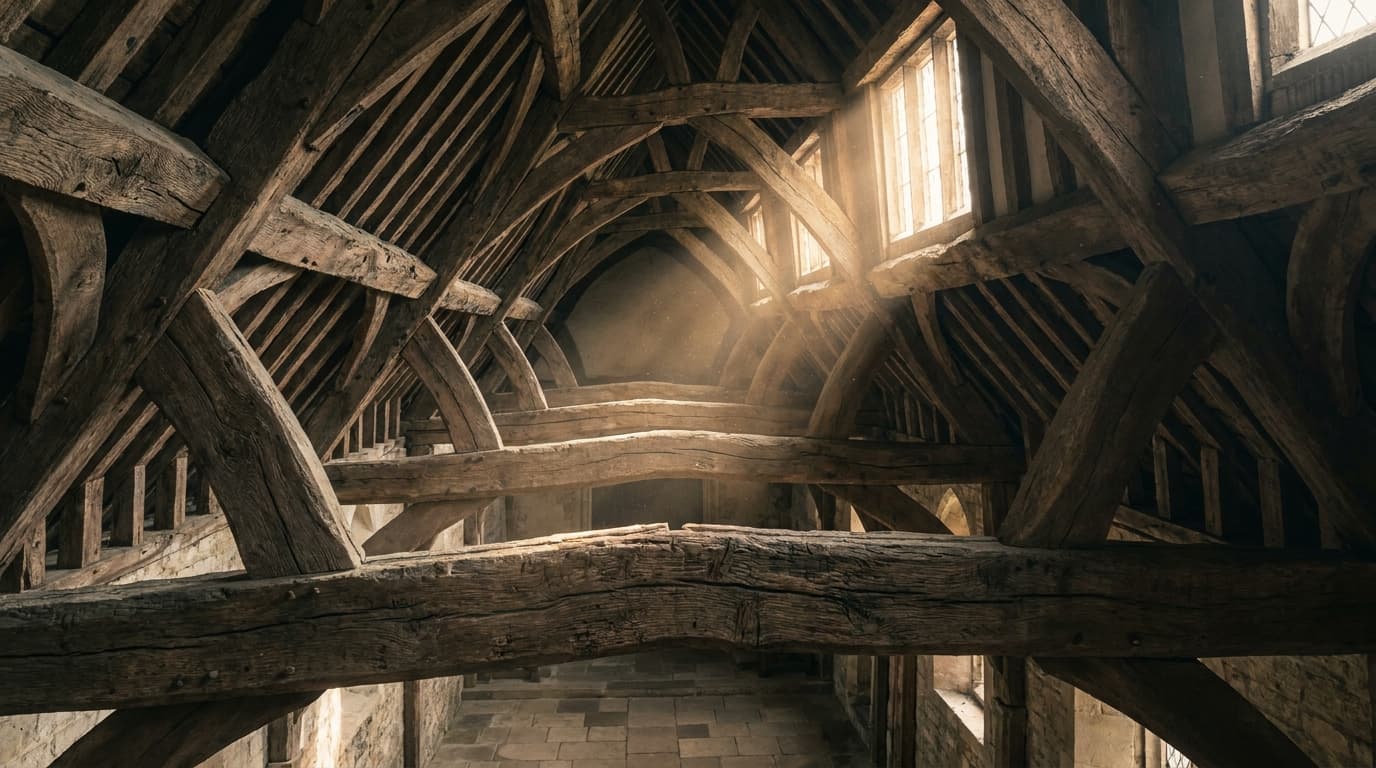
Nightshift is entrusted with some of the most prestigious and important buildings in the country, from historic monuments and thousand-year-old churches to Elizabethan country houses.
Listed & heritage buildings
Where consent restricts what can be applied
Museums & galleries
Collections and cases left untouched
Churches & historic monuments
Including thousand-year-old fabric
Stately homes & estates
Elizabethan and Georgian timber
Hotels in period buildings
Treated without closing rooms
Panelled offices & members' clubs
Discreet, out of trading hours
The programme
Surveyed first, sold second.
Every programme starts with a survey, because biological treatment is not the right answer for every case and you deserve to be told that before anyone quotes.
Survey
A qualified surveyor attends
We establish whether the infestation is active, identify the beetle responsible and assess the timber and any associated damp. Not every case suits biological treatment, and we will tell you when it does not.
Specification
A written specification
You receive a report setting out what is happening in the timber, what we propose and why, in a form your architect, conservation officer or insurer can work from.
Introduction
The treatment is introduced
The wasps are released into the affected timber. There is no smell, no residue and no need to clear the space. Scheduling is agreed around your operating hours.
Monitoring
Monitored to conclusion
Return visits track emergence and confirm the infestation is falling away, with the schedule and duration agreed at survey. Every visit closes with a written record.
Woodworm FAQ
Asked before every timber programme.
The questions facilities and operations teams raise most, answered plainly.
Are the wasps a problem in the building?
No. Spathius exarator is 2 to 3mm long, silent, and harmless to people, pets and the public. It has no interest in anything other than beetle larvae inside the timber, and in practice occupants do not notice it is there.
Can this be used in an occupied building?
Yes, and that is usually the point. There is no chemical application, so there is no evacuation period and no re-entry window to manage around guests, staff, congregations or collections.
How do you know it has worked?
The timber tells you. A wasp emerges through a hole about 0.5mm across, against roughly 2mm for the beetle, so successful parasitism is visible in the wood itself. We monitor that across the programme and record the position in writing at each visit, so you finish with documented evidence rather than an assurance.
Is chemical treatment ever still the right answer?
Sometimes. Severe structural infestation, or timber that also needs decay or damp work, can call for a different specification. The survey decides it, not the sales conversation.
Do you also deal with the damp that caused it?
Yes. Woodworm and timber decay usually follow a moisture problem, and our team is experienced in damp course installation and in advising on structural dampness alongside the timber work.
Arrange a survey
London never sleeps.
Neither do we.
Call today for a no obligation quote, 24/7. Surveys, quotations and advice are free and without obligation.
office@nightshiftpestcontrol.co.uk
5 Linden Close, The Pantiles, Tunbridge Wells, TN4 8HH
BPCA member · CEPA · CHAS · SafeContractor