

Schools & academies
School and academy pest control
A school is a catering operation, a sports facility and an estate of ageing buildings, occupied for six hours a day by people who must not encounter anything we use.
That last point governs everything. Product choice, placement and timing are all constrained by the presence of children, and safeguarding governs who may be on site at all. The practical answer is to do the work when the school is empty, which is a shift pattern we already run.
How we work this environment
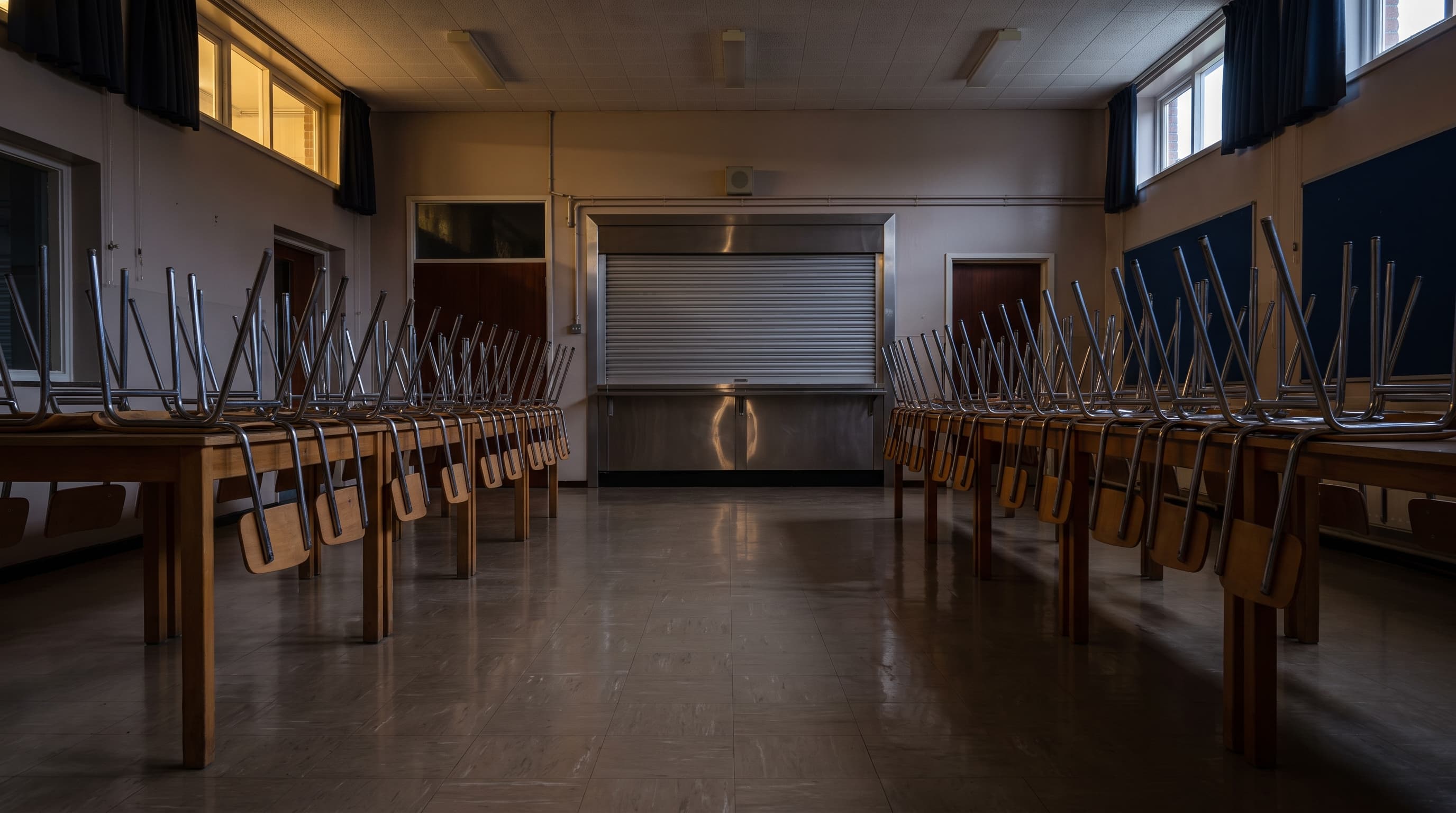
Outside teaching hours as standard (evenings, weekends and holiday periods) with intensive work planned into the longer holidays when buildings are empty and access is unrestricted.
The risk profile
What makes this environment different.
Occupancy dictates the specification
What may be used, and where it may be placed, is constrained by children being present. Bait placement in accessible areas is not acceptable, so proofing and monitoring carry more of the programme than they would elsewhere.
Safeguarding governs access
Enhanced vetting is expected for anyone working on a school site. A contractor who cannot evidence it becomes a supervision burden for staff who have other jobs to do.
The kitchen is a full food business
School catering carries the same food hygiene obligations as any commercial kitchen, with the added scrutiny that comes from feeding children. A pest finding there escalates to governors and parents, not just to the caretaker.
Holidays are both the window and the risk
Empty buildings over long holidays are the ideal time to treat and also the time infestations establish undisturbed. A programme that only visits in term time misses the period when activity actually builds.
Where we look first
The places it actually starts.
- Kitchens, servery, dining halls and dry stores
- Food technology rooms and cookery classrooms
- Bin stores, waste compounds and recycling
- Sports halls, changing rooms and equipment stores
- Portable classrooms, roof voids and boxing
- Boiler rooms, service ducts and cleaner stores
- Grounds, playing fields, sheds and outbuildings
Compliance & evidence
All technicians are DBS checked before deployment. Catering areas are treated to satisfy the Food Safety Act 1990 and the FSA Food Hygiene Rating Scheme, with same-day written reports for the estates and governors' file, and RAMS and COSHH documentation supplied on request.
Certificates published, not promised
BPCA member M15/1628, CEPA certified to EN 16636, CHAS, SafeContractor and Constructionline, with numbers and expiry dates on our procurement page.
Common questions
Schools, answered.
The questions facilities and operations teams raise most, answered plainly.
Are your technicians DBS checked?
Yes, all technicians are DBS checked before deployment, and the team also holds the security clearance required for government and airside work where that is relevant.
Can you work while children are on site?
We schedule around them. Treatment is planned for evenings, weekends and holidays so nothing is applied in occupied areas, and any work that must happen during the day is restricted to areas pupils cannot access.
Can a multi-academy trust run under one agreement?
Yes. Trusts and multi-site estates run under one agreement with per-site frequencies set by risk, one point of contact and consolidated reporting, with site-level detail for each school.
Arrange a survey
London never sleeps.
Neither do we.
Call today for a no obligation quote, 24/7. Surveys, quotations and advice are free and without obligation.
office@nightshiftpestcontrol.co.uk
5 Linden Close, The Pantiles, Tunbridge Wells, TN4 8HH
BPCA member · CEPA · CHAS · SafeContractor