

Bird control is usually straightforward. You identify what the birds are using the structure for, you deny them it physically, and the problem ends. Netting and spikes do most of the work in this industry and they do it well.
The jobs that are difficult are the ones where the physical answer is unavailable. A listed facade where the planning position rules out fixings. A construction site whose geometry changes every fortnight, so anything installed is wrong by the time it is finished. A building whose owners will not accept the look of proofing on a principal elevation. A solar array where netting the panels defeats the point of having them.
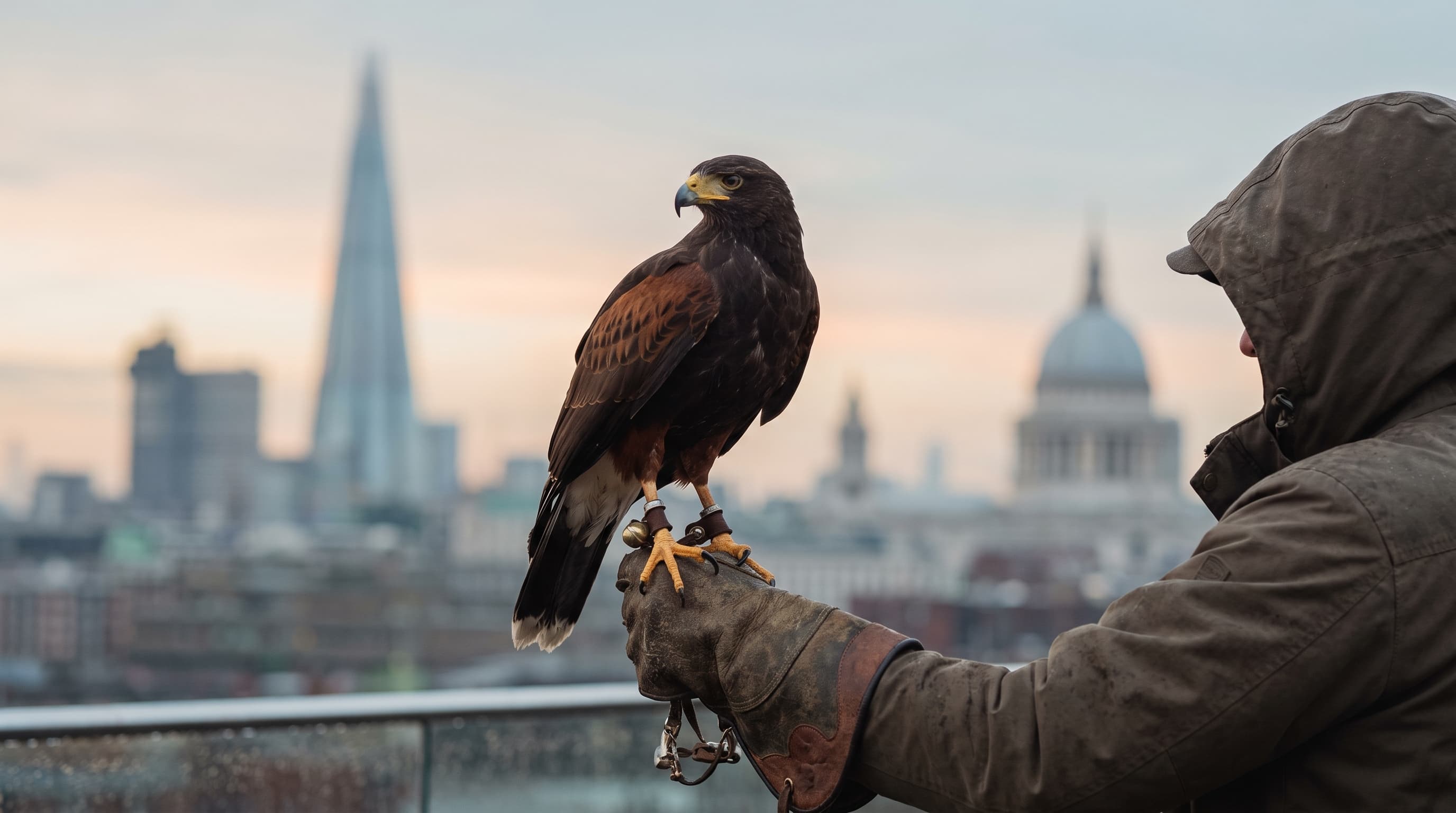
In those cases the answer is behaviour rather than hardware. Flying a hawk over a site does not harm the birds; it re-establishes the presence of a predator, and pigeons and gulls relocate their roosting and nesting elsewhere because the site stops reading as safe. It is not a single visit and it is not permanent on its own, which is the part worth being straight about before anybody buys it.
The sites this is for
Listed buildings and conservation-controlled facades
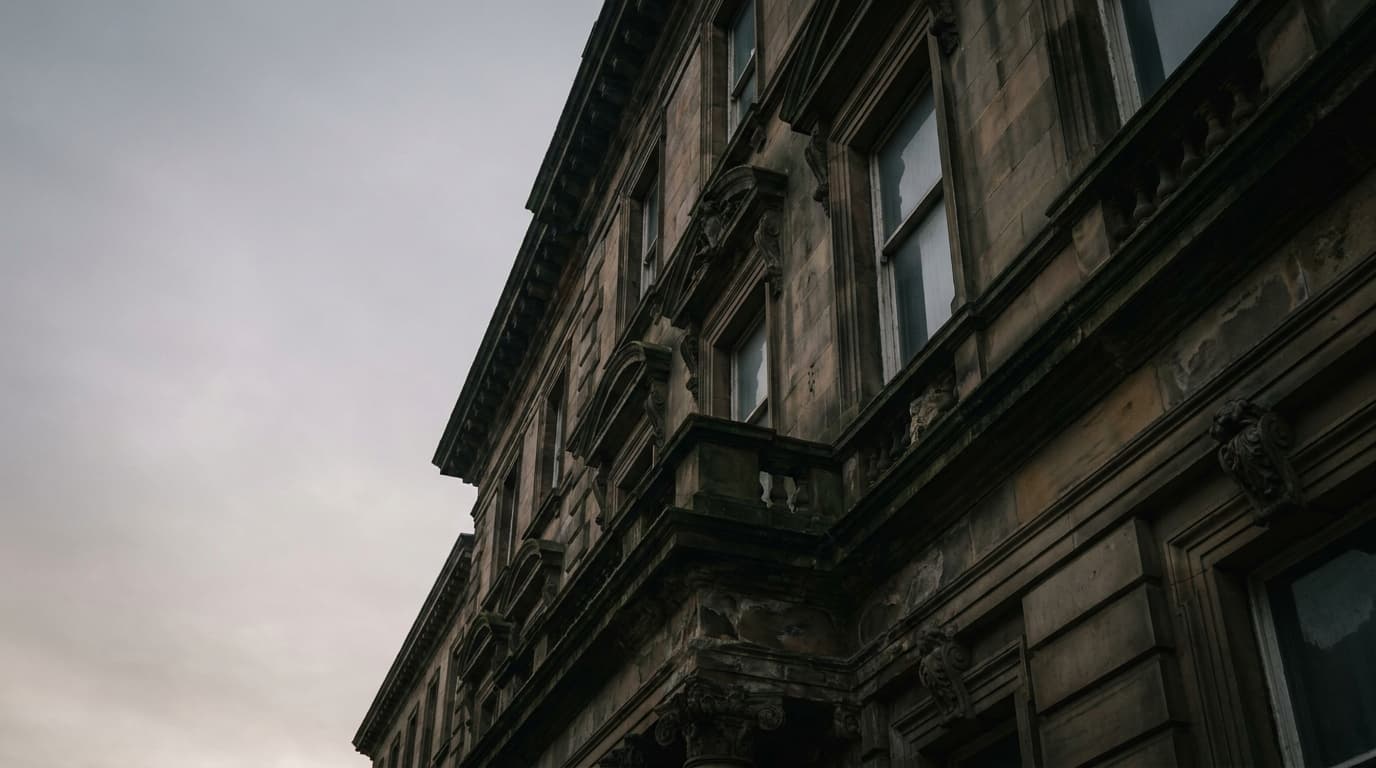
Where fixings into historic fabric are refused or restricted, the usual proofing specification is simply unavailable. Hawking leaves no fixings and no visible installation at all, which makes it one of very few options that a conservation officer has no basis to object to. Where some proofing is permitted, the sensible answer is usually a combination: minimal reversible fixings on the elevations that allow them, and hawking over the ones that do not.
Live construction and refurbishment sites
A site whose shape changes every fortnight cannot be proofed conventionally, because anything installed is obsolete by the following phase. It is also the point at which birds are most likely to colonise: open structures, exposed ledges, no occupancy and often standing water. Hawking suits it because it moves with the site, and because scaffolding and open elevations that would make an install awkward make no difference to a bird of prey.
High-end and reputation-sensitive properties
Hotels, private estates, headquarters buildings and anywhere the elevation is part of the asset. The objection to proofing here is rarely technical, it is that it looks like proofing. Hawking is invisible when it is not happening and, handled discreetly, most occupiers never know it is scheduled. Flights are timed around occupancy rather than around our convenience.
Solar arrays
Pigeons nesting beneath panels is one of the fastest growing bird problems in the country, and it damages output as well as the roof: fouling, blocked drainage, chewed cabling and lost generation. Netting or mesh at the panel edge is usually the right permanent answer, and British Bird Control within our group specialises in it. Hawking has a role where an array sits on a building that cannot be worked on immediately.
Gulls, which are a different problem from pigeons
Gulls are larger, bolder, protected in ways that constrain what may be done during nesting, and far more persistent about a roof they have used before. Proofing designed for feral pigeons will not hold them. This matters most between spring and mid-summer, and the honest advice is usually that the work should have started earlier in the year.
When we will tell you to net instead
If the structure can take fixings, the geometry is stable and nobody objects to the look of it, netting or spikes will cost less over five years than a flying programme and will not depend on anybody turning up. We will say so. Hawking is the answer to a constraint, not an upgrade, and selling it to a site that could simply be proofed would be selling the wrong thing.
Four companies in one group do this work
Bird work is the one discipline where the Tyro UK group fields four companies rather than one: our own falconry and proofing teams, and JG Pest Control, Integrum Services and British Bird Control alongside them, covering netting, spikes, proofing, guano and specialist cleaning, and solar panel pigeon proofing. You contract with Nightshift and we call on whichever of them the job needs.
Common questions
Where do construction firms get hawking services for bird management?
From a contractor that flies its own birds rather than subcontracting the flight, because on a live site the scheduling has to bend to the programme rather than the other way round. Nightshift operates its own falconry team. On construction specifically the two things worth asking any provider are how flights are scheduled against phase changes, and what happens between flights, because hawking is a programme rather than a visit and a gap in it is when birds return.
Who offers discreet hawking solutions for high-end properties?
Discretion is a specification rather than a promise, so it is worth pinning down. In practice it means unbranded arrival where wanted, flights timed around occupancy and events rather than around the contractor's diary, and reporting that goes to the person who commissioned it rather than circulating. We work nights as standard across the business, which makes early and out-of-hours flying ordinary here rather than an exception.
Can bird spikes be installed on listed buildings?
Sometimes, and it depends entirely on the fixings and the elevation rather than on the listing alone. Where fixings into historic fabric are refused, the realistic options are reversible systems on the elevations that permit them and hawking over the ones that do not. Anyone who tells you spikes are always fine on a listed building, or always impossible, is not describing the actual test being applied.
Does hawking actually work, or does it just move birds next door?
It works by moving them, which is the honest answer. A hawk flown over a site re-establishes a predator presence and the birds relocate their roosting and nesting. That is the mechanism, not a side effect. It means two things: the effect is not permanent without a programme, and the objective is to make your structure less attractive than the alternatives nearby. Where a permanent physical answer is available, that is usually better value.
Is hawking harmful to the birds?
No. The birds are dispersed rather than caught. The hawk is trained, flown under control and worked to move a population off a structure rather than to hunt it, which is why hawking is generally acceptable in settings where lethal control would not be.
How quickly does it work?
Dispersal usually begins immediately and establishment takes a programme of flights over weeks rather than a single visit, with frequency reducing once the site is holding. Anyone quoting one flight for a settled colony is quoting the wrong job. Where nesting is already under way the timing constraints of the season may also decide what can be done and when.
Related: falconry bird control in London, building proofing, heritage estates, and stadiums and large venues.
Send us the elevation, not just the problem
Surveys, quotations and advice are free and without obligation. Photographs of the affected elevations tell us more than a description does, and they are usually enough for us to say whether this needs hawking at all or whether proofing would serve you better and cost less.
Arrange a survey