


Nightshift Pest Control
News & analysis ·
Bed bugs are having a season in the press. The Times reported this week that Britain has hit what it called peak bedbug, with infestations rising on trains and in offices, and a grounded flight made the news on the same day. The coverage is about where they are turning up. The question we get asked is narrower and more urgent: somebody has just reported bites at work, and what do we do today.
We have not surveyed any of the buildings in those stories and will not diagnose them from news reports. What follows is what the first day looks like when it goes well, drawn from commercial work rather than from the coverage.
The two instincts that cost you weeks
The first instinct is to clean. A deep clean is ordered, often that afternoon, and it feels like doing something. On bed bugs it is close to the worst opening move. Vacuuming and moving furniture disperses an aggregation that was, until that morning, sitting in a handful of seams you could have found. After a clean, the same number of insects are spread across a wider area, the evidence a surveyor needs has been removed, and nobody can now tell you where it started.
The second instinct is to tell everyone. An all-staff email asking people to report bites produces a flood of reports, most of which are not bed bug bites, because bites are a notoriously unreliable indicator and people who have been told to look will find something. You then have forty reports, no map, and a workforce that is frightened. The useful version of that message comes later, once you know what you are dealing with, and it says something specific.
What the first day is actually for
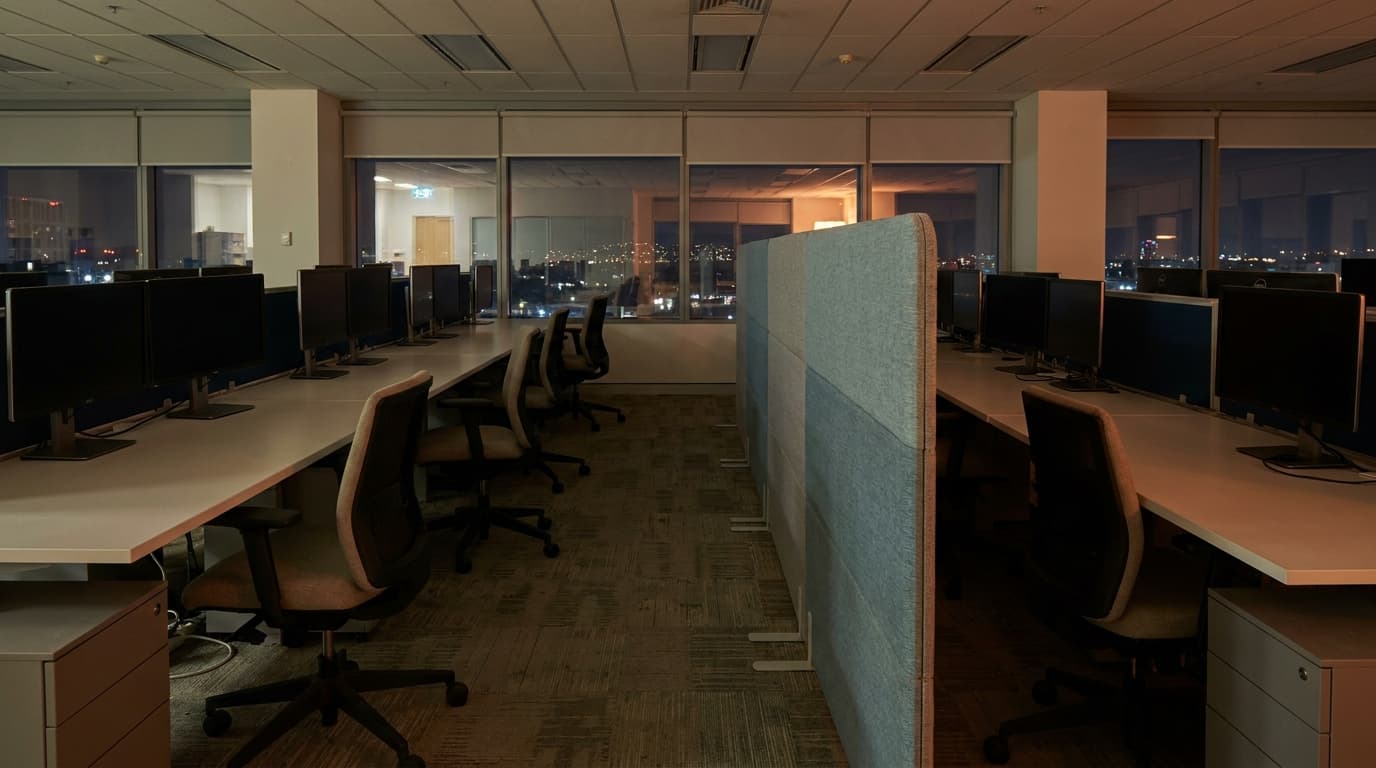
One thing: finding the unit of the problem before anyone disturbs it. In a workplace that means the furniture rather than the people. Bed bugs in an office live in the seams and foam of upholstered task chairs, the underside of desks, the joints of soft partition screens, and the undisturbed warmth around cable trays and power boxes. On a train or a coach it is the same object in a different building: an upholstered seat, with a seam, that is warm and rarely lifted.
So the first day is a survey, not a treatment. Leave the chairs where they are. Do not clean. Note which desks reported, and treat that as the start of the search rather than the extent of it, because the person who reports is the person who reacts to bites, not necessarily the person sitting nearest the problem.
Canine detection earns its place here, and not for the reason people expect
Scent-trained dogs are usually sold on finding bed bugs. In a workplace their commercial value is more often in the areas they CLEAR. A dog that rules out four of five floors turns an open-ended problem into a defined one, and lets four floors carry on working while one is dealt with. Indications are confirmed visually by a technician before anything is treated, because a dog narrows the search, it does not sign off the job.
Ours are in-house rather than subcontracted, which matters on the first day for a dull reason: availability. A search that happens tomorrow morning is worth more than a better search next week.
Then treat when the building is empty
The reason this sits with us is scheduling rather than chemistry. Treating an office means moving and working through furniture across a floor plate, and no business wants that happening around its staff, its customers or its reputation. Nightshift works nights as its standard shift rather than as a call-out, so a floor is treated after it empties and is back in use for the morning, and out-of-hours attendance carries no surcharge because it is not out of hours for us.
Attendance is discreet and vehicles are unbranded. On a reputation-sensitive site that is not a nicety; it is frequently the deciding factor in whether a treatment happens quickly or waits for a quiet week that never comes.
What to tell staff, when you tell them
Once you know the shape of it, the message that works is specific and unembarrassed: which area is affected, what is being done, when, and one practical line about bags. Bed bugs leave a building in bags and coats, and a workplace outbreak that reaches homes stops being a facilities problem and becomes forty of them. Keep bags off upholstered furniture at work and off beds and sofas at home, and ask people to say if they think they have taken something home rather than deal with it quietly. Asked without blame, that question gets answered honestly, and you hear about the first flat instead of the fifth.
The questions worth asking whoever you call
What is the unit being treated, the furniture across the floor plate or the desks that reported. When does the work happen, and does it fit the hours the building is genuinely empty. What monitoring goes in afterwards, where, and what result reopens the floor. Every visit should produce a written report the same day, because the thing that ends an outbreak on paper is evidence, and the thing that ends it in practice is not stopping too early.
What this means for your site
If bites are reported at work today: do not deep clean, do not email everyone, and do not treat the reported desks as the boundary. Survey first, while the furniture is undisturbed, and treat when the building is empty. Nightshift surveys and quotes commercial premises at any hour, with canine detection in-house and treatment worked overnight so the floor is back in use in the morning.
Sources
- The Times, infestations rising on trains and in offices (13 October 2026)
- BBC News, flight grounded after a bed bug outbreak (13 October 2026)