

- Crystal Palace Park
- Anerley Road
- Betts Park
- Anerley station
- Croydon Canal route
The second thing is subdivision. Much of this stock is now flats, and conversion rarely stopped at the front door: soil pipes were re-routed, floors were opened and closed, and party walls were penetrated for services in decades of separate works by different builders. That leaves a building that reads as several homes from the street and behaves as one continuous void inside, which is why activity spreads between flats that share nothing except an address.
The railway edge is the third. Embankment and cutting alongside the line give a permanent, undisturbed corridor with cover and water, running the length of the district and belonging to nobody who lives here. Rear gardens back directly onto it in long runs, and the boundary between the two is where the pressure originates rather than in anybody's kitchen.
Nightshift works this the way the stock is actually built: survey at terrace and street level rather than at the reported address, camera the drainage where activity keeps returning, and say in writing where the defect sits even when it is on a neighbour's title or a water company's. Technicians are on shift through the night, appointments are booked directly with residents, and every visit produces a written report the same day.
The building stock
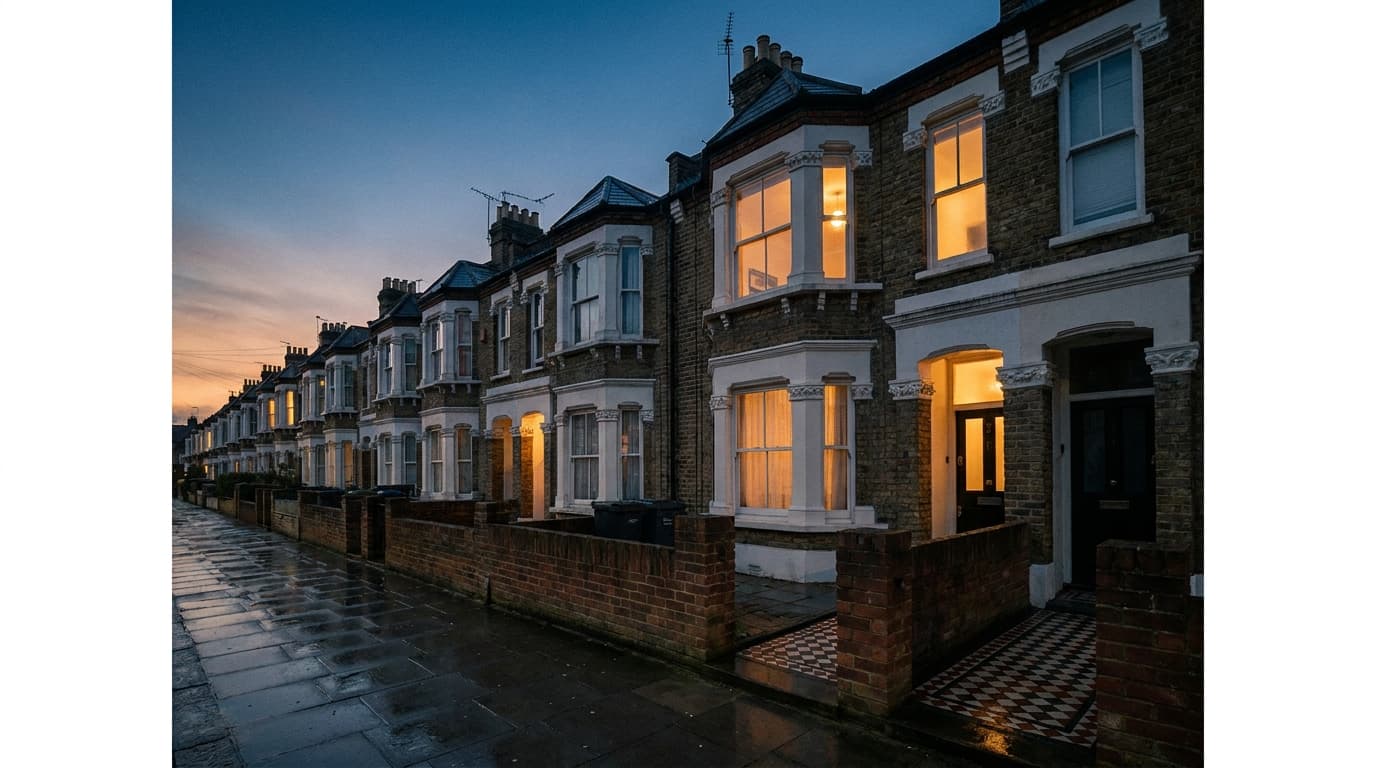
Victorian and Edwardian terraces and semis running across a pronounced slope, a large share converted into flats over many decades of separate works, sitting over cellars and ventilated suspended floors on original shared drain runs, with a modest high street of small retail and food units in similar stock, and long rear gardens backing onto railway embankment and cutting.
Where the pressure comes from
Original drain runs following the slope
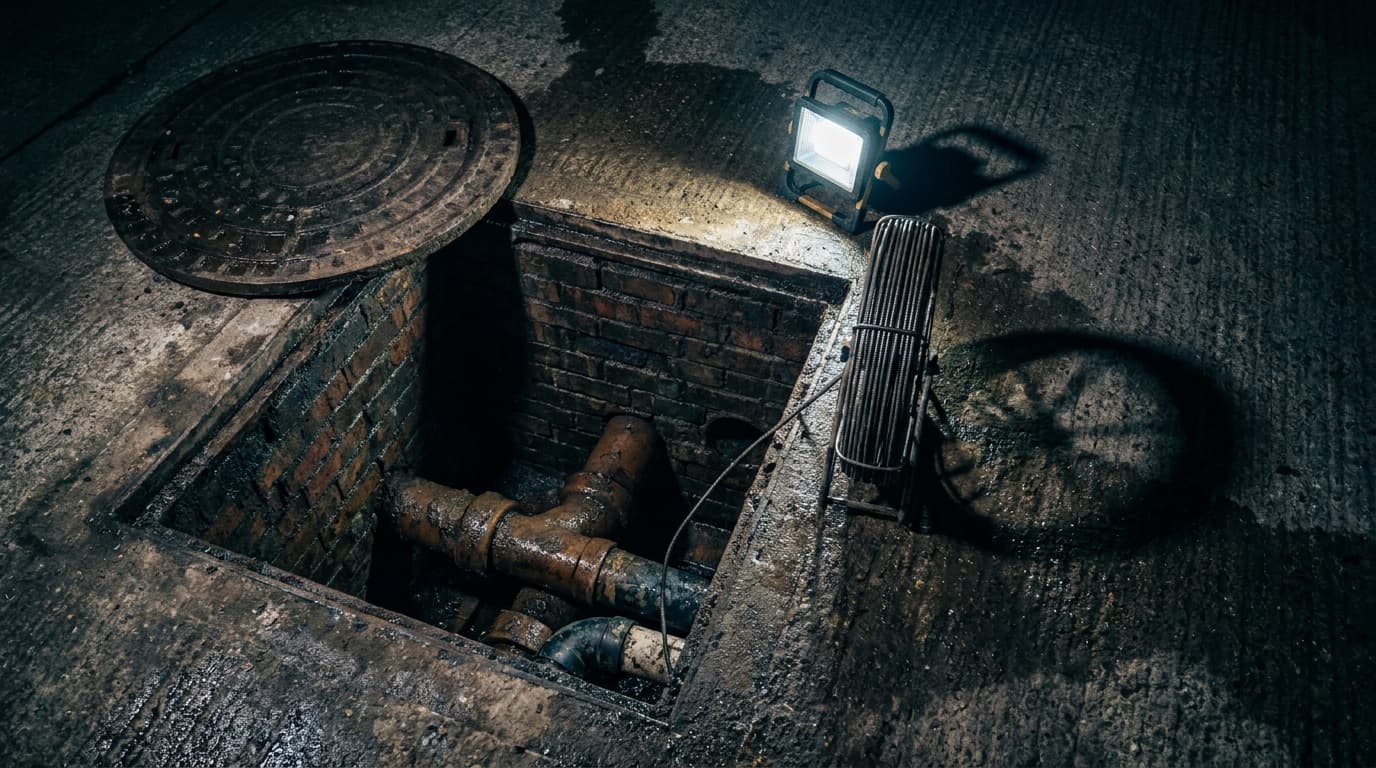
Drainage here was laid to the gradient and serves several properties in sequence. A fracture, a displaced joint or a redundant branch anywhere along that line gives access to every connected building below it, which is why one household treating alone rarely stays clear. Where activity keeps returning at multiple addresses we recommend a camera survey before anything else, because the answer is usually a defect rather than a treatment.
Conversions that never closed what they opened
Flat conversions across this stock happened piecemeal, and each set of works left service penetrations through party walls, floors and ceilings. The building looks divided and is not. Sealing at each dwelling is what confines a problem to the flat that has it, and it is almost always missing in stock converted before anybody thought about it.
The railway boundary
Embankment and cutting provide continuous cover, water and an undisturbed route the length of the district, and no resident controls it. Gardens backing onto it are the interface, so proofing and clearing along that rear boundary does more here than anything placed inside the house.
Suspended floors over bare earth
A ventilated void running the full footprint of the building, reachable through defective air bricks and service entries, and completely undisturbed. Bait laid in the kitchen above it addresses none of that. The void has to be opened, inspected and then properly closed, and in stock of this age that inspection frequently finds timber decay nobody had budgeted for.
High street yards against back gardens
The parade's rear service areas sit a fence panel from domestic gardens, so commercial waste and residential cover form one continuous corridor. Residents and businesses each experience it as the other's fault, and it resolves fastest when one contractor holds both sides of that fence.
Who we work for in Anerley
- Landlords, letting agents and block managers
- Housing associations and registered providers
- Independent cafés, takeaways and small food retail
- Pubs and licensed premises
- Schools, nurseries and community halls
- Homeowners in converted and period stock
Common hotspots
- Shared drain runs, gullies and rodding eyes down the slope
- Underfloor voids, air bricks and cellar steps
- Party wall and floor penetrations in converted flats
- Rear boundaries backing onto railway embankment
- Communal hallways, meter cupboards and bin areas
- Loft junctions between terraced pairs
- High street rear yards and grease traps
- Garden decking, sheds and compost
- Void flats standing empty between tenancies
Questions we are asked in Anerley
- Our neighbours have rats too. Does treating one house work?
- Not for long if the source is shared, and on this slope it usually is. Where several addresses along a terrace report at once, the drainage and the rear boundary are the things to look at rather than the individual kitchens. We will say plainly in the report where the defect sits, including when it is not on your property.
- We hear something under the floorboards.
- Usually we lift a small area or work through an existing hatch, inspect the void, identify the route in and treat where the activity actually is. Once clear, the repair is to the air bricks and service entries so the void stops being reachable. It is also the point at which we can tell you honestly about the timber.
- Can anything be done about the railway boundary?
- Not on the railway itself, which is not ours or yours to work on. What can be done is the interface: clearing and proofing along your rear boundary, dealing with cover and food on your side, and proofing the building itself. That is where the useful work is, and we will be straight that it manages the pressure rather than removing it.
- The flat below says the problem is ours and we say it is theirs.
- In converted stock that argument is usually a symptom of the same thing: penetrations left open between dwellings, so one population uses both. A survey of the void and the service runs settles it, and the report states what was found where, which is more use than either party being sure.
- I run a café on the parade. Will an inspector accept your paperwork?
- Yes. A written report is issued the same day as the visit, RAMS and COSHH are supplied for your file, and we can attend before opening or after close so trading is not interrupted. Nightshift is a BPCA member and CEPA certified.
- Do you treat empty flats before re-letting?
- Yes, and it is the cheapest point at which to do it. With no household to work around, the underfloor void, the drainage connection and the party wall penetrations can all be dealt with properly, and we report what was closed so the next tenancy starts from a known position.
Related services
Pest control across other London districts
Arrange a survey in Anerley
Free and without obligation. Call 01892 871008 or request a survey. We answer 24 hours a day.