

- Parsloes Park
- Valence House
- Becontree station
- Heathway
- Goresbrook
The tenure is the complication. Decades of right to buy have left runs of identical houses in mixed ownership, so a single terrace can contain council tenancies, housing association homes, owner occupiers and private rentals, all sharing a roof space, a party wall and a boundary. A rodent or squirrel problem does not respect that pattern, but the repairs budget does. A provider who treats only the addresses it holds is treating alternate houses in a row that the animal moves through freely.
That is why the work here is surveyed at street and terrace level even when the instruction covers only part of it. We identify where the harbourage and the route actually are, report plainly when the defect sits on a neighbouring title, and give the provider something it can take to the neighbouring owner or to its own repairs team. The alternative is a treatment cycle that resets every time.
The loft is the other thing this stock hides. Interwar roofs run continuously over terraced pairs and short runs, with party wall gaps at the apex, and they carry squirrels, wasp nests and, where felt has failed, birds. Access is through hatches inside occupied homes, so appointments, attempted access and no-access all have to be logged rather than quietly dropped. Nightshift books directly with residents, offers out-of-hours and weekend slots so people who work days are not permanently unreachable, and issues a written report the same day. Timber and woodworm treatment is our own work too, which matters on stock of this age because opening a loft for squirrels regularly finds the decay nobody had budgeted for.
The building stock
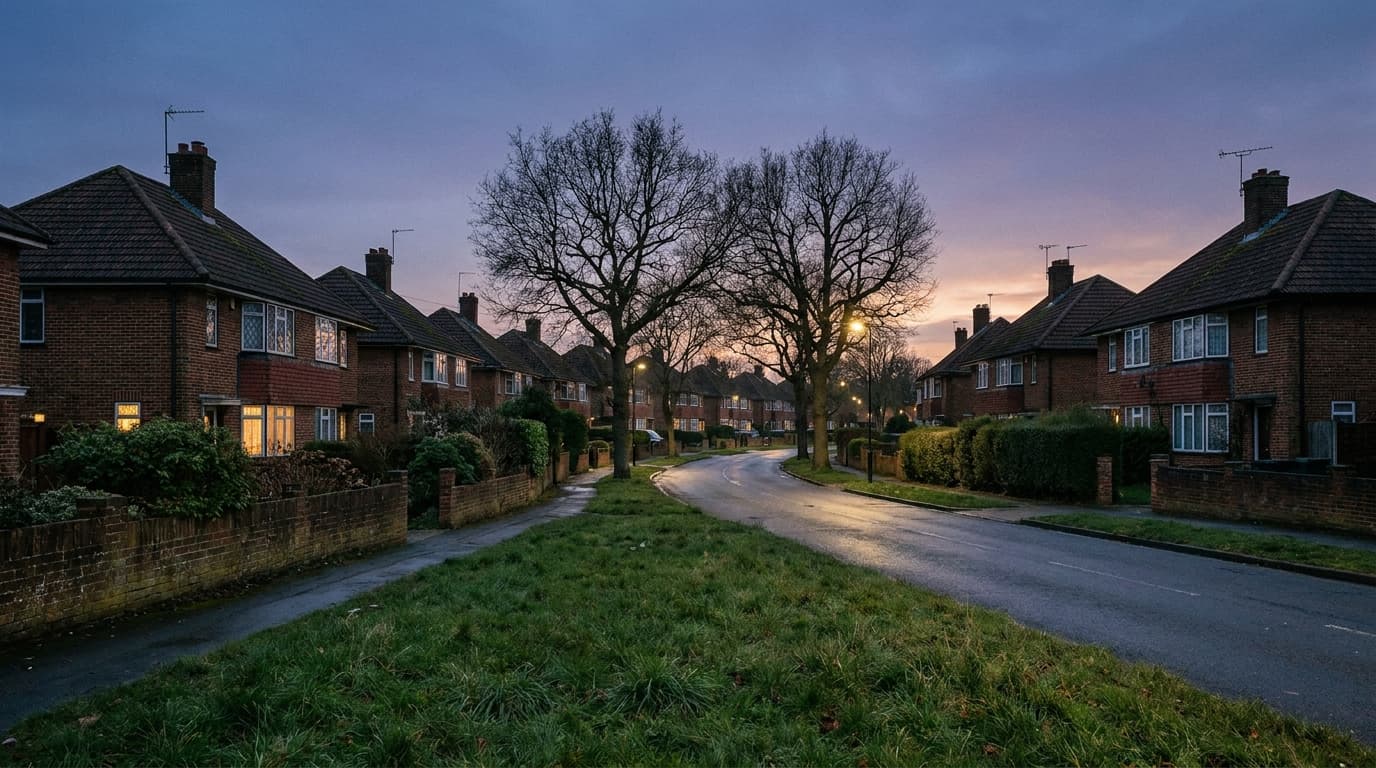
Interwar brick semi-detached houses and short terraces with pitched tiled roofs, continuous loft voids over terraced runs with party wall gaps at the apex, front and back gardens, outbuildings and sheds, service alleys running behind the rear boundaries, cavity walls and suspended ground floors in the earlier phases, now in mixed council, housing association, owner occupier and private rented ownership along the same streets.
Where the pressure comes from
The alley behind the gardens
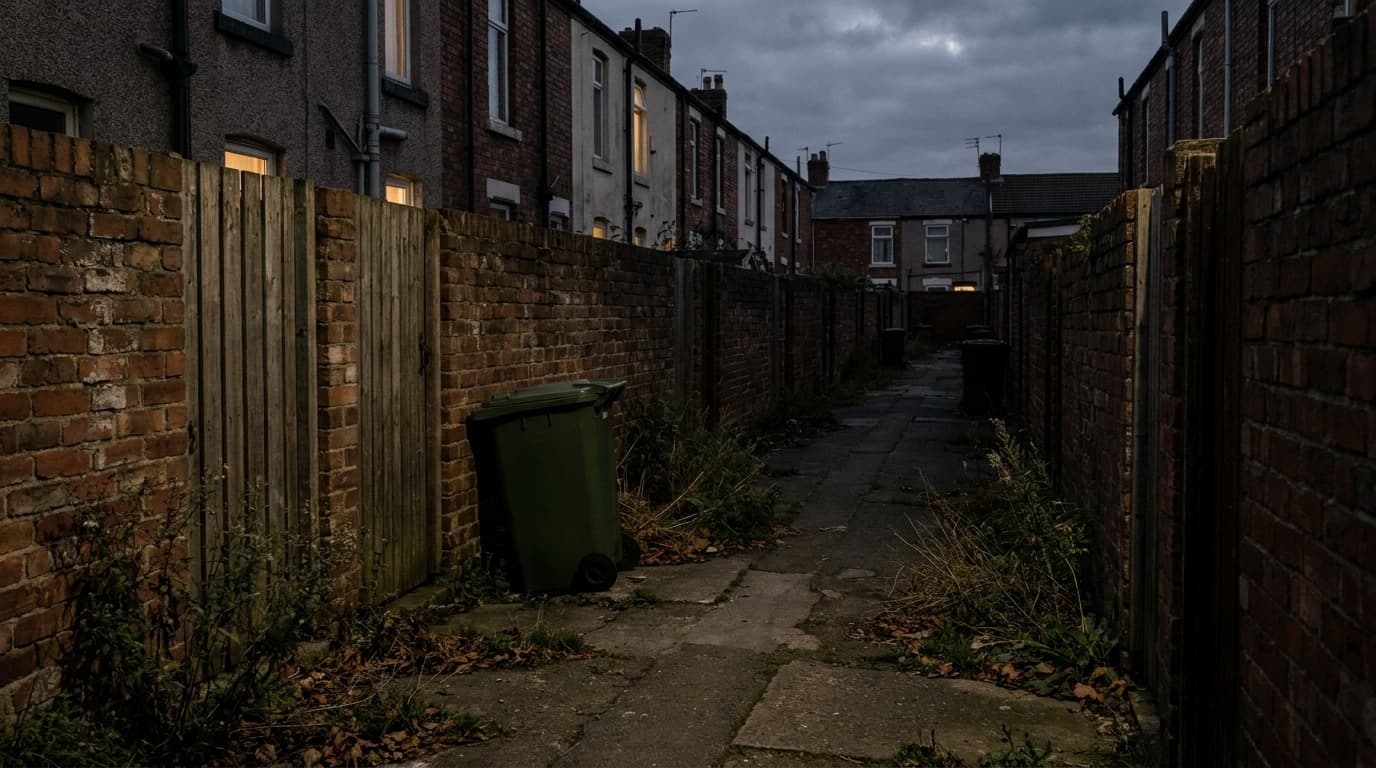
Rear service alleys run continuously behind whole terraces, and where they collect fly-tipped material, overgrowth and bagged waste they become a covered highway with food along it. Residents experience it as somebody else's problem and it belongs to nobody in particular. Clearing and proofing the boundary line does more here than treating any individual garden, and we will say so in writing rather than keep returning.
Mixed tenure along one terrace
Right to buy has left identical houses in different ownership sharing a loft void and a party wall. Treating only the addresses on your list leaves untreated houses in the middle of the run, and the population simply uses them. We survey the terrace rather than the tenancy list and give you a plain statement of which defects sit outside your title, so the conversation with the neighbouring owner can actually happen.
Continuous loft voids and party wall gaps
Interwar roofs were not sealed between properties at the apex, so a squirrel or a wasp nest entering one house has the run of several. Treating the reported loft alone is why the next call comes from two doors down. The route in is usually a lifted tile, a failed soffit or a gap at the verge, and until that is closed the void will be re-entered every autumn.
Gardens, sheds and decking
Sheds, raised decking, compost heaps, bird feeders and stored timber give rodents cover and food within a few metres of the back door, and on this estate those features repeat in every garden along the street. Proofing the house without addressing the harbourage beside it treats the symptom. We advise on both and report what remains, so a housing officer knows what is a repair and what is a tenancy conversation.
Wasps and squirrels on a seasonal clock
This stock generates a predictable seasonal load: wasp nests in loft voids and soffits through late summer, squirrels seeking harbourage in the roof as the weather turns. A provider that handles these reactively spends the season chasing. Proofing the roofline in the quiet months is materially cheaper than attending the same addresses every year, and the survey that identifies it costs nothing extra when we are already in the loft.
Who we work for in Becontree
- Local authority housing and ALMO teams
- Housing associations and registered providers
- Portfolio landlords and letting agents
- Schools, nurseries and community halls
- Local shopping parades and takeaways
- Care homes and supported living providers
Common hotspots
- Rear service alleys and boundary overgrowth
- Loft voids and party wall gaps at the apex
- Soffits, verges, lifted tiles and failed felt
- Sheds, garages and stored timber
- Raised decking, compost bins and bird feeders
- Suspended floor voids and defective air bricks
- Cavity walls at service entry points
- Void properties standing empty between tenancies
- Bin storage at the front boundary and in side returns
Questions we are asked in Becontree
- Half the terrace is ours and half is privately owned. What can you actually do?
- We treat and proof the addresses you instruct, and we survey the whole run so you know what you are up against. The report states plainly where harbourage or a defect sits on a title you do not hold. That gives your housing officer something concrete to take to the neighbouring owner, rather than an unexplained pattern of repeat calls.
- Squirrels are in the loft. Is that a one-visit job?
- The animals can be dealt with quickly. Keeping them out is the actual job, and on this stock it means finding the entry at the soffit, verge or a lifted tile and closing it, plus checking how far the void runs over neighbouring properties. Without the proofing you will see the same loft again the following autumn.
- Residents work during the day and we cannot get access.
- We book directly with residents and offer out-of-hours and weekend appointments, because technicians are on shift through the night rather than called out from home. Attempted access is logged whether or not anyone is in, and no-access is reported back to you rather than dropped, so the record shows what was tried.
- Do you deal with wasp nests across a whole street at once?
- Yes, and on this estate that is usually the sensible way to buy it. The same roof detail repeats along the terrace, so nests recur in the same positions. Treating them together and then proofing the roofline in the quieter months costs less than attending the same addresses every summer.
- We have found woodworm while dealing with a rodent problem.
- We carry out timber and woodworm treatment ourselves, so it does not need a second contractor or a second survey. On stock of this age an open loft or an opened floor void frequently shows decay that nobody had budgeted for, and it is far cheaper to see it while access already exists.
- Can you treat empty properties before re-let?
- Yes. A void is the one point where the loft, the floor void and the external proofing can all be dealt with without working around a household. We report what was closed, so the incoming tenancy starts from a known position rather than inheriting an open route.
Related services
Pest control across other London districts
Arrange a survey in Becontree
Free and without obligation. Call 01892 871008 or request a survey. We answer 24 hours a day.