

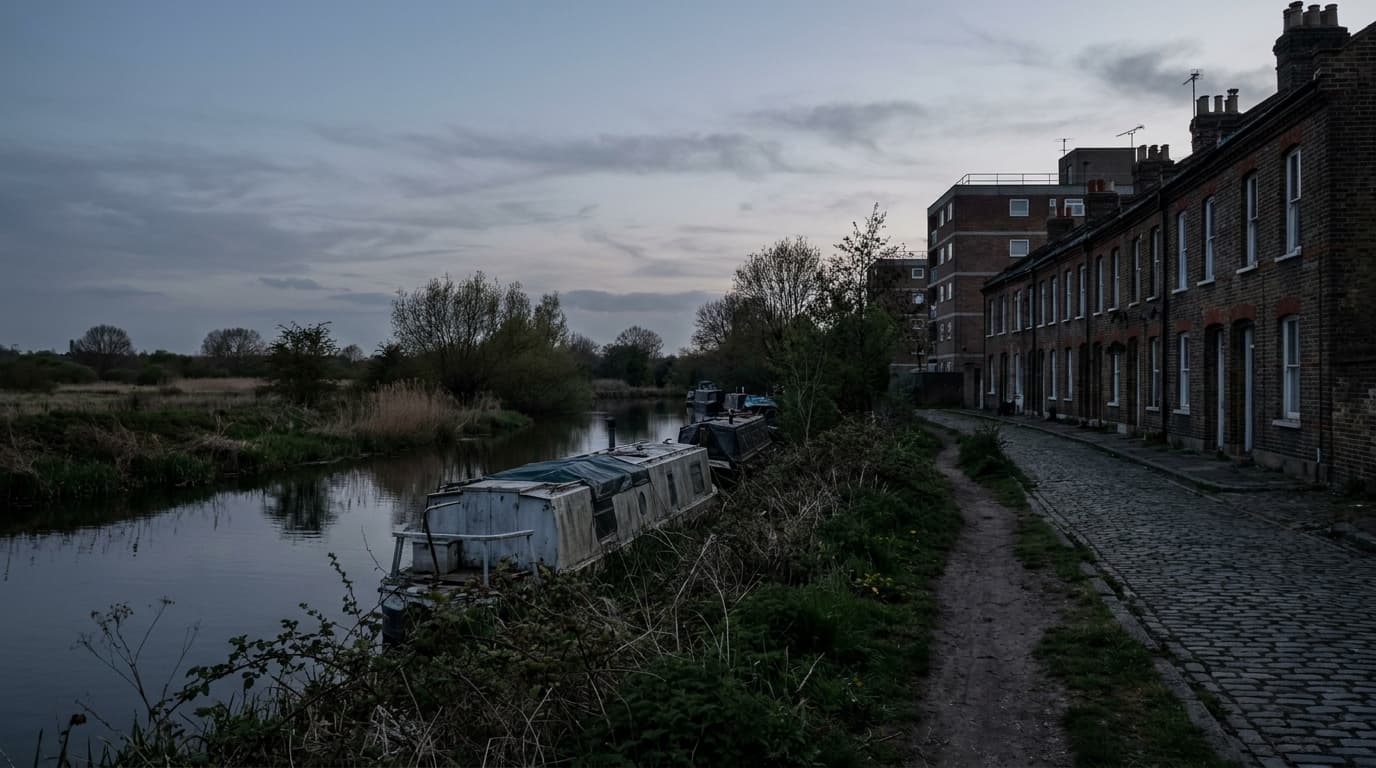
- River Lea and the Lee Navigation
- Springfield Park
- Millfields Park
- Hackney Marshes
- Chatsworth Road
- Clapton Pond
The second fact is how Clapton Park was built and rebuilt. It was laid out from the late 1860s around Chatsworth Road, and by the late 1880s its terraces reached the Hackney Cut. In the 1950s and 1960s the eastern half, nearest the water, was cleared for council estates, and several of the towers built there came down in the 1990s for low rise homes. Walk east from Lower Clapton Road and the stock changes in bands: terrace, then estate, then the Cut and the marsh.
The third is Chatsworth Road. It is still a run of Victorian shop units with flats above, cafés, restaurants and food shops among them, and on Sundays the market trades on the carriageway in front of them. Food is handled on the street one day a week and in the kitchens every day.
Nightshift works Clapton from the water inward. We survey the boundary facing the towpath, park or marsh, look at estate ground and the neighbouring terraces together, and say in writing where a problem comes from when that is somebody else's land. Food businesses are attended before opening or after close. The phone is answered 24 hours a day, technicians are on shift through the night, and every visit produces a written report the same day.
The building stock
Victorian terraces laid out from the late 1860s across Clapton Park, many now flats, with Chatsworth Road's shop units and flats above at their centre; post-war council estates, 1990s low rise homes and garage courts on cleared ground nearest the Hackney Cut; Georgian houses around Clapton Square and Clapton Pond; and along the eastern edge, towpath, moored boats, parks, filter beds and marsh by the Lea.
Where the pressure comes from
A corridor the length of the valley
The towpath along the Lee Navigation is in use all year, so the bankside population has more to feed on than the river alone provides. The river runs unbroken along the valley, and parts of the land beside it are nature reserve, so the population is continuous. The work that lasts is on the buildings and rear boundaries facing the water.
When the Lea runs high
Land around Lea Bridge and Hackney Marsh falls within an Environment Agency flood warning area. When ground by the water saturates, bankside burrows flood and their occupants move uphill to the first dry shelter, which on this slope is the lowest row of buildings. Activity that begins after heavy rain is often that movement, and proofing on the river side is what meets it.
Estate ground between the water and the terraces
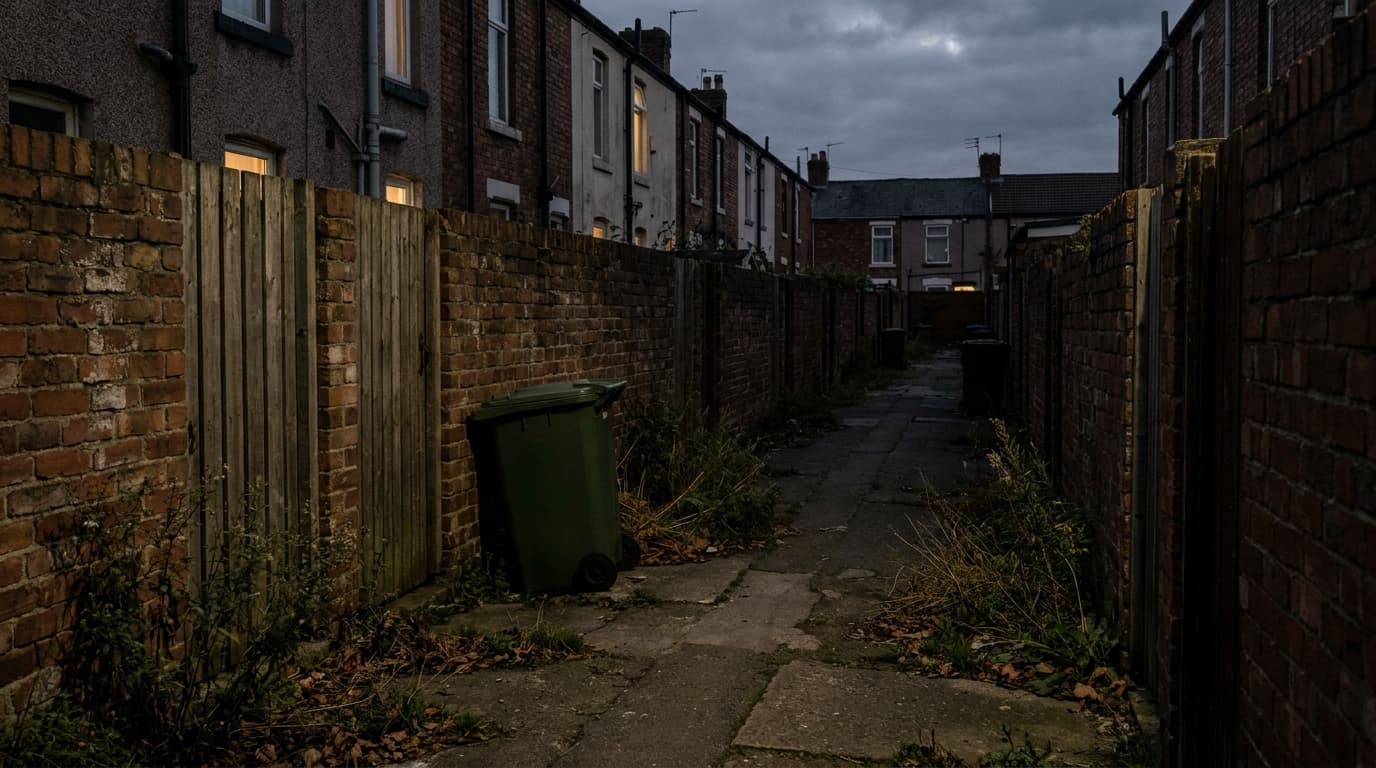
The post-war estates took the ground nearest the Hackney Cut and the Victorian terraces continue to the west, so where the two meet, open space, bin stores and car parks sit against back gardens under different management. Either side can be supplying the other, so the survey crosses that line rather than stopping at it.
Garage courts on the water side
The garage courts sit on the cleared ground nearest the Hackney Cut, so a row of lock-ups can be the first dry, roofed cover between the towpath and people's homes. Garages that stand empty are dry, sheltered, rarely opened and back onto gardens. Surveying the courts nearest the water, and establishing which garages are actually in use, finds cover that no report from inside a flat will point to.
The Monday after the Sunday market
A street market trading on the carriageway puts food and its waste on the same kerbs and gullies at the same hours every week, in front of homes, and a reliable supply like that is one a drain population can exploit. Much is decided at close: waste contained and gullies kept clear. For food businesses beside the pitches, a Monday inspection sees what a midweek one misses.
Who we work for in Clapton
- Housing associations, councils and estate management organisations
- Private landlords and letting agents in converted terraces
- Cafés, restaurants and food shops on Chatsworth Road
- Market traders and street food operators
- Homeowners in Victorian and Georgian houses
- Schools, nurseries and community buildings
Common hotspots
- Rear boundaries facing the towpath, parks and marsh
- Ground floor homes and bin stores nearest the Hackney Cut
- Garage courts, lock-ups and estate car parks
- Estate open space against terraced back gardens
- Kerbs, gutters and drain gullies along market pitches
- Rear yards, grease traps and bins behind food shop units
- Air bricks, door thresholds and drain connections on the river side
- The lowest buildings on the slope after heavy rain
- Basements and area steps in Georgian houses
Questions we are asked in Clapton
- Is there 24 hour pest control in Clapton?
- Yes. The phone is answered 24 hours a day, including weekends and bank holidays, and technicians are on shift through the night rather than called out from home, so a night visit in Clapton is the normal shift rather than a premium. A written report follows the same day.
- Our garden backs onto the towpath. Will the rats ever stop?
- Not while the river corridor keeps supplying it. The towpath is used all year and a stretch cleared at Clapton refills from the next, and that is outside your fence. Inside it, the work is proofing the house, closing gaps under fences and sheds, and monitoring the rear boundary so a change, especially after heavy rain, is caught early.
- Activity started after heavy rain. Is that connected?
- It can be. Ground by the Lea saturates, bankside burrows flood, and whatever lived in them heads for the nearest dry shelter, which on this slope means the lowest buildings. Check the timing against the weather, then have the air bricks, drain connections and thresholds on the river side inspected.
- Our terrace backs onto an estate and each side says the problem is the other's.
- On this slope the direction matters. Estate ground sits between the terraces and the Hackney Cut, so activity from the water often reaches estate bin stores and open space first, but a garden with cover and food can supply the estate as easily. We inspect your boundary and, where access allows, the ground and bin stores nearest you, and the report records which side the evidence sits on.
- We trade at a street market and run a kitchen on the same road. What do you provide?
- A written report issued the same day as the visit, RAMS and COSHH for your file, and attendance before you open or after you close. We also look at the rear yard, the drain connection and the kerb outside, because market trading puts food in front of the unit as well as inside it. Nightshift is a BPCA member and CEPA certified.
- Can you work across a whole estate rather than one flat at a time?
- Yes. An estate programme surveys the shared ground, garage courts, bin stores and the boundary facing the water as well as the homes themselves. Appointments are booked directly with residents, attempted access is logged whether or not anyone is in, no-access is reported back to you, and empty homes can be treated and proofed before they are let again.
Related services
Pest control across other London districts
Arrange a survey in Clapton
Free and without obligation. Call 01892 871008 or request a survey. We answer 24 hours a day.