

- Elephant Park
- Walworth Road
- New Kent Road
- Elephant and Castle station
- Burgess Park
Ground works are the first consequence. Demolition, service disconnection and the opening of long-buried drainage displace established rodent populations rather than remove them, and they move into whatever occupied structure is nearest. Residents in a block that has been quiet for years begin reporting, and nobody connects it to the site next door because the two are managed by different organisations entirely.
The second is handover. A new tower arrives with its own set of defects, and they are construction defects rather than hygiene failures: service penetrations left unsealed above ceilings, temporary voids never closed, basement and plant room door seals never adjusted, refuse rooms sized to a design assumption rather than to how the building is used. Activity in a two-year-old building is almost always one of those, and identifying it as a defect rather than absorbing it as a cleaning cost is worth real money while it is still somebody's liability.
The third is tenure. Social rent, shared ownership and private sale inside one block means the freeholder, the managing agent and a registered provider each hold part of the building, and pest problems fall into the seams: risers, podium decks, refuse rooms. Nightshift works to whoever instructs us, surveys the whole building regardless, and states in the report where a defect physically sits so the gap is visible rather than argued about. Technicians are on shift at night and every visit produces a written report the same day.
The building stock
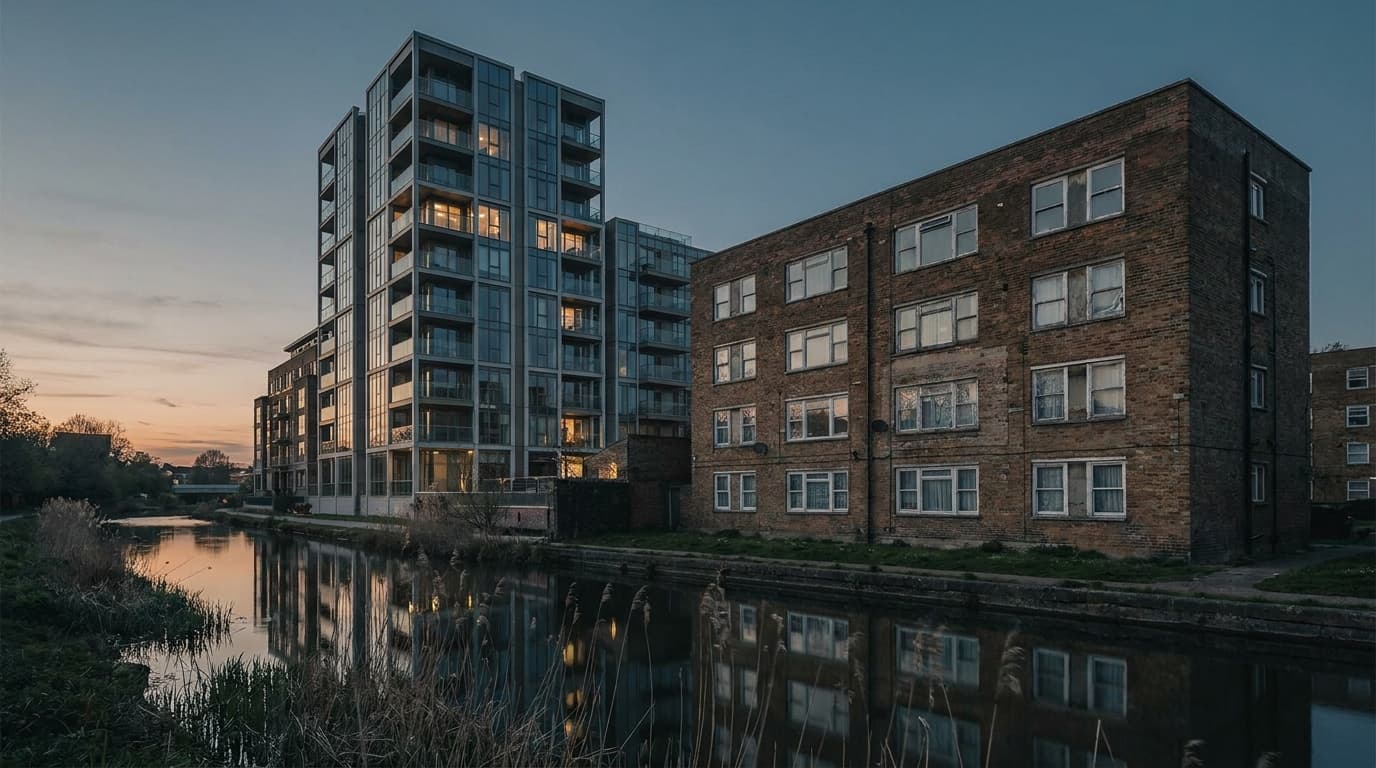
Recent residential towers with podium decks, basement car parks and plant rooms, standing beside post-war local authority estates with shared riser shafts, refuse chutes and communal stores, sections part decanted or awaiting demolition, active construction phases adjoining occupied homes, mixed social rent, shared ownership and private sale tenure within single buildings, and ground floor retail and food units beneath residential above.
Where the pressure comes from
Ground works move populations into occupied blocks
Demolition, service disconnection and the opening of old drainage push established rodents into the nearest occupied structure. Reports then appear in blocks that have been quiet for years and nobody links them to the works. Programming treatment against the demolition sequence, and treating the boundary between the live site and occupied homes, prevents one phase of works generating a year of complaints.
New build defects mistaken for hygiene failures
Unsealed service penetrations above ceilings, temporary construction voids never closed and basement door seals never adjusted are the usual cause of activity in a recent building. It presents as a resident problem and it is a construction one. Identifying and photographing the defect lets a managing agent raise it while it is still within somebody's liability rather than absorbing it as a recurring cost.
Chutes and riser shafts in the older blocks
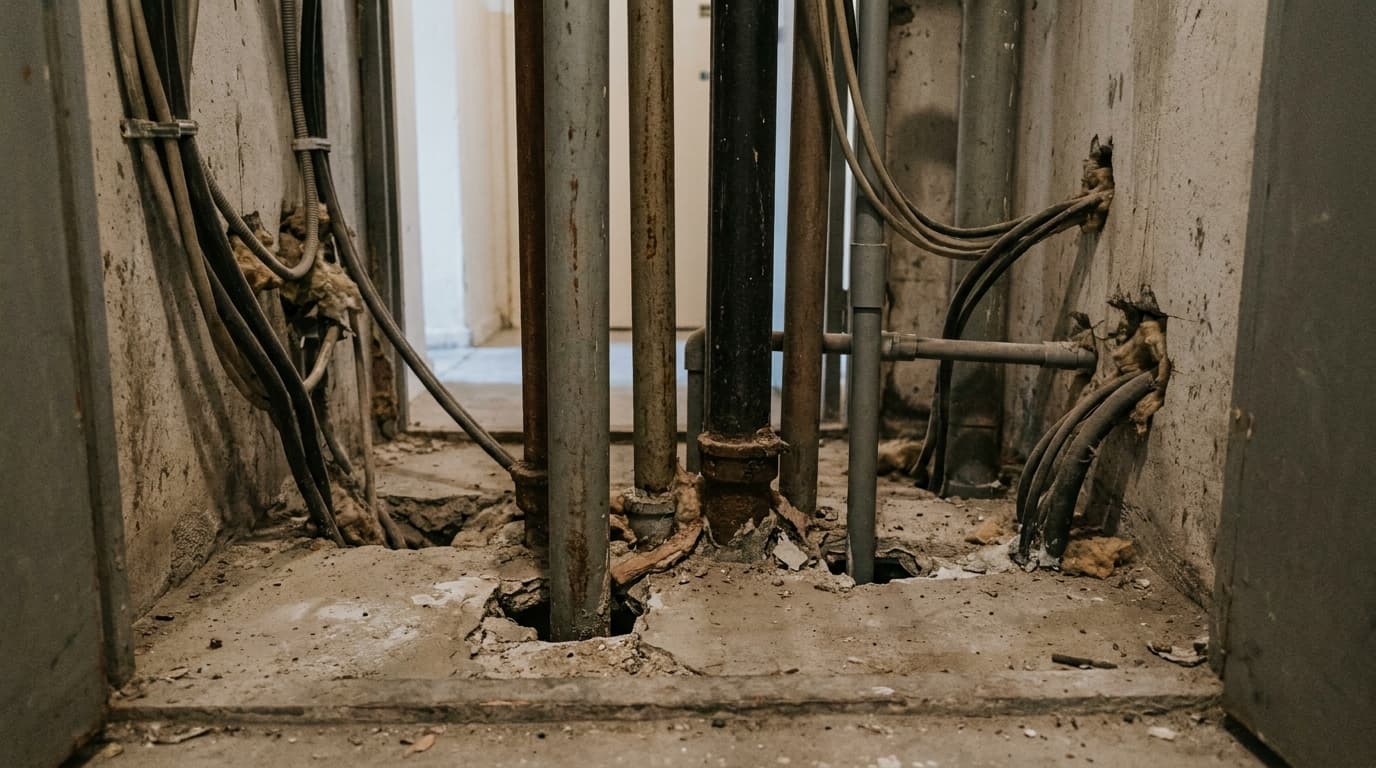
The post-war stock here concentrates waste into a chamber at the base of a shaft reaching every floor, and connects dwellings that share no wall. Hopper doors, the chute itself and the chamber below need to be in the programme rather than left to cleaning, and during regeneration reduced caretaking makes them the first thing to fail and the last to be noticed.
Mixed tenure and the responsibility gap
Social rent, shared ownership and private sale inside one block means several parties each hold part of the building, and problems fall into the seams. Our report states where the defect physically sits, which turns an argument about who pays into a question with an answer.
Voids accumulating during decant
A part decanted block gathers empty dwellings faster than they can be individually managed, each unheated, unwatched and connected to its neighbours. Left to accumulate they become the harbourage supplying the occupied half of the same building. Treating and proofing them as they are created is materially cheaper than batching them at the end.
Who we work for in Elephant and Castle
- Managing agents and block management companies
- Housing associations and registered providers
- Local authority housing and regeneration teams
- Residential developers and aftercare teams
- Demolition and construction contractors
- Ground floor retail, cafés and food businesses
Common hotspots
- Boundaries between live construction and occupied blocks
- Service penetrations above ceilings in recent buildings
- Basement car parks, plant rooms and door seals
- Refuse chutes, hopper doors and chamber bases
- Riser shafts and pipework penetrations between floors
- Podium decks, terraces and balcony edges
- Void dwellings accumulating during decant
- Opened or abandoned drainage runs during ground works
- Ground floor retail and food waste areas
Questions we are asked in Elephant and Castle
- Our block has started reporting rats and nothing has changed inside.
- Look at what has changed outside. Ground works and service disconnections nearby displace populations into the nearest occupied structure, and the timing is usually the giveaway. We survey the boundary between the works and your block, treat that line rather than only the reported flats, and can set the programme against the construction sequence so the next phase does not repeat it.
- The building is only a few years old. How can we have a problem?
- Age is not the protection people assume. In recent buildings the usual cause is a construction defect: an unsealed service penetration, a void left from the fit-out, a basement door seal never adjusted. We find and photograph it, and write the report so you can raise it as a defect rather than absorb it as a cleaning failure.
- Who should be instructing you on a mixed tenure block?
- Whoever holds the instruction, and we work to that. What we always do is survey the whole building and state where the defect physically sits, so if it falls in the seam between freeholder, agent and registered provider the report makes that visible instead of leaving it to be argued about afterwards.
- We have a lot of voids in a block that is still half occupied.
- Then the voids are supplying the occupied half. Treat and proof them as they are created rather than batching them at the end: access is unrestricted in an empty dwelling, so the service penetrations, duct entries and chute connection can be closed properly, and we report what was closed on each.
- Caretaking has been reduced during the works. Does that affect you?
- It changes what we have to cover. Where cleaning and caretaking thin out, the chute chambers and refuse stores fail first and are noticed last. We include them explicitly and report their condition, so a reduction in one service does not quietly become a pest problem nobody owns.
- Can you work without disturbing residents?
- Yes. Technicians are on shift through the night rather than called out from home, so decks, stair cores, chute chambers and riser shafts are surveyed and treated outside the hours residents are moving through them. The written report is issued the same day regardless.
Related services
Pest control across other London districts
Arrange a survey in Elephant and Castle
Free and without obligation. Call 01892 871008 or request a survey. We answer 24 hours a day.