

- Lincoln's Inn Fields
- Hatton Garden
- Leather Lane
- Bedford Row
- Kingsway
- Holborn station
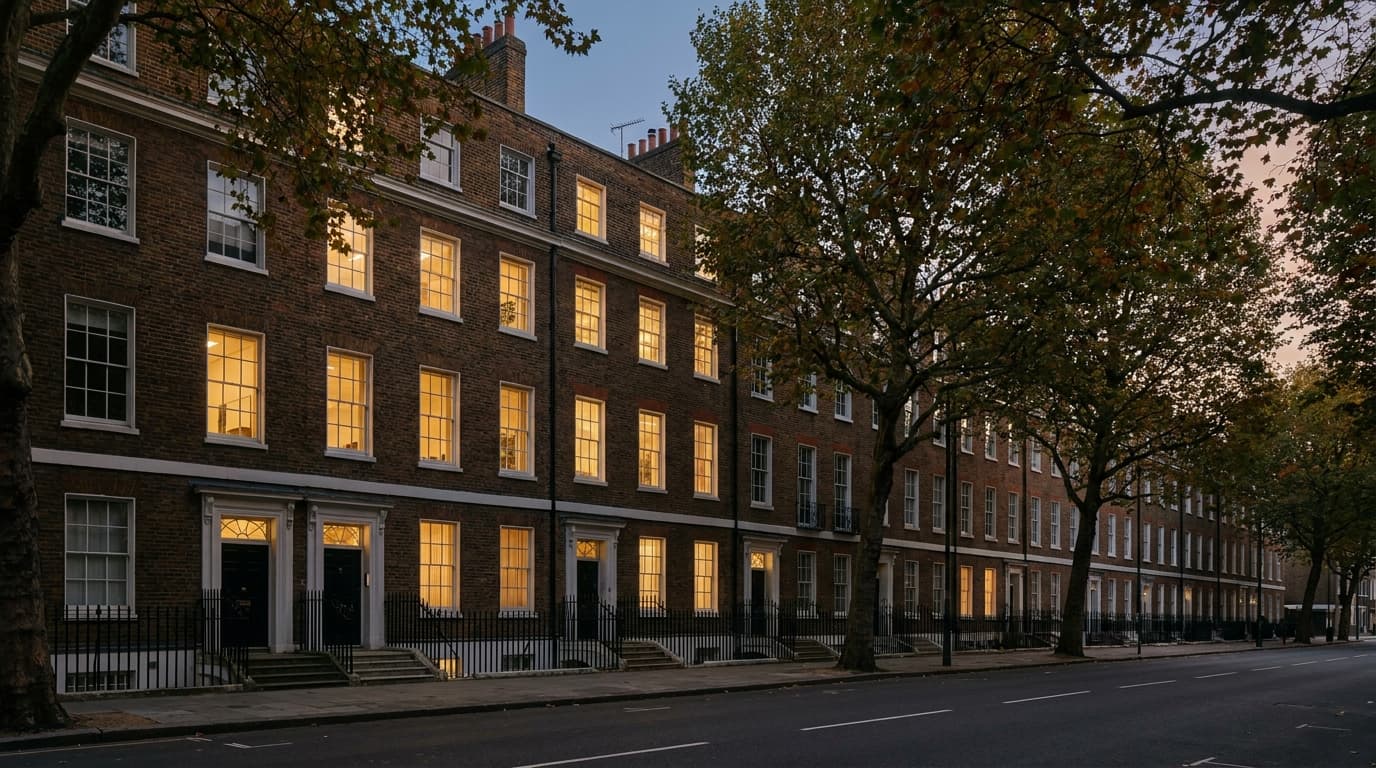
Many practices here occupy early eighteenth-century terraces, and houses of that age keep panelled rooms, disused fireplaces and timber floors over joist voids, now threaded with office cabling. Each is a concealed route between rooms and storeys. Much of the stock is listed, so a survey cannot strip a wall to trace a route, and proofing has to be something the building is permitted to carry.
East of Gray's Inn Road the trade changes. Hatton Garden is the jewellery quarter, with showrooms at street level and setters, casters, engravers and dealers working above and below them, much of it behind secured doors in separately let units. Leather Lane runs parallel a block to the west and on weekdays holds a street market, a good deal of it hot food and crowded at lunchtime, with stalls lining both sides of the road. A programme in secured workshop buildings has to reach rooms that are seldom opened.
Nightshift works Holborn at night, but the night is arranged rather than assumed. We work to your access arrangements, whether they run through the clerks, a building manager or the security desk. Access to workshop units is arranged in advance, and attempted access is logged whether or not the door opens. File stores and panelling voids are part of the survey, proofing on listed interiors is specified to suit the fabric, and every visit produces a written report the same day. Nightshift is a BPCA member and CEPA certified.
The building stock
Early eighteenth-century terraces on Bedford Row and Great James Street, most of them listed, Bedford Row largely occupied by legal firms and Great James Street by offices, with some houses returning to homes, and inside them panelled rooms and timber floors; early twentieth-century stone office blocks on Kingsway and modern offices along High Holborn; older commercial buildings on Hatton Garden divided into jewellery showrooms and secured workshops above and below street level; and a weekday street market on Leather Lane.
Where the pressure comes from
Paper that nobody moves
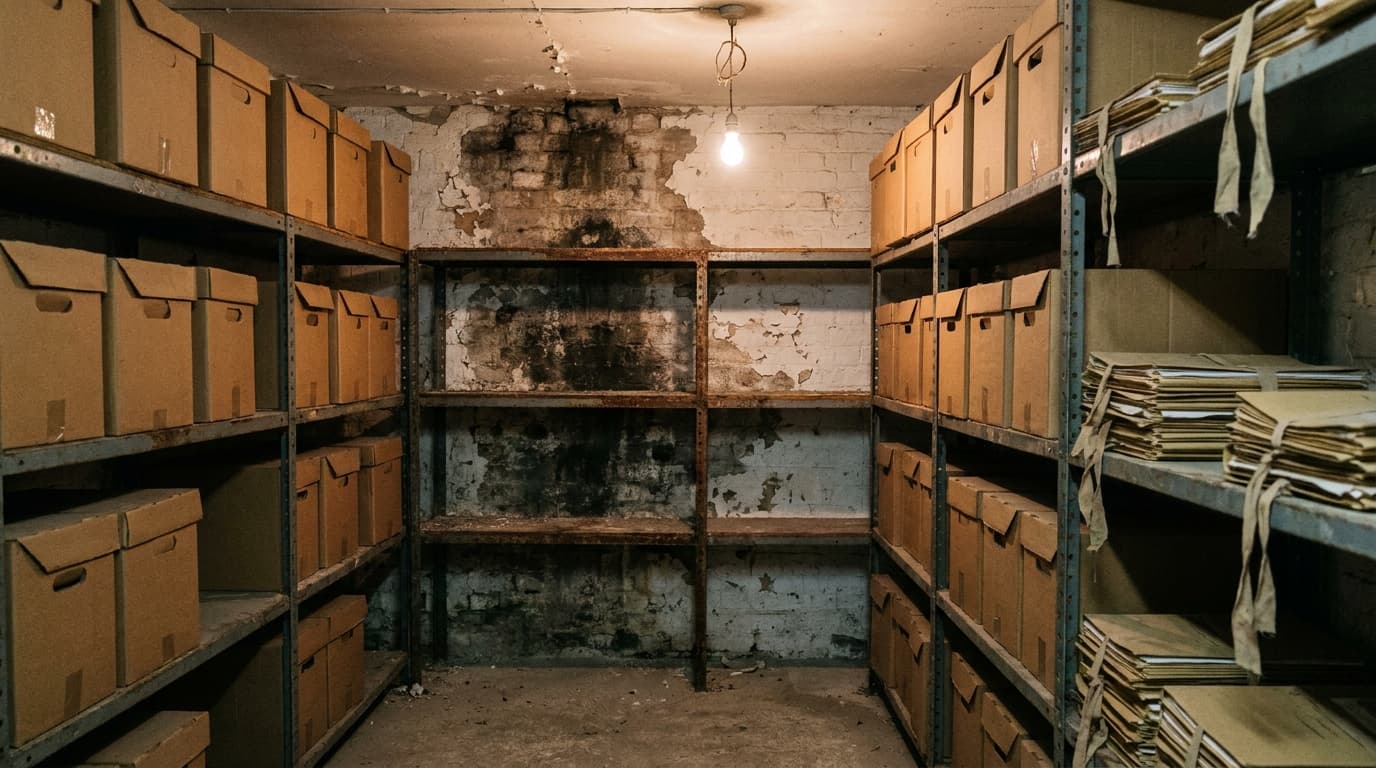
Stores holding case files, bundles and archive boxes are opened when a document is wanted and otherwise left shut. Mice shred paper and card for nesting and go undisturbed there for weeks, so by the time a dropping is seen upstairs a population is settled. Stores are surveyed and monitored in their own right, not judged from the rooms people use.
Panelling, flues and floorboards in listed houses
Early Georgian panelling is fixed to timber grounds with a void behind it, disused fireplaces leave open flues, and joist voids now carry decades of cabling. Mice use all three to move between rooms and storeys unseen. On a listed interior, anything that needs consent is identified in writing before it is fitted.
Secured units on shared stairs
A multi-let trade building can be a stack of separately secured units on shared stairs, each locked outside its own hours. A programme treats only the doors that open, and one unit left shut could hold a population its neighbours are paying to remove, so access is arranged unit by unit and no-access reported back rather than quietly dropped.
A lunchtime market a block from the workshops
Wherever hot food is cooked and sold outdoors, some oil and scraps can reach gutters, gullies and shopfronts however well the stalls clear up, and anything foraging after dark will find them. What matters here is the distance: a block away stand secured trade buildings with rooms that are seldom opened. Monitoring inside those buildings, not only at the frontages nearest the pitches, shows how far that pressure reaches.
Damp stores and the insects that eat paper
Where a basement or attic store runs damp, silverfish and booklice feed on the paper and the mould growing on it. That damages records before it troubles anyone's hygiene, and no treatment holds while the damp remains. Each store's condition is recorded at survey, and the report says plainly when the damp, not the insects, is the thing to fix.
Who we work for in Holborn
- Barristers' chambers and solicitors' practices
- Jewellery workshops, showrooms and trade dealers
- Corporate and professional offices
- Street food traders, cafés and takeaways
- Pubs, restaurants and hotels
- Managing agents for listed and period buildings
Common hotspots
- Archive and file stores that are rarely opened
- Damp stores where silverfish and booklice feed
- Voids behind timber panelling and beneath floorboards
- Disused fireplaces, flues and chimney breasts
- Service hatches and cable routes between storeys
- Secured workshop units, shared stairs and landings
- Gutters, gullies and shop thresholds near street food pitches
- Cellar hatches and service entries at pavement level
- Pub, restaurant and hotel kitchens
Questions we are asked in Holborn
- We have found droppings in our file store. Are the papers at risk?
- They can be, because mice shred paper and card for nesting as well as fouling it. We inspect the boxes and shelving as well as the floor, find the route in, and say in the report where it runs, including when that is not on your property.
- Our rooms are listed and panelled. How do you find the route?
- Through what the building already lets us open: a lifted board, a loose skirting, a service hatch, a disused flue. Those are the routes mice use between rooms and storeys, so the survey follows them rather than lifting what cannot be put back. Proofing is specified to suit the fabric, and beetle or decay found while a board is up goes to our timber division.
- Our workshop is locked out of hours. Can you still come at night?
- Yes, arranged in advance to your access arrangements. Technicians are on shift through the night rather than called out from home. Attempted access is logged whether or not the door opens, and no-access is reported back to you rather than quietly dropped, because in a shared building an unvisited unit can be where the problem sits.
- We run a café near the market. When should you visit?
- Once the lane has cleared in the evening or before you open, so the frontage and cellar hatch are seen as the market leaves them. Food units are attended at night as the normal shift, RAMS and COSHH are supplied for your file, and a written report is issued the same day.
- Our archive store is rarely opened. How would we know if something is wrong?
- Often not until a box is pulled out and found chewed. Monitoring placed inside the store, where the files sit, shows activity on a routine visit rather than on the day a document is wanted, and the store's condition, damp included, goes into the same-day written report.
- Who arranges the visit in chambers, us or the clerks?
- Whoever holds the keys and the diary, usually the clerks. The visit is agreed with them, including which rooms are in use and which file stores need opening, and the report goes only to whoever instructed us. Vehicles and workwear are unbranded on request.
Related services
Pest control across other London districts
Arrange a survey in Holborn
Free and without obligation. Call 01892 871008 or request a survey. We answer 24 hours a day.