

- Old Compton Street
- Berwick Street
- Golden Square
- Dean Street
- Soho Square
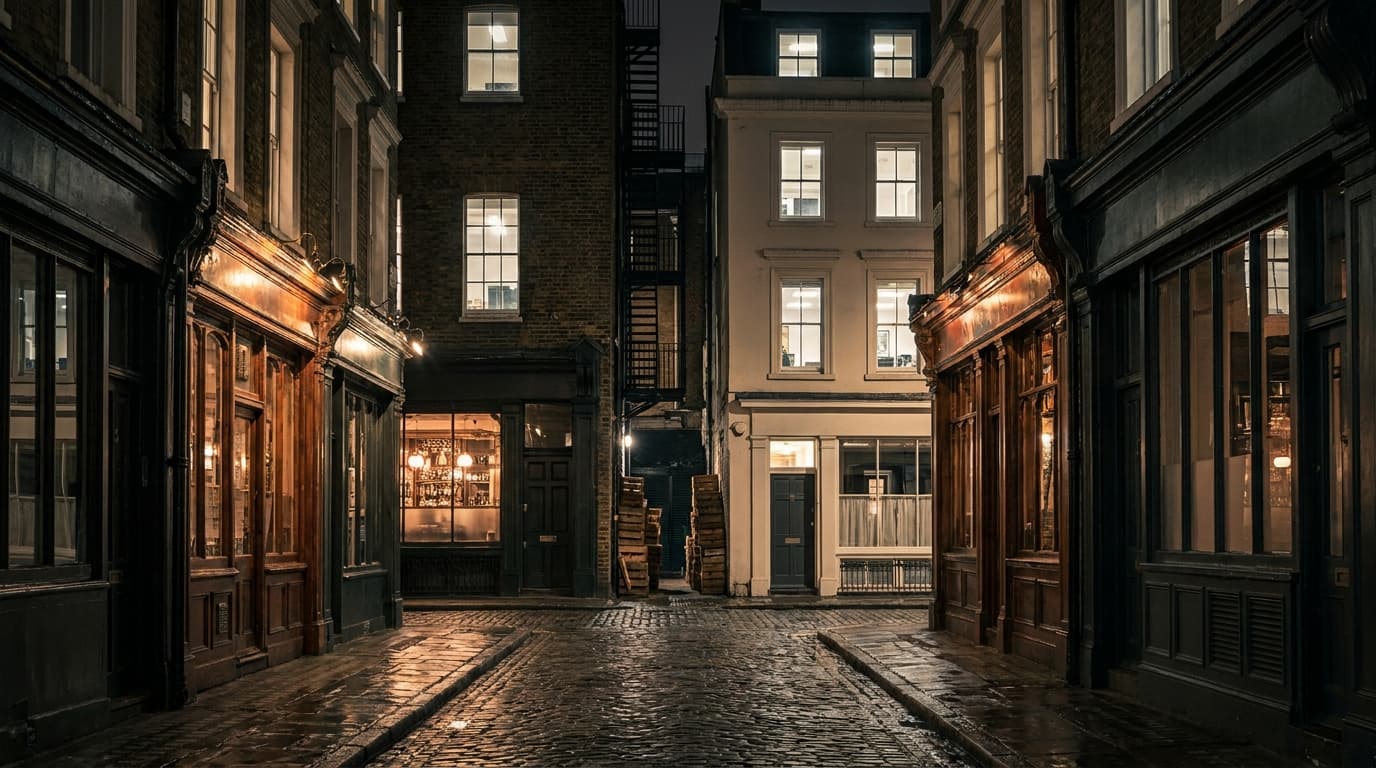
That single constraint produces most of the district's pest pressure. Waste goes out to the street for timed collection, so for a period every evening the food waste of an entire block sits at kerbside. Deliveries come through the front. Extract runs up the outside of the building. Grease, spillage and cardboard accumulate in spaces measured in inches rather than metres, and no operator has room to store their way out of it.
Below ground it gets worse, and it is the part most operators do not see. Cellars under these buildings frequently interconnect, or connect to a shared drain run laid when the plots were houses rather than restaurants. A rodent route can cross three businesses without surfacing, which is why a kitchen that treats thoroughly and repeatedly can clear and reinfest on a cycle that makes no sense from inside its own four walls.
Nightshift works Soho at the hour it is possible to work it. Technicians are on shift through the night as standard, so kitchens are treated between close and prep, cellars are surveyed when the building is empty, and nothing happens in front of a guest. We survey the cellar and the drainage rather than only the room that reported, and say in the report where the route runs even when it leaves your lease. Every visit produces a written report the same day.
The building stock
Georgian and Victorian buildings on tight plots of four and five storeys with no service yard and often no rear access, restaurant and bar frontages at street level, kitchens in cellars and rear extensions, offices and residential flats above, interconnected cellars and shared original drain runs beneath, and refuse presented to the street for timed collection.
Where the pressure comes from
No back of house, so waste lives on the street
Timed collection means the food waste of a whole block stands at kerbside for a window every evening. No operator has room to store their way out of it, so the useful work is containment that actually closes, collection timing that shortens the window, and proofing the frontage the waste stands against. We will not recommend storage that the building physically does not have.
Cellars that cross the lease line
Cellars beneath these buildings frequently interconnect or share an original drain run laid when the plots were houses. A route can cross three businesses without surfacing, which is why a kitchen can treat thoroughly and reinfest on a cycle nobody can explain from inside. The survey has to be of the cellar and the drainage, not the kitchen.
Kitchens below ground
A cellar kitchen has warmth, moisture, food and a permanent connection to the drainage in one space, usually with limited ventilation and no natural light. It is the most favourable environment in the district and the hardest to inspect properly, and it is where a programme should start rather than finish.
Extract, grease and the outside of the building
Ducting running up an external elevation, grease accumulating at joints, and flat roofs at the back collecting both waste and birds. This is the part of a Soho building nobody looks at from the street and it feeds problems on every floor beneath it.
Residential above commercial
Flats sitting directly over a kitchen, sharing a structure and often a riser, and managed by an entirely different party. Each side experiences the result as the other's fault. Where we hold both we report on both sides of that ceiling, which is generally the fastest route to anything being fixed.
Who we work for in Soho
- Restaurants, bars and members' clubs
- Cafés, delicatessens and food retail
- Theatres, venues and hospitality operators
- Managing agents and building owners
- Media, post-production and creative offices
- Hotels and serviced apartments
Common hotspots
- Cellars, and the openings between them
- Shared original drain runs and rodding eyes
- Kerbside waste presentation points
- Kitchen extract ducting and grease traps
- Light wells, area steps and cellar hatches
- Riser shafts between commercial and residential
- Rear flat roofs and parapets
- Storage cupboards and stair voids
- Delivery routes through front of house
Questions we are asked in Soho
- We treat thoroughly and it always comes back. Why?
- In Soho the usual answer is the cellar. Cellars beneath these buildings frequently interconnect or share an original drain run, so the population lives in a route crossing several leases and your treatment reaches your end of it only. That is a survey question rather than a product question, and the report should tell you where the route goes even when the answer is somebody else's property.
- There is nowhere to put the bins. What can you actually do?
- We will not recommend storage the building does not have. What we will do is set out what is achievable: containment that closes properly, collection timing that shortens the window waste stands out, proofing the frontage it stands against, and where the pressure is coming from besides your own waste. Then we report what remains outstanding so it is on the record.
- Can you work without our guests or staff seeing you?
- That is the normal way we work here. Technicians are on shift through the night rather than called out, so kitchens are treated between close and prep, cellars are surveyed when the building is empty, and there is no out-of-hours premium because nights are simply the shift.
- The flats above say the problem comes from our kitchen.
- Sometimes true, often not, and a survey settles it rather than an argument. Commercial below and residential above usually share a structure and a riser while being managed by different parties. We report what we find on both sides of that ceiling where we hold both, and state plainly where the route actually runs where we do not.
- An environmental health officer is due. Can you help now?
- We can inspect, treat what needs treating and give you a current written record, which is the part most files are missing. Nobody can retrospectively create months of monitoring history, so if the visit is imminent expect an accurate picture of your exposure rather than a fix for all of it.
- Do you cover the whole of the West End?
- Yes, and on foot, which suits a district where a vehicle is a liability. Technicians move between sites across Soho and the surrounding streets in one shift, so a group with several venues gets one agreement, one contact and one reporting standard rather than separate visits to each address.
Related services
Pest control across other London districts
Arrange a survey in Soho
Free and without obligation. Call 01892 871008 or request a survey. We answer 24 hours a day.