

- St Pancras International
- Euston Road
- Pancras Square
- Somers Town
- Camley Street
- St Pancras Lock
North of the stations the land was built for freight. Coal drops passed coal from rail wagons to canal boats and carts, the Midland Railway built a basin by St Pancras Lock to load coal barges, and the British Library stands on the site of the former Somers Town goods depot. That ground now holds offices, shops, restaurants and homes. Around Pancras Square and along King's Boulevard goods arrive and waste leaves through shared below-ground service routes. Where buildings are serviced from below, the survey belongs underground, in the service routes and refuse stores they share.
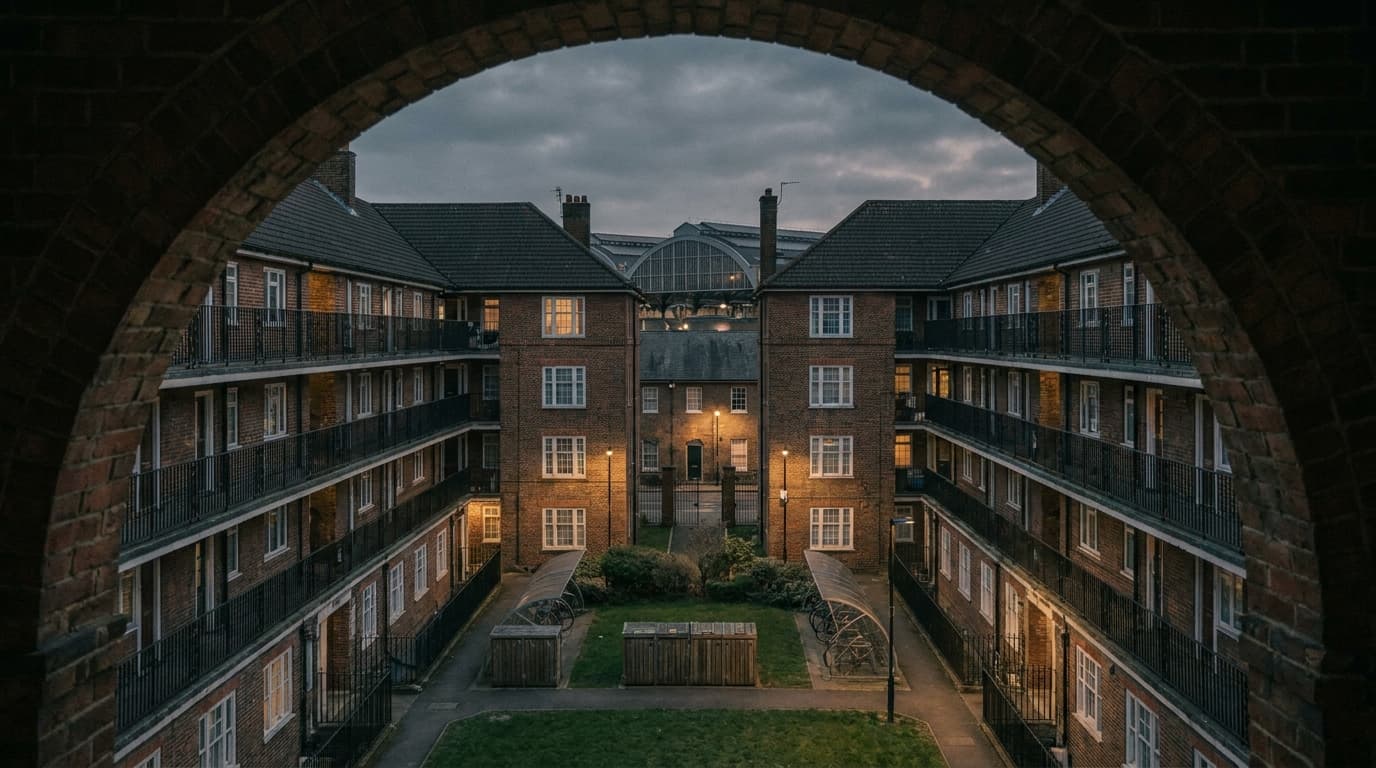
Two very different groups live here. Somers Town lies between Euston and St Pancras. It holds interwar social housing built around courtyards reached through archways. Where blocks face inward like that, a problem at ground level can belong to the shared court rather than to one flat. The district also holds purpose-built student blocks, which fill and empty with the academic year.
Nightshift works St Pancras around how each building is run. Technicians are on shift through the night, so buildings are inspected outside their busy hours with no out-of-hours premium. We follow the luggage, the courtyard or the service route rather than stopping at the room that reported, use canine detection to identify the specific rooms carrying live bed bugs, and work to each building's access arrangements. Every visit produces a written report the same day.
The building stock
Two Victorian railway termini on Euston Road, one raised over an undercroft laid out like a beer warehouse that now holds the Eurostar terminal, shops and restaurants, with hotels and hostels around them, former coal drops and goods buildings converted to shops, restaurants and offices, newer buildings around Pancras Square and along King's Boulevard serviced through shared below-ground routes, interwar courtyard housing in Somers Town, and purpose-built student blocks.
Where the pressure comes from
Luggage rooms where bags are held
Where guests leave bags with a hotel or hostel between check-out and travel, luggage from many rooms can sit together for hours in one store or bank of lockers. That store is a place where belongings from different rooms touch, and it is easy to leave off a housekeeping round. Bed bugs carried in on one case can leave in another, so the survey takes in the luggage store and the lockers as well as the bedrooms.
An intake that arrives in the same week
Purpose-built student blocks follow the academic year, so a whole new intake moves in together. Bed bugs brought in on one set of luggage can spread along a corridor of bedrooms before the first bites are reported, and shared kitchens give cockroaches and mice somewhere to settle. The empty weeks before arrival are the one time every room can be reached, so that is when to survey the whole building and proof the kitchens.
Courtyards behind the archways
Courtyard housing groups its blocks around small greens entered through archways from the street. A courtyard is sheltered and quiet after dark, so it can hold activity that a busy pavement would disturb, and the archway lets in anything foraging along the street. Every ground-floor flat around the court shares that ground, so the survey covers the court, the archways and the base of each block together.
A back of house shared below ground
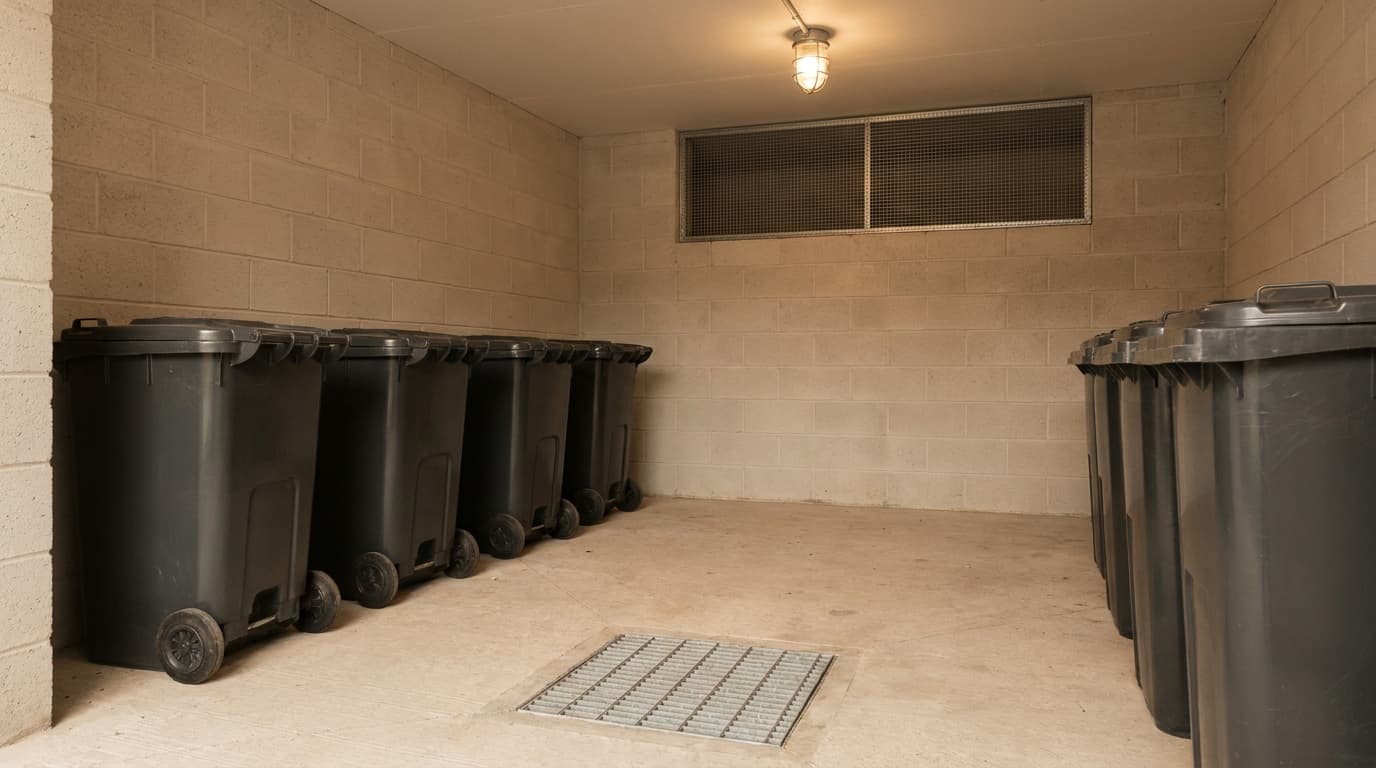
Where newer buildings are serviced from below, goods arrive and waste leaves through basement routes they share rather than from the street. A delivery carrying cockroaches, or a refuse store drawing rats, sits on a route no single tenant controls or sees in full. The survey takes in the tenant's refuse store and the service corridor beside it, and the report records findings beyond the lease so the tenant can put them to whoever manages the basement.
Move-out week in the bin stores
When a student block empties within the same few weeks, the food left in every shared kitchen goes out at once, into bin stores serving the whole building, while the building is at its emptiest. Mice and rats find that before anyone reports it, because nobody is left to report. Clearing stores as they fill, and checking them before the summer survey starts, stops the changeover handing the new intake an established problem.
Who we work for in St Pancras
- Hotels, hostels and serviced apartments
- Student accommodation operators
- Restaurants, cafés and bars
- Retail and food units
- Office occupiers and facilities managers
- Estate and building managers
- Housing associations and council housing teams
Common hotspots
- Luggage rooms and locker banks
- Hostel dormitories and hotel bedrooms with fast turnover
- Shared kitchens in student blocks
- Bin stores serving student accommodation
- Courtyards, archways and ground-floor stores in Somers Town
- Basement service corridors and goods-in doors
- Refuse stores beneath offices, shops and restaurants
- Counter voids and dry stores in food units
Questions we are asked in St Pancras
- A hotel guest has reported bites.
- Canine detection first, to identify the specific rooms carrying live bed bugs so only those are treated and the rest stay in use. Where bags are held for guests, the luggage room and lockers are inspected too. The written report follows the same day.
- We manage a student block. When should pest work be booked?
- Before the new intake arrives, while rooms are empty and every kitchen can be reached, so the whole building is surveyed and the kitchens proofed. If bed bugs are reported during term, canine detection identifies the specific rooms carrying live activity and treatment goes only there.
- Several ground-floor flats around one courtyard are reporting rats.
- Then the courtyard is the place to start. Treatment goes where the activity is, and the report sets out what the shared ground needs. Inside homes, appointments are booked directly with residents, attempted access is logged whether or not anyone is in, and no-access is reported back to you.
- Our restaurant is serviced through a shared basement. Who deals with problems there?
- Whoever manages the basement, once they have evidence. We treat your unit and your own store, and the same-day report states what we found beyond your lease and where, so you have something specific to put to them.
- Our block is emptying for the summer. What should happen in the bin stores?
- Clear them as they fill rather than once everyone has gone, because the kitchens empty into them over the same few weeks. We check the stores for activity once the building is quiet, before the whole-building survey, so the new intake does not arrive to a problem that settled over the summer.
- Will an environmental health officer accept your paperwork?
- A written report is issued the same day as every visit, recording what was found, what was done and what remains outstanding, unit by unit or consolidated where one agreement covers several premises. Nightshift is a BPCA member and CEPA certified.
Related services
Pest control across other London districts
Arrange a survey in St Pancras
Free and without obligation. Call 01892 871008 or request a survey. We answer 24 hours a day.