

- Swanley Park
- Swanley station
- London Road
- Hextable
- Crockenhill
The pressure here is external, seasonal and predictable. Field populations move toward buildings when the land changes around them, which means harvest, ploughing, and the first hard weather rather than anything that happened inside a property. A run of calls across a whole estate in October is not a coincidence and is not an infestation spreading house to house; it is one movement into the nearest shelter, arriving at fifty front doors at once.
The second factor is the distribution and light industrial stock. Large footprints, loading doors standing open through a shift, and goods arriving from elsewhere give both a route in and a way for a problem to be imported rather than grown. Proofing the envelope and the doors is worth more on those units than anything placed inside them.
Nightshift plans against that calendar rather than reacting to it: proofing before the season turns, monitoring at the boundary between built and open land, and programmes timed to when the pressure actually arrives. Technicians work nights as standard, so food premises and industrial units are treated outside operating hours, and every visit produces a written report the same day.
The building stock
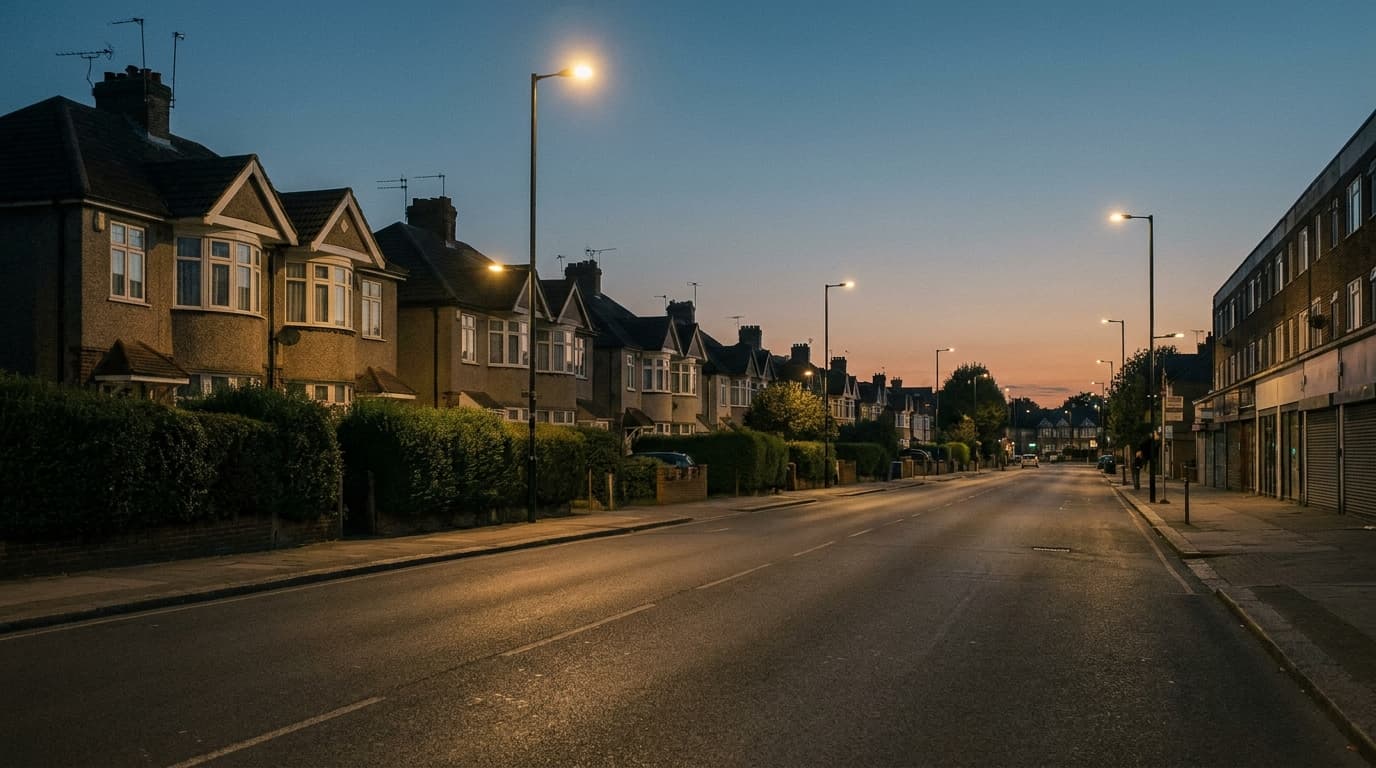
Post-war and later residential estates and cul-de-sacs of conventional brick construction with gardens, a compact retail core with flats over shops, light industrial and distribution units with large footprints and loading access on the town's edge, and a hard boundary where the built area meets open farmland, orchard and paddock.
Where the pressure comes from
The boundary between built and open land
Where an estate ends and a field begins, the field is the reservoir. Populations move toward buildings when the land changes, so the useful work sits along that interface: proofing the properties that face it, monitoring the boundary, and clearing the cover that lets animals cross unseen. Treating individual houses inside the estate addresses the arrivals rather than the source.
A seasonal calendar, not a random one
Harvest, ploughing and the first cold snap each push activity toward shelter, and the calls arrive in clusters that look like an outbreak and are not. A programme built around that calendar, with proofing done before the season turns rather than after the calls, is materially cheaper than reacting to the same weeks every year.
Loading doors and imported problems
Distribution and light industrial units run with doors open through a shift, and goods arrive from other sites. That gives both a standing route in and a way for a problem to be delivered rather than developed. Door proofing, strip curtains and a goods-in inspection habit are worth more here than any amount of internal treatment.
Flats over shops in the retail core
Residential above food premises puts a commercial waste and extract stream directly beneath people's homes, and the two are usually managed separately. Each side experiences the result as the other's fault. Where one contractor holds both, it resolves quickly; where not, we report what we find on both sides of that ceiling.
Gardens, outbuildings and the rural habit of storage
Sheds, stored timber, feed, compost and log piles are more common here than in inner London and give cover and food within a few metres of the back door. Proofing a house while the harbourage beside it is untouched treats the symptom, and we will say so rather than return quarterly.
Who we work for in Swanley
- Homeowners and private landlords
- Warehousing, distribution and light industrial
- Food retail, takeaways and pubs
- Housing associations and registered providers
- Schools, nurseries and community buildings
- Farms, smallholdings and equestrian at the fringe
Common hotspots
- The boundary between estates and open farmland
- Loading doors, shutters and goods-in areas
- Sheds, log piles, feed and garden storage
- Drainage runs and gullies serving the estates
- Flats over shops, and the yards behind the parade
- Grease traps and extract at food premises
- Roof voids and soffits on conventional stock
- Racking and pallet storage in industrial units
- Field margins, hedgerow and paddock edges
Questions we are asked in Swanley
- Half the street has rats at the same time. Is it spreading?
- Usually not in the way it looks. Where an estate backs onto farmland, a change on the land moves a population toward shelter and it arrives at many houses at once. That is one event rather than a spread, and it means the work belongs at the boundary and on proofing rather than at fifty individual addresses.
- It happens every autumn. Can anything actually stop it?
- The arrival cannot be stopped, because the land is not yours. What changes the outcome is being proofed before the season turns rather than after the first call: doors, air bricks, service entries and the rear boundary. A programme timed to that calendar costs less than reacting to the same six weeks every year.
- We run a distribution unit. Where should the money go?
- The envelope, and the doors in particular. A unit running with loading doors open through a shift has a standing invitation, and internal treatment is chasing what is already inside. Door proofing, strip curtains and a goods-in inspection habit do more than any bait programme, and we would rather tell you that than sell you the visits.
- Can you attend outside our operating hours?
- Yes, and it is our standard shift rather than a callout. Technicians work through the night, so units and food premises are treated when they are not running and there is no out-of-hours premium.
- Do you cover the villages around the town?
- Yes, across this part of Kent and the wider South East, with same-day response in the South East. Being straight about it, attendance into the town is quicker than to an outlying farm, and we would rather say so than publish one figure that means something different depending on where you are.
- Will your paperwork satisfy a retailer audit?
- A written report follows every visit, with trend data across visits and RAMS and COSHH on request, and BRC-aligned support is available for sites supplying retail. Bring the standard you are audited against to survey and we will work to it.
Related services
Pest control across other London districts
Arrange a survey in Swanley
Free and without obligation. Call 01892 871008 or request a survey. We answer 24 hours a day.