


- Burgess Park
- Walworth Road
- East Street Market
- Albany Road
- Elephant and Castle
Demolition is the other half of it. Ground works, service disconnections and the opening of long-buried drainage runs displace established rodent populations rather than remove them, and those populations move into the nearest occupied structure. Residents in an adjoining block that has never had a problem start reporting one, and the reports look inexplicable unless the works next door are part of the picture. Programming pest control against the demolition sequence rather than against the complaint log is the single biggest improvement available on a site like this.
Nightshift works regeneration estates as a programme with the phasing built in: baseline survey before a block empties, treatment and proofing of voids as they are created rather than after they accumulate, attention to the boundary between the live site and occupied homes, and a written record at every stage. Void properties get treated and proofed while access is unrestricted, which on deck access stock means the service penetrations, ducts and chute connections can be closed properly.
The occupied side still needs ordinary work done well. Deck access blocks concentrate refuse in shared stores and chutes, connect dwellings through riser shafts, and put every front door onto an open walkway that the weather and everything else can reach. High tenancy turnover in the surrounding conversions and private rented stock also keeps a persistent bed bug risk in circulation, and canine detection settles which units actually carry live activity so a provider treats what is infested rather than a whole block on suspicion. Technicians are on shift through the night, and every visit produces a written report the same day.
The building stock
Post-war local authority estate housing including deck access and slab blocks with shared riser shafts, refuse chutes and communal stores, low-rise infill and maisonettes, sections in phased regeneration with blocks part decanted or awaiting demolition, and surrounding Victorian and Edwardian terraces subdivided into flats in housing association, council and private rented ownership.
Where the pressure comes from
Demolition moves populations, it does not remove them
Ground works, service disconnections and the opening of old drainage runs push established rodents into whatever occupied structure is nearest. Reports then appear in blocks that have been quiet for years, and nobody connects them to the works. Programming treatment against the demolition sequence, and putting a treated buffer between the live site and occupied homes, prevents a phase of works generating a year of complaints.
Voids at scale during decant
A part decanted block accumulates empty dwellings faster than they can be individually managed, and each one is unheated, unwatched and connected to its neighbours. Left to accumulate they become the harbourage supplying the occupied half of the same building. Treating and proofing voids as they are created, rather than in a batch at the end, is materially cheaper and is the difference between a controlled decant and an escalating one.
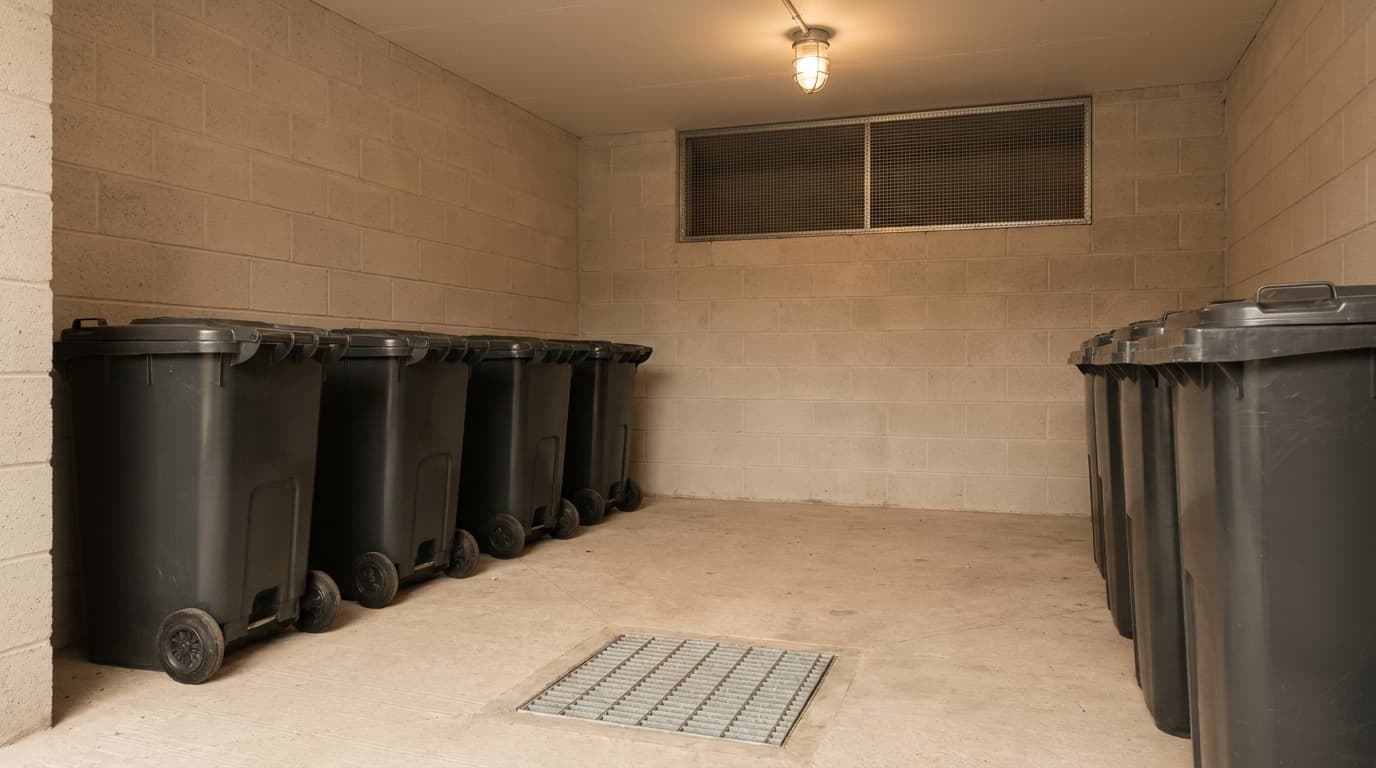
Chutes and shared refuse stores
Deck access blocks concentrate the waste of many dwellings into one chamber at the base of a shaft that reaches every floor. Hopper doors, the chute itself and the chamber below have to be in the pest programme rather than left to cleaning schedules. Where caretaking has been reduced during regeneration this is usually the first thing to fail and the last thing to be noticed.
Riser shafts and service penetrations
Vertical shafts and the holes cut through them for pipework connect dwellings that share no wall, so activity moves between floors and appears unrelated. Inspecting the shaft and sealing at each dwelling is what stops it. During regeneration these routes are frequently opened up by works and not reinstated, which turns a controlled building into a connected one.
Bed bugs where tenancies turn over
Decant, temporary accommodation and high turnover in the surrounding private rented stock keep bed bugs in circulation, and they spread between units through service holes and party wall gaps rather than only by furniture. Canine detection identifies the units carrying live activity, so a provider treats what is infested rather than putting a whole block through preparation it did not need.
Who we work for in Walworth
- Local authority housing and regeneration teams
- Housing associations and registered providers
- Development and demolition contractors
- Managing agents and block management companies
- Schools, nurseries and youth provision
- Street market traders and food businesses
Common hotspots
- Void dwellings accumulating during decant
- Refuse chutes, hopper doors and chamber bases
- Riser shafts and pipework penetrations between floors
- Access decks, walkways and external stair cores
- Boundaries between live demolition works and occupied blocks
- Opened or abandoned drainage runs during ground works
- Communal stores, drying rooms and pram sheds
- Underfloor voids in the surrounding terraces
- Bin areas serving market and food premises
Questions we are asked in Walworth
- A block next to our demolition phase has started reporting rats. Is that connected?
- Very often, yes. Ground works and service disconnections displace populations into the nearest occupied structure. We survey the boundary between the works and the occupied block, treat that line rather than only the reported flats, and set the programme against your demolition sequence so the next phase does not repeat it.
- We have a lot of voids in a block that is still half occupied.
- Then the voids are supplying the occupied half. Treat and proof them as they are created rather than batching them at the end. Access is unrestricted in an empty dwelling, so the service penetrations, duct entries and chute connection can be closed properly, and we report what was closed on each one.
- Caretaking has been reduced on the estate during regeneration. Does that affect you?
- It changes what we have to cover. Where cleaning and caretaking thin out, the chute chambers and refuse stores fail first and are noticed last. We include them in the programme explicitly and report their condition, so a reduction in one service does not quietly become a pest problem nobody owns.
- Can you confirm bed bugs before we treat a whole block?
- Yes. Canine detection identifies the specific units carrying live activity, which means treating what is infested rather than what is suspected, and residents in unaffected flats are not put through preparation they never needed. On decant stock that distinction saves a great deal of money and goodwill.
- What record do we get for an ombudsman referral?
- A written report the same day as each visit, recording what was found, what was done, what access was achieved or attempted and what is still outstanding, including items on somebody else's title. It is produced as routine on every visit rather than assembled from memory once a case is already live.
- Can you work without disturbing residents on the decks?
- Yes. Technicians are on shift through the night rather than called out from home, so walkways, chute chambers, stair cores and riser shafts can be surveyed and treated outside the hours when residents are moving through them.
Related services
Pest control across other London districts
Arrange a survey in Walworth
Free and without obligation. Call 01892 871008 or request a survey. We answer 24 hours a day.