

- West Reservoir
- Woodberry Wetlands
- Manor House station
- Seven Sisters Road
- Finsbury Park
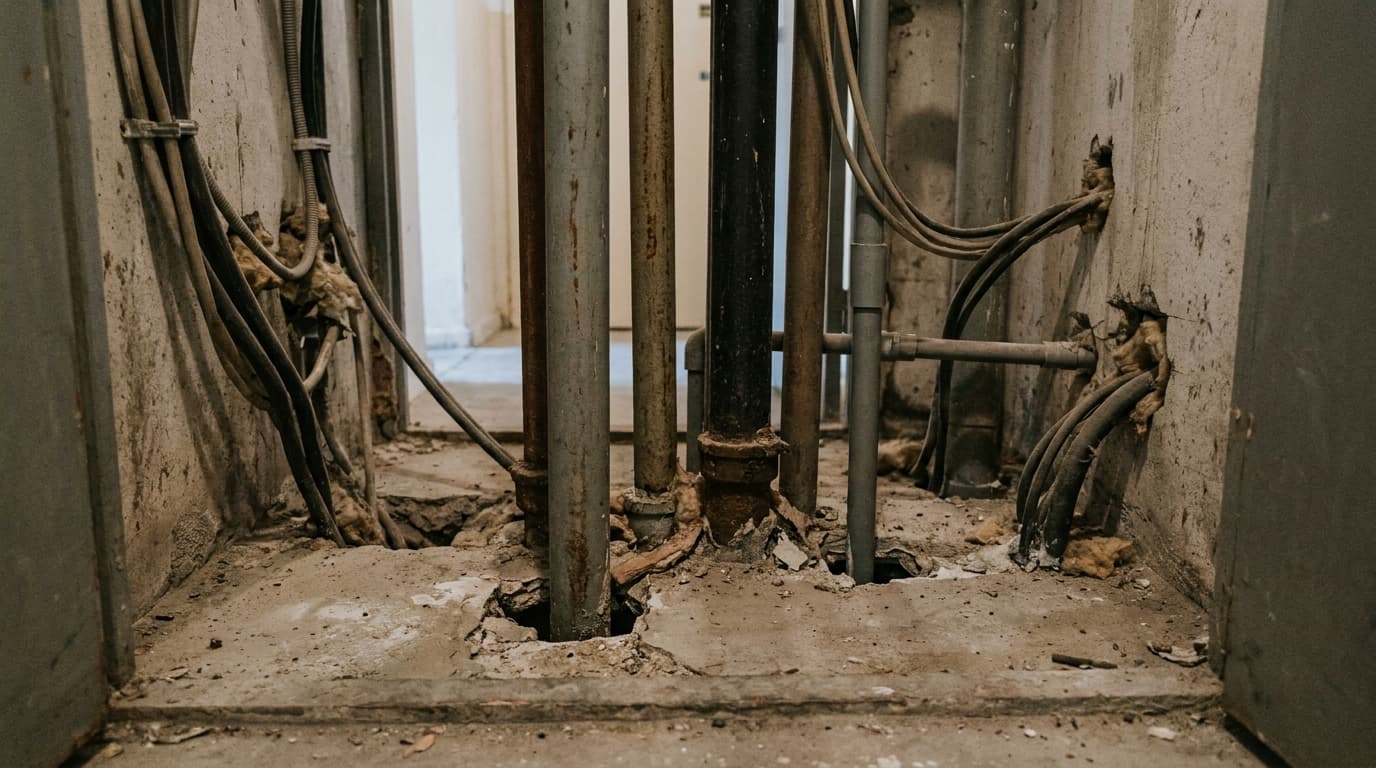
The new build issues are worth naming because they are routinely misdiagnosed as resident behaviour. Service penetrations left unsealed above ceilings and behind risers, temporary construction voids never closed, basement car parks and plant rooms with door seals that were never adjusted, and refuse rooms sized for a design assumption rather than for how the building is actually used. Activity in a two-year-old building is almost never a hygiene failure. It is a defect, and a report that says so gives the managing agent something to raise while it is still somebody's liability.
The water is the second condition. Reservoir and wetland margins alongside the site support waterfowl and gulls as well as providing cover and water for rodents at the boundary. Bird pressure lands on flat roofs, podium decks and balcony edges, and the fouling blocks outlets on buildings where the drainage design has very little tolerance. Bird proofing, netting and hawking are our own work rather than subcontracted, and on a podium deck the choice between them is usually decided by what residents will accept looking at.
The third condition is tenure. A single block can hold social rent, shared ownership and private sale, with different service charge arrangements and different expectations, and pest control frequently falls into the gap between the freeholder, the managing agent and the registered provider. We work to whoever holds the instruction, survey the whole building regardless, and state in the report where a defect sits so the gap is visible rather than argued about. Technicians are on shift through the night, and every visit produces a written report the same day.
The building stock
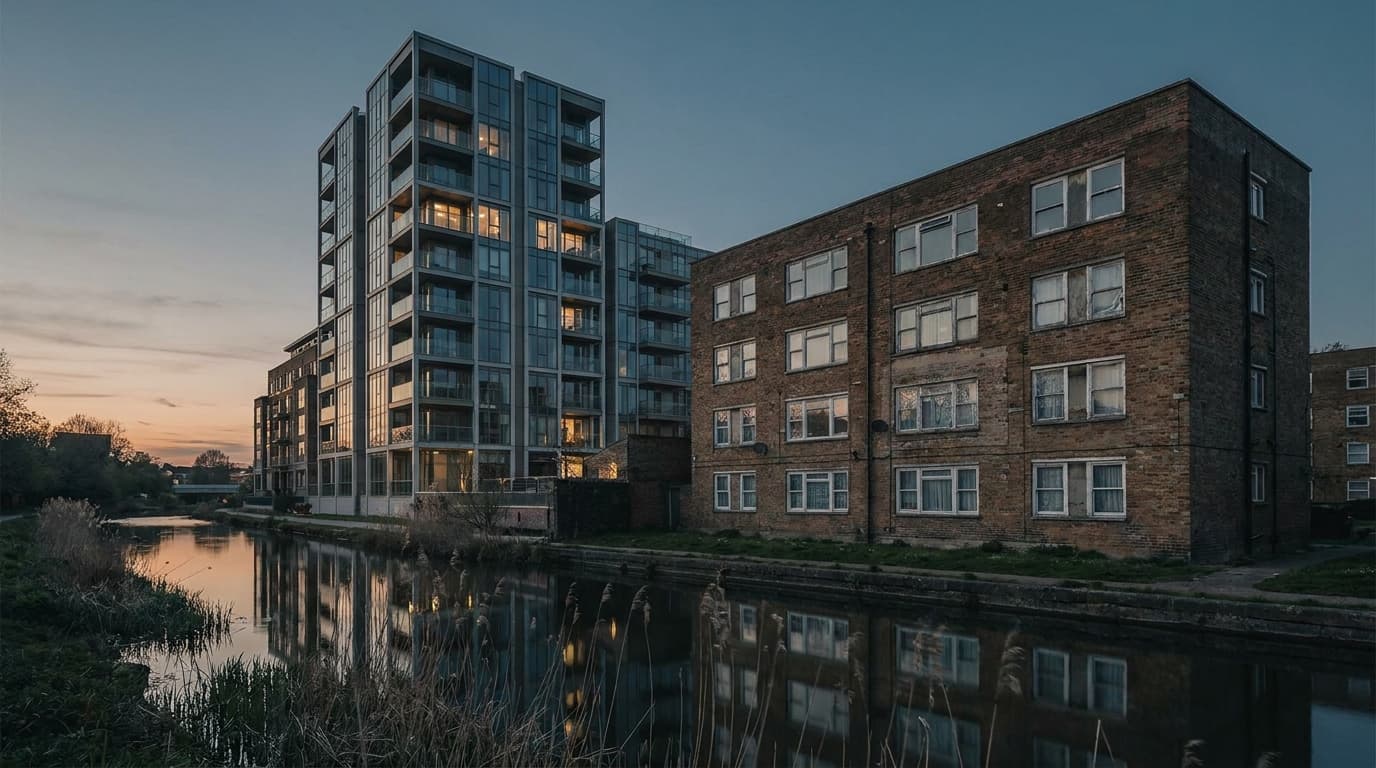
Recent residential towers and mid-rise blocks with podium decks, basement car parks and plant rooms, standing in phases alongside surviving post-war blocks with shared riser shafts and communal stores, in mixed social rent, shared ownership and private sale tenure within single buildings, bounded by reservoirs and wetland with waterside walkways and landscaped margins, and with active construction phases adjoining occupied homes.
Where the pressure comes from
New build defects mistaken for hygiene failures
Unsealed service penetrations above ceilings, temporary construction voids never closed, and door seals in basements and plant rooms that were never adjusted are the usual cause of activity in a recent building. It presents as a resident problem and it is a construction one. We identify and photograph the defect so the managing agent can raise it while it is still within somebody's liability period rather than absorbing it as a recurring pest cost.
Reservoir and wetland margins
Open water alongside the site provides permanent cover, water and food at the boundary, and supports waterfowl and gulls as well as rodents. Pressure arrives at the perimeter continuously rather than originating inside the buildings, so the perimeter has to be part of the programme. Treating only reported dwellings on a site like this never converges.
Two building generations, one estate
Surviving post-war blocks and recent towers sit metres apart with entirely different construction, different routes and different failure modes. A single approach applied across both will over-service one and under-serve the other. We survey and programme them separately even under one instruction, and say which findings belong to which generation.
Mixed tenure and the responsibility gap
Social rent, shared ownership and private sale inside one block means the freeholder, the managing agent and the registered provider each hold part of the building. Pest problems fall into the seams, particularly in risers, podium areas and refuse rooms. Our report states where the defect physically sits, which turns an argument about who pays into a question with an answer.
Refuse rooms and podium decks
Bin rooms sized to a design assumption and used differently in practice overflow, and podium decks collect food waste, bird fouling and standing water in the same places every week. Both sit directly above or beside occupied homes. Putting them in the pest programme explicitly, rather than leaving them to cleaning, is what stops a well built block reinfesting.
Who we work for in Woodberry Down
- Managing agents and block management companies
- Housing associations and registered providers
- Residential developers and their aftercare teams
- Local authority housing teams
- Ground floor retail, cafés and food businesses
- Schools, nurseries and community buildings
Common hotspots
- Reservoir, wetland margins and waterside planting
- Service penetrations above ceilings and behind risers
- Basement car parks, plant rooms and door seals
- Refuse rooms, bin stores and waste holding areas
- Podium decks, terraces and balcony edges
- Flat roofs, parapets and rainwater outlets
- Boundaries between live construction phases and occupied blocks
- Communal stores and cycle rooms
- Ground floor retail and café waste areas
Questions we are asked in Woodberry Down
- The building is only a few years old. How can we have a rodent problem?
- Age is not the protection people assume. In recent buildings the usual cause is a construction defect: an unsealed service penetration, a void left from the fit-out, or a basement door seal never adjusted. We find and photograph it, and the report is written so you can raise it as a defect rather than absorb it as a cleaning failure.
- Who should be instructing you, the agent or the registered provider?
- Whoever holds the instruction, and we will work to that. What we will always do is survey the whole building and state where the defect physically sits, so if it falls in the seam between freeholder, agent and provider the report makes that visible instead of leaving it to be argued about after the fact.
- We have gulls and waterfowl as well as pigeons on the decks.
- Open water changes the bird picture. Gulls are more persistent than feral pigeons and proofing that holds one may not hold the other, and podium decks bring the added constraint that residents have to look at whatever is installed. We survey the roofscape and the decks together and use proofing, netting or hawking according to what the species and the elevation need. Bird work is carried out by our own teams.
- Construction is still going on next to occupied blocks.
- Then the boundary between them belongs in the programme. Ground works and service alterations displace rodents into the nearest occupied structure, so we treat and monitor that line as phases change rather than waiting for reports from the flats behind it.
- Can you cover the older blocks and the new towers on one contract?
- Yes, and it is the sensible way to buy it, provided the two are programmed separately. They are different buildings with different routes, and a single blanket specification will over-service one and under-serve the other. One contractor across both means the ground between them is somebody's responsibility.
- What do residents see of this?
- As little as possible. Technicians are on shift through the night rather than called out from home, so communal areas, refuse rooms, risers and decks can be worked outside the hours when residents are using them. The written report is issued the same day regardless.
Related services
Pest control across other London districts
Arrange a survey in Woodberry Down
Free and without obligation. Call 01892 871008 or request a survey. We answer 24 hours a day.