

- Blackfriars Bridge
- Queen Victoria Street
- Ludgate Hill
- Blackfriars station
- New Bridge Street
The other half of the picture is lunch. A short stretch of Queen Victoria Street and the lanes off Ludgate Hill support a density of coffee, sandwich and hot-food trade that exists to serve a weekday population many times the size of the residential one. That trade produces a concentrated waste stream in a small area with very little back-of-house space to put it in, and the rodent activity in the surrounding blocks reflects it.
Above the parapet line there is a third problem, and it is the one most City contracts leave out. Feral pigeons and, closer to the water, gulls treat flat roofs, plant decks and the recessed ledges of post-war frontages as nesting ground. The fouling blocks outlets and corrodes plant long before anyone complains about the look of it, and on the older stone and brick elevations near the bridge approaches netting is either refused or unsightly. Flying a hawk over the roofscape moves the birds off without harming them, and it is a service we operate ourselves rather than subcontract.
Nightshift works this part of the City the way the buildings are actually run: outside core hours, through the managing agent or facilities team, with a written report the same day so the tenant, the landlord and the incoming environmental health officer are reading the same record. One contract can carry the rodent programme, the bird work and the proofing repairs across a whole portfolio rather than three suppliers arguing about whose gap it is. Technicians are on shift through the night rather than on call from home, and the target across London is attendance within thirty minutes.
The building stock
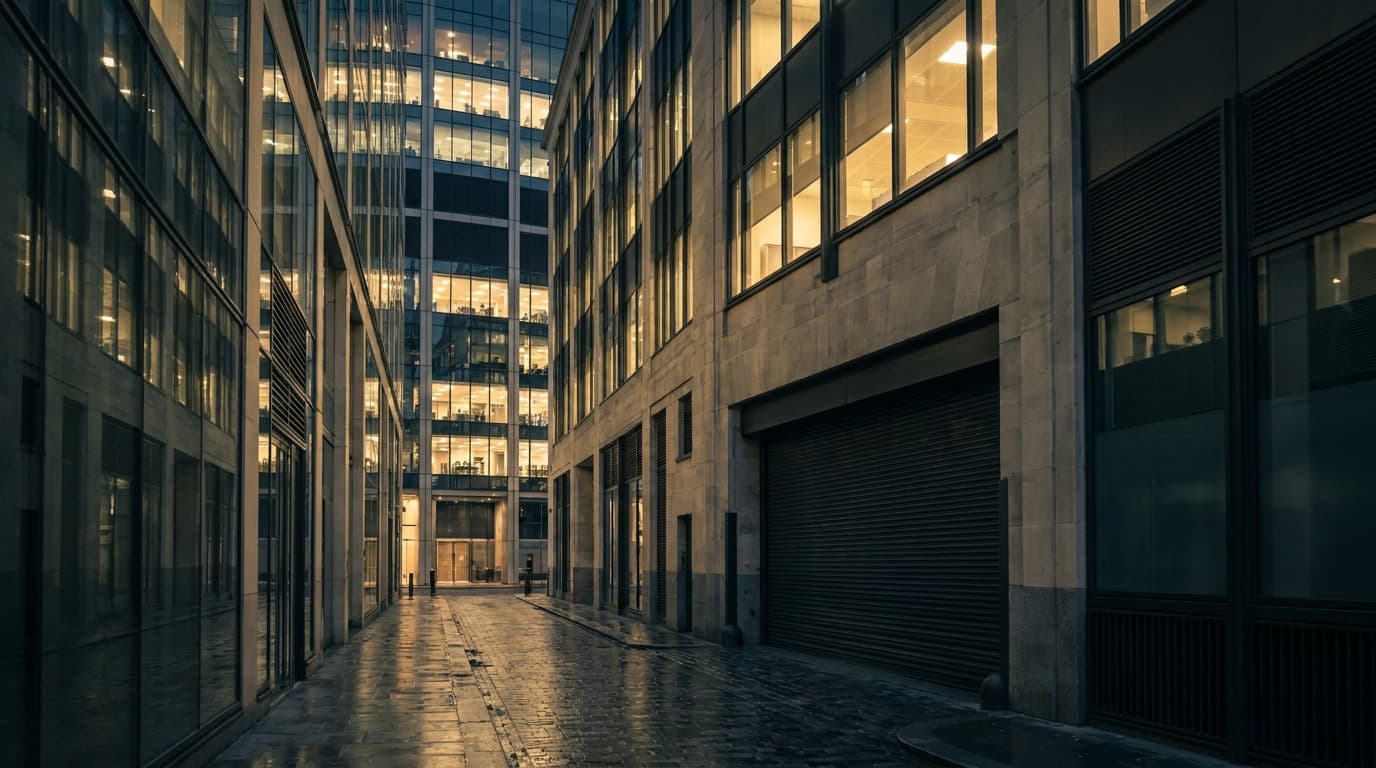
Post-war and modern commercial towers over two and sometimes three levels of basement, multi-tenanted floors served by shared riser shafts and ductwork, retail and catering units at street level, extensive flat roofs and plant decks above them, and a handful of older brick buildings and converted upper floors surviving between them near the bridge approaches.
Where the pressure comes from
The riser is the motorway
Service shafts connect a basement plant room to every floor above it in an unbroken vertical run. Once mice are established at the bottom, sightings appear on floors that share nothing else with each other, and treating the floor where the sighting happened never resolves it. The work is in sealing the penetrations at each level, not baiting the corner of an office.
Deep basements and Thames-side drainage
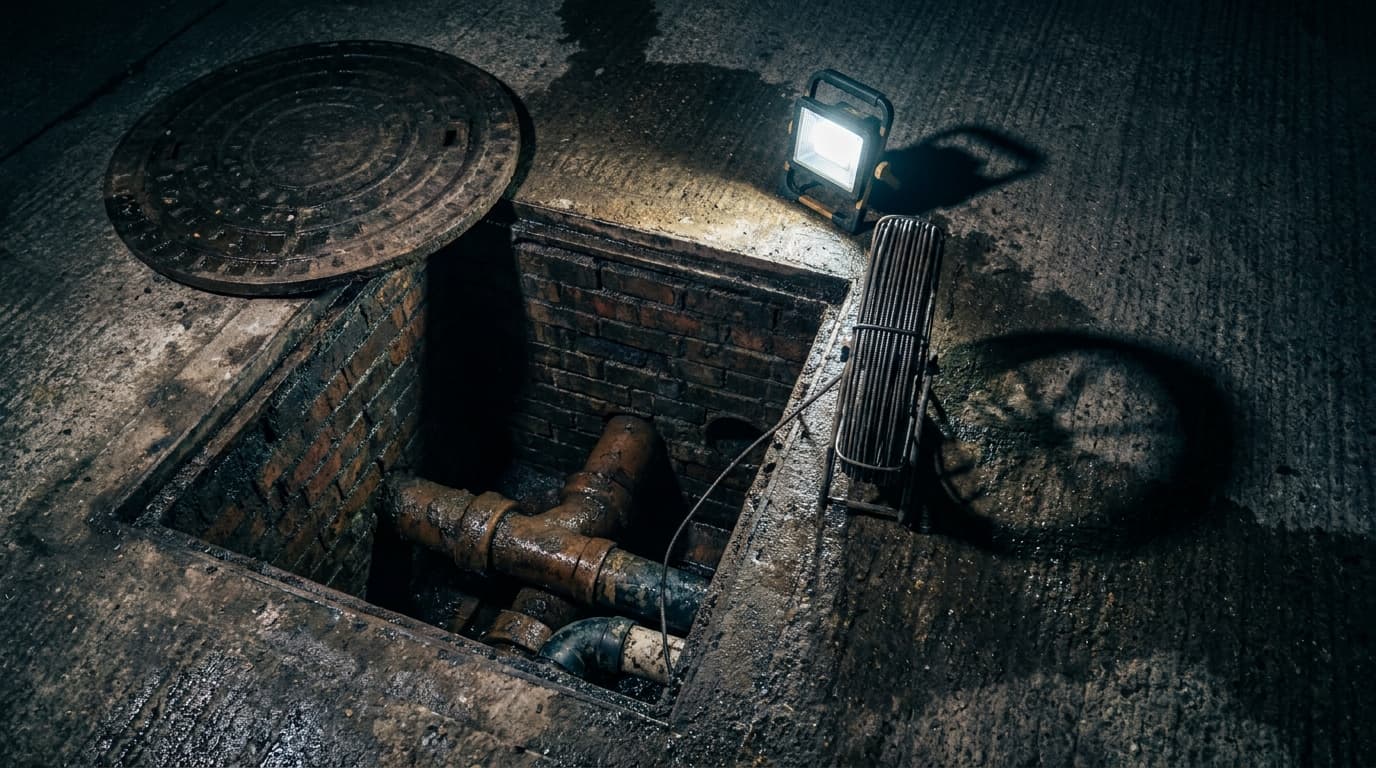
Buildings here sit well below street level on ground that drains towards the river, and the older sewer runs beneath them have been repeatedly cut into by later construction. A displaced joint or an abandoned connection gives rats a dry route into a car park or a plant room without ever crossing open ground.
Birds on the roofscape, not in the office
Pigeon and gull fouling on a plant deck is a maintenance and safety cost first: blocked rainwater outlets, contaminated air intakes, and access platforms that a contractor will not work on until they are cleaned. Proofing solves the ledges that can be proofed; hawking handles the spans and listed frontages that cannot, and the two are specified together after a roof-level survey.
Lunchtime waste in a small footprint
Food units serving thousands of people between noon and two have limited yard space and often share a bin store with the offices above. Waste that sits an hour too long in a warm service corridor is the single most reliable source of rodent and fly pressure in the district.
Multi-tenanted buildings, split responsibility
A tenant reports a mouse, the landlord holds the basement, and the caterer holds the waste. Nothing is resolved while each of them looks only at the part of the building they hold. Programmes that work here are written at building level and reported to every party at once.
Who we work for in Blackfriars
- Corporate offices and headquarters buildings
- Coffee shops, sandwich bars and lunchtime catering
- Managing agents and facilities management teams
- Bars and after-work hospitality
- Building contractors and fit-out teams
- Data halls, comms rooms and building plant operators
Common hotspots
- Sub-basement plant rooms, tank rooms and switch rooms
- Riser shafts, ductwork and cable penetrations between floors
- Ground-floor catering units and their shared bin stores
- Loading bays and goods lifts
- Tea points, breakout areas and under-desk waste
- Car park levels and vehicle ramps
- Drainage runs and interceptors below basement level
- Roof plant, parapets, air intakes and pigeon-nesting ledges
Questions we are asked in Blackfriars
- Can you work outside our building's core hours?
- Yes, and in the City it is usually the only sensible option. Our technicians work nights as standard, so evening and overnight visits are the normal shift rather than a premium. We work to your access arrangements, sign in through the building's security desk and leave before the first arrivals.
- Mice appear on the fourth floor but nowhere else. Why?
- Almost always because a riser or a duct connects that floor to something lower down. We survey the vertical routes rather than the room where the sighting happened, then proof the penetrations. Treating a single floor in a shared building buys quiet for a few weeks and nothing more.
- Can one contract cover our whole portfolio, not just this building?
- Yes, and it is how most of our commercial clients buy. A single agreement can carry rodent and insect programmes, bird proofing and falconry, and timber work across multiple addresses, with reporting consolidated for the estate and detail available per building. Procurement documentation, insurance certificates, RAMS and COSHH are supplied for the whole account.
- We have pigeons on the roof and cannot net the frontage. What then?
- That is exactly what our falconry service is for. Trained hawks are flown to disperse feral pigeons and gulls without harming them, which works on spans, plant decks and listed or protected facades where netting is refused or impractical. We survey at roof level first and specify proofing where proofing is the better answer.
- We are multi-tenanted. Who receives the report?
- Whoever needs it. As standard the written report goes to the managing agent or facilities team the same day, and we can issue unit-level detail to individual tenants and catering operators so each holds its own evidence.
- Will the work be visible to staff or visitors?
- It does not need to be. Out-of-hours attendance is the usual answer, and where a daytime visit is unavoidable we work discreetly and without branded workwear on the floor if that is what the building requires.
Related services
Pest control across other London districts
Arrange a survey in Blackfriars
Free and without obligation. Call 01892 871008 or request a survey. We answer 24 hours a day.