

- Royal Arsenal
- Beresford Square
- Powis Street
- General Gordon Square
- Woolwich Ferry
- Woolwich Arsenal station
Turning an industrial building into homes means building a second interior inside the first. The space between that new work and the old brick wall is dry, warm and concealed, and it can run the length of a range, which is the kind of void mice can use end to end. At ground level the weak points are where modern frames and service entries were fitted into wide and arched openings made for industry.
Across the main road, the old town centre sells food in the open. Beresford Square has a daily open-air market selling fresh produce and hot food, and Powis Street is partly pedestrianised, with cafés and takeaways among the shops. Many of the frontages above the shops are Victorian, Edwardian and interwar. In a town centre like this, pigeons feed where food is dropped and roost on the frontages above, and food that works into gullies and paving joints after trading can feed rats.
Nightshift works both halves of Woolwich at night, because technicians are on shift through the night as standard. Town centre shops, cafés and takeaways are attended after close or before opening, so trading is not interrupted. In converted buildings, common parts, risers and ground floor openings can be surveyed while nobody is moving through them. Nightshift is a BPCA member and CEPA certified, and every visit produces a written report the same day.
The building stock
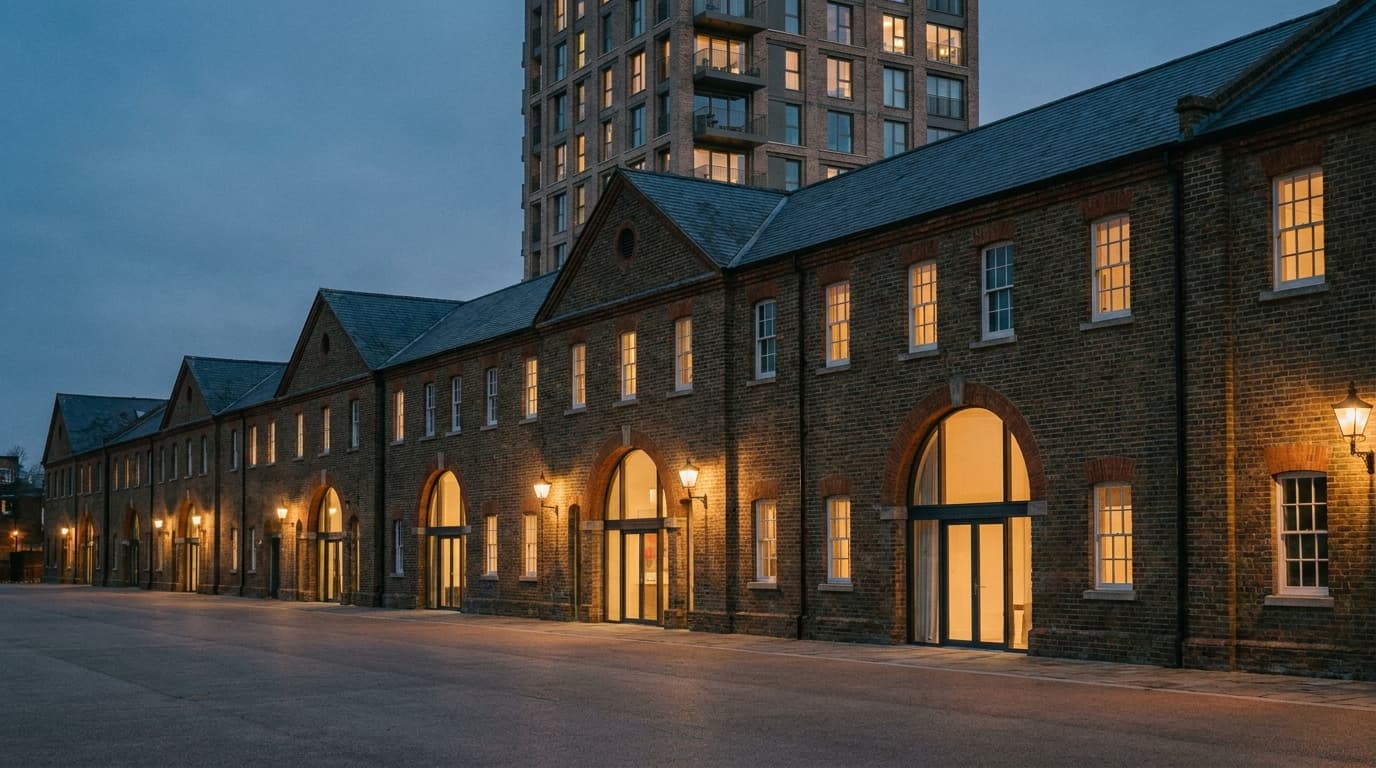
Seventeenth to nineteenth century storehouses, workshops and factory buildings of the former Royal Arsenal, many converted into flats and others into a pub and performance venues, among new riverside apartment blocks, beside a town centre of Victorian, Edwardian and interwar shop and former department store buildings on partly pedestrianised streets, a daily open-air market, and terraces and post-war estates rising towards Woolwich Common.
Where the pressure comes from
One range, many flats, one void
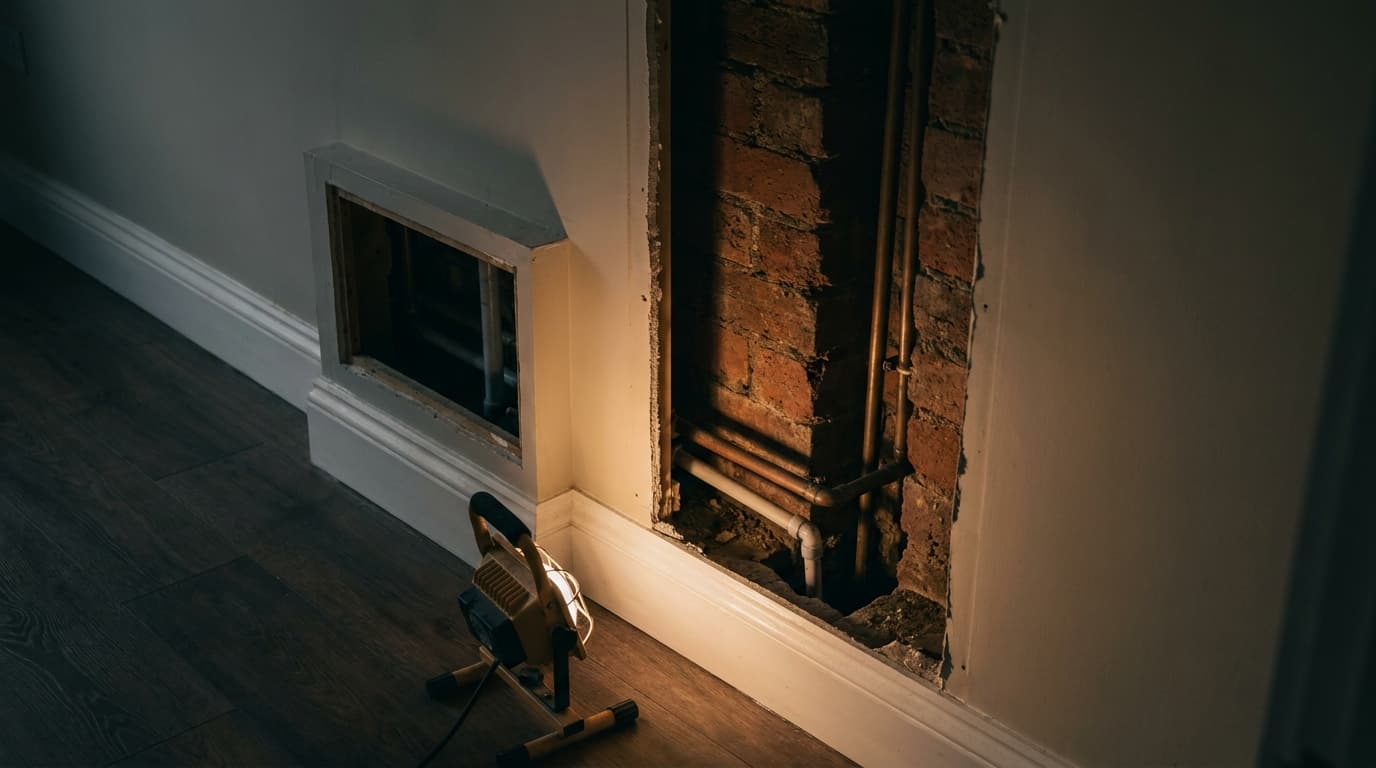
A storehouse or workshop range was built as large open floors inside solid brick walls, and conversion divided those floors into flats with new partitions, lowered ceilings and linings standing off the masonry. The dry space between lining and old wall can pass behind several homes on the same floor, so mice heard in one flat can be living behind its neighbours. The survey follows the range rather than the flat that called, and finds where the void is open, usually at service boxing, skirtings and pipe entries from below.
Old arches, new frames
Converted industrial buildings often have wide or arched ground floor openings filled with glazed screens, doors and shopfronts. Where a straight modern frame meets an irregular brick arch, any gap left is small, hidden and can be large enough for a mouse.
A market that packs away in the afternoon
An open-air market trading produce and hot food leaves some of what was dropped after the stalls clear, in gullies, paving joints and doorway corners, where rats will feed on it. Premises facing a market take that pressure at their thresholds, where door bottoms, drain gratings and service entries along the frontage give rats a way in.
Pigeons fed on the pavement, nesting over the fascia
On a pedestrianised shopping street pigeons feed on dropped food through the day, then roost and nest on the ledges of the older shop buildings above, and near the river gulls can join them. Fouling lands over entrances and signage, which puts a bird problem into a food business's hygiene inspection. No single business can stop the feeding, so the work is proofing ledges and the gaps behind fascias.
Shop units let separately from the floors above
Across the town centre, older shop buildings carry flats above separate ground floor units. When a ground floor unit stands empty, nobody sees it for months and the first report comes from the floors above. Inspecting and proofing it on a schedule means the next tenant takes on a unit with a known history, rather than a problem they inherit on the day they open.
Who we work for in Woolwich
- Managing agents and estate management companies
- Leaseholders and residents' management companies
- Market traders and hot food businesses
- Restaurants, pubs and bars
- Performance and events venues
- Hotels and serviced accommodation
- Retail landlords and shop unit owners
Common hotspots
- Voids between linings and original brick walls
- Service boxing, risers and access panels in converted flats
- Junctions between new frames and historic arched openings
- Service entries through solid walls at ground level
- Gullies, paving joints and doorways around market pitches
- Cornices, sills and ledges above shopfronts
- Gaps behind fascias, signage and canopies over entrances
- Vacant ground floor units beneath occupied upper floors
- Back-of-house in venues inside converted buildings
Questions we are asked in Woolwich
- We can hear mice in the walls of our converted flat. Where are they?
- Most likely in the space behind the lining, which in a converted storehouse or workshop can run along the building. We work through service cupboards and access panels to find where that void is open, treat inside it, and report which openings need closing and whether each sits in your flat or the common parts.
- Our building is listed. What can be fitted to the ground floor openings?
- Proofing is specified for the fabric rather than taken from a standard kit, and fitted where the new frame meets the old brickwork. Anything that may need consent is identified in writing before it goes in. The survey also narrows the job, because the gaps that matter are often few and at ground level.
- We trade beside the market. When would you come?
- After you close and the stalls are cleared, or before you open. Nights are our normal shift, so there is no out-of-hours premium. We look at your frontage as well as inside, and RAMS and COSHH are supplied for your file.
- Pigeons are fouling the sign above our shop entrance.
- Proofing the ledge or the gap behind the fascia can end the roosting, though not the feeding on the pavement below. We survey from the upper storeys down and proof what can take hardware. Where an elevation cannot, trained hawks are flown to move pigeons and gulls on without harming them, and that work is done by our own teams.
- Our ground floor unit has been empty for a while. Does it need a visit?
- Yes, ideally before the floors above start reporting. Where an empty unit sits directly beneath homes or rooms, nobody is there to see a problem establish. Scheduled inspection and proofing gives the landlord a dated record to hand to an incoming tenant.
- We run a venue in a converted building. When would you attend?
- After the last event, when the bar and back-of-house are clear and the lining voids and ground floor openings can be inspected without an audience. The written report issued the same day records what was found, what was done and what remains outstanding, which is the history an environmental health officer expects to see.
Related services
Pest control across other London districts
Arrange a survey in Woolwich
Free and without obligation. Call 01892 871008 or request a survey. We answer 24 hours a day.