


Nightshift Pest Control
News & analysis ·
Two cases in social housing reached the press in the last fortnight. In the first, residents of a regeneration scheme filed a group complaint about maggots in the communal areas of their block. In the second, a council tenant reported rats returning to his flat over two years. Neither is a story about a landlord doing nothing. That is what makes them worth reading.
In both, something was done. In the first the cleaning was increased. In the second the holes were filled. And in both, the thing that was done was not the thing that would have worked, which is a far more common failure than neglect and a much harder one to see from a job sheet.
I wouldn't say they've fixed the issue, just that they are cleaning it more frequently and since they've cleaned it there are more flies.
More cleaning, more flies
The resident in the first case described the outcome precisely, and it is the most useful sentence in either report: pest control were cleaning it more often, and since they had cleaned it there were more flies. Read as a complaint that is a contradiction. Read as an observation it is exactly what you would expect.
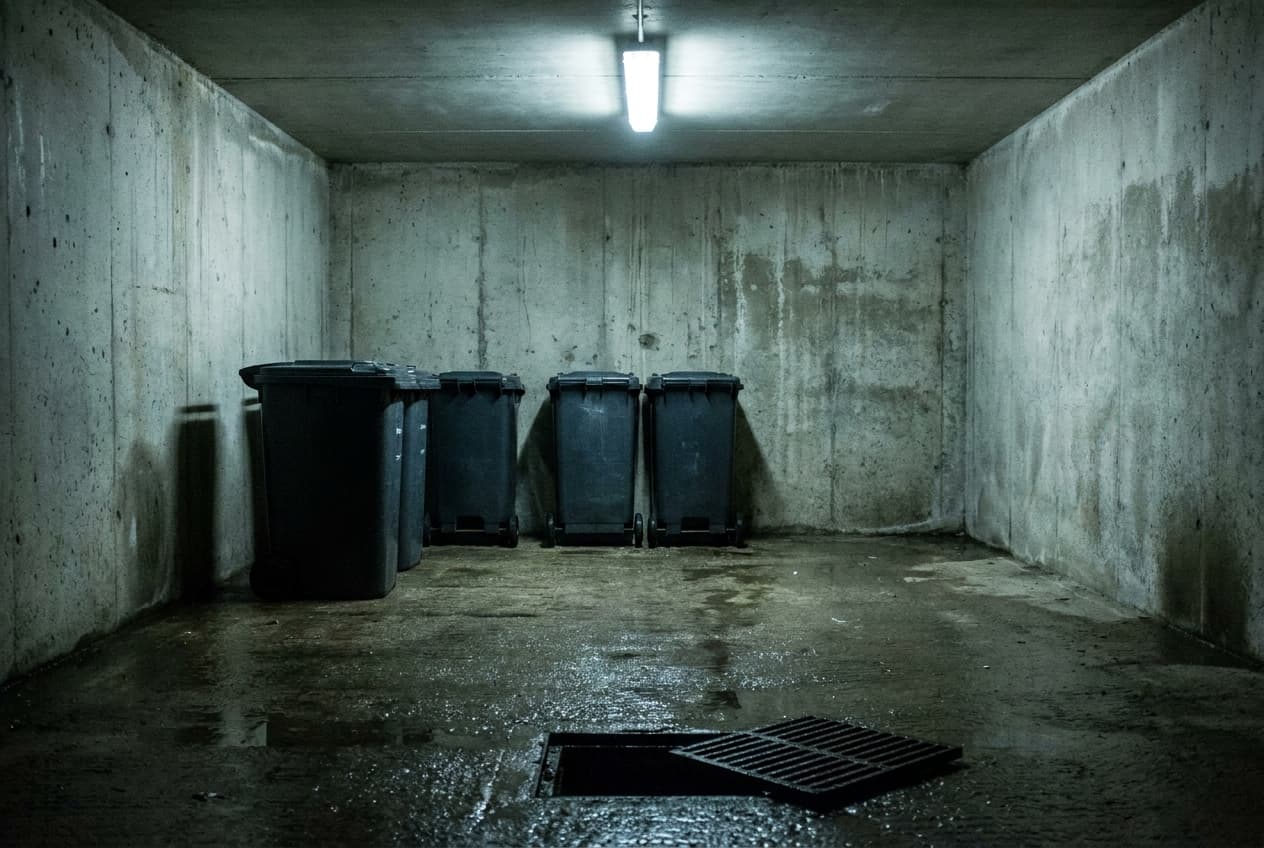
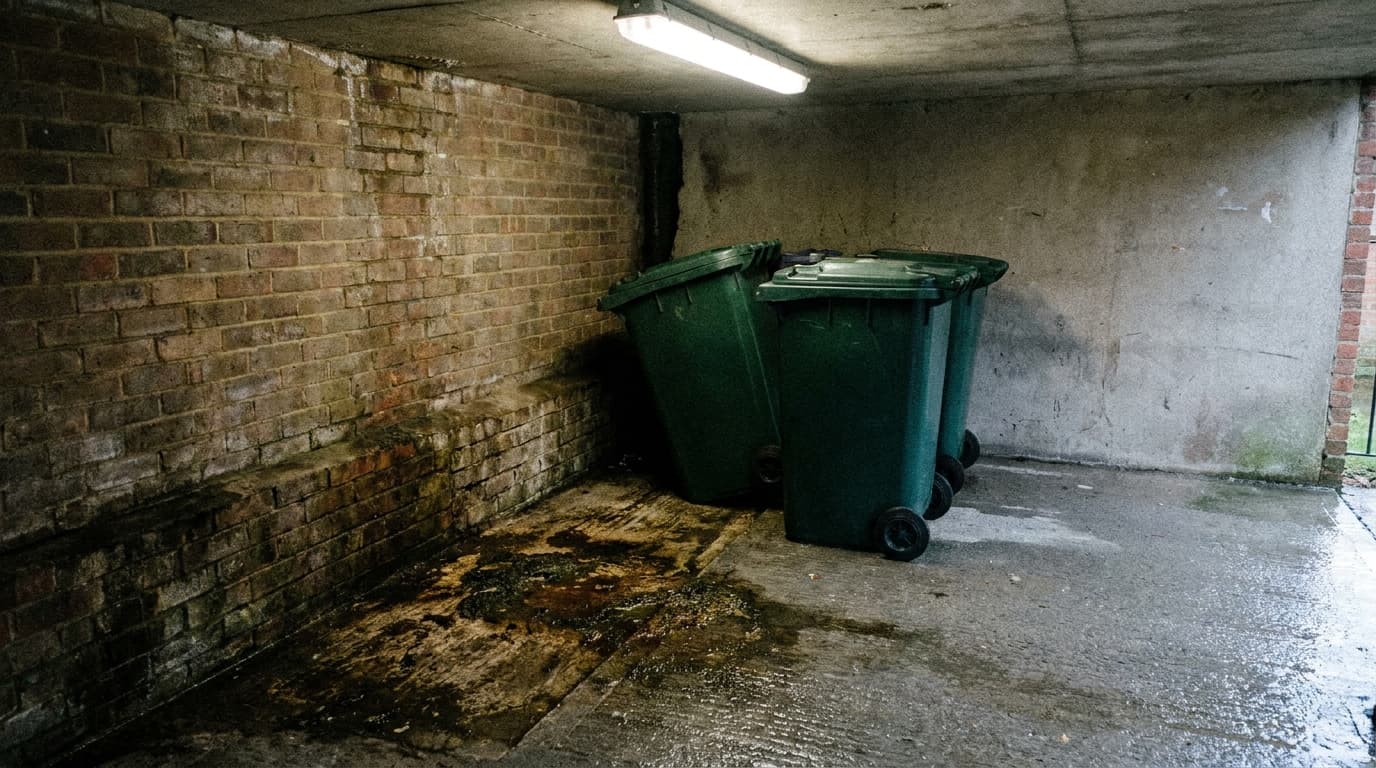
Maggots in a communal store are not living on the floor. They are living in whatever organic residue has accumulated where nobody looks: in the wells of the bins themselves, in the spillage that has run underneath and behind them, in the film that has worked into cracks in the floor slab, and in the gully. A wash-down removes what is on the surface. It does not remove the medium, and it can push residue further into the cracks and the gully while adding the moisture that suits it.
The timing then does the rest. When blowfly larvae mature they leave the breeding medium deliberately and travel, sometimes several metres, looking for somewhere dry to pupate. That is why residents see them crossing the floor and heading for the entrance way: not because the problem has spread, but because that generation has finished feeding. Those larvae left before the clean. They pupate somewhere the mop never reached, and the adults emerge days later, into a store that has just been cleaned. So the sequence a resident experiences is a clean, followed by more flies, repeating on a cycle that looks like the treatment is making it worse.
It is not making it worse. It is failing to touch the source, while removing the evidence that would have led somebody to it. If a store is being cleaned more often and fly numbers are rising, the answer is not more frequent cleaning. It is to find the breeding site, which usually means moving the bins rather than washing around them, lifting and checking the gully, and dealing with whatever is running under the units. That is an hour of unglamorous work that ends a problem three months of cleaning will not.
Foam closes the hole to the eye, not to the rat
The second case turns on a product rather than a schedule. The family, receiving no help at the time, bought protective equipment, cleared the cupboards themselves, found holes in a cupboard and the floor and filled them with expanding foam. The rats chewed through and came back, worse than before.
Expanding foam is not a rodent-proofing material and it never has been. Polyurethane foam offers a rat almost no resistance; it is soft, it is easy to gnaw and it carries no deterrent of any kind. What it does very effectively is close a hole to the eye, which means it converts an open route into a route that has been signed off. On a repairs system it reads as a completed job.
What actually holds is something the animal cannot work: stainless or galvanised wire wool packed tight and mortared over, sheet metal or perforated plate across a larger opening, a cement-based filler with aggregate rather than a soft mastic. And before any of that, the question of what is on the other side. A hole under a bath and a hole in a floor void are usually not two separate accidents. They are two symptoms of one route in, and until that is found the next hole appears somewhere else.
What the two cases share
In both, the provider can evidence action. Cleaning was increased. Holes were filled. Both would appear in a report as work carried out, on time, in response to a resident. And in both, the resident's experience got worse, because activity was measured and cause was not.
That gap is the thing worth designing against, and it is measurable. Frequency of cleaning is an activity metric. Number of holes filled is an activity metric. Whether the same address reports again within ninety days is an outcome metric, and it is the one that tells you whether anybody found the cause. A provider that tracks the second will see the first two for what they are.
One more detail from the second case
When the tenant's mother first reported the rats in 2024, she says she was told the council no longer had a pest control service. When she reported them again this year, she was told there was one. We are not in a position to say which was correct, and it does not much matter which was: a resident who is told a service does not exist stops reporting to it, and every subsequent problem at that address becomes invisible to the very team that would have fixed it. Providers spend a great deal of effort on how quickly reports are answered and much less on whether residents believe there is anything to report to.
None of this is a criticism of the two organisations involved. Both responded, both did something, and in each case what they did is what most providers would have done. The shape is what is worth taking, because the shape repeats: a response that addresses what can be seen, a cause that nobody was asked to look for, and a record that shows willing while the problem carries on.
What this means for your site
Ask of any recurring pest case on your stock: what did we actually change? Cleaning more often and filling holes are activity, and both can leave the cause untouched while producing a clean record. The outcome measure is whether the same address reports again within ninety days. If it does, the case is a structural or a source problem until proven otherwise, and the next visit should be a survey rather than another treatment.
Sources
- BBC News, Council homes' residents complain about maggots (2 September 2026)
- Derbyshire Times, reporting a Chesterfield council tenant's recurring rat infestations (4 September 2026)